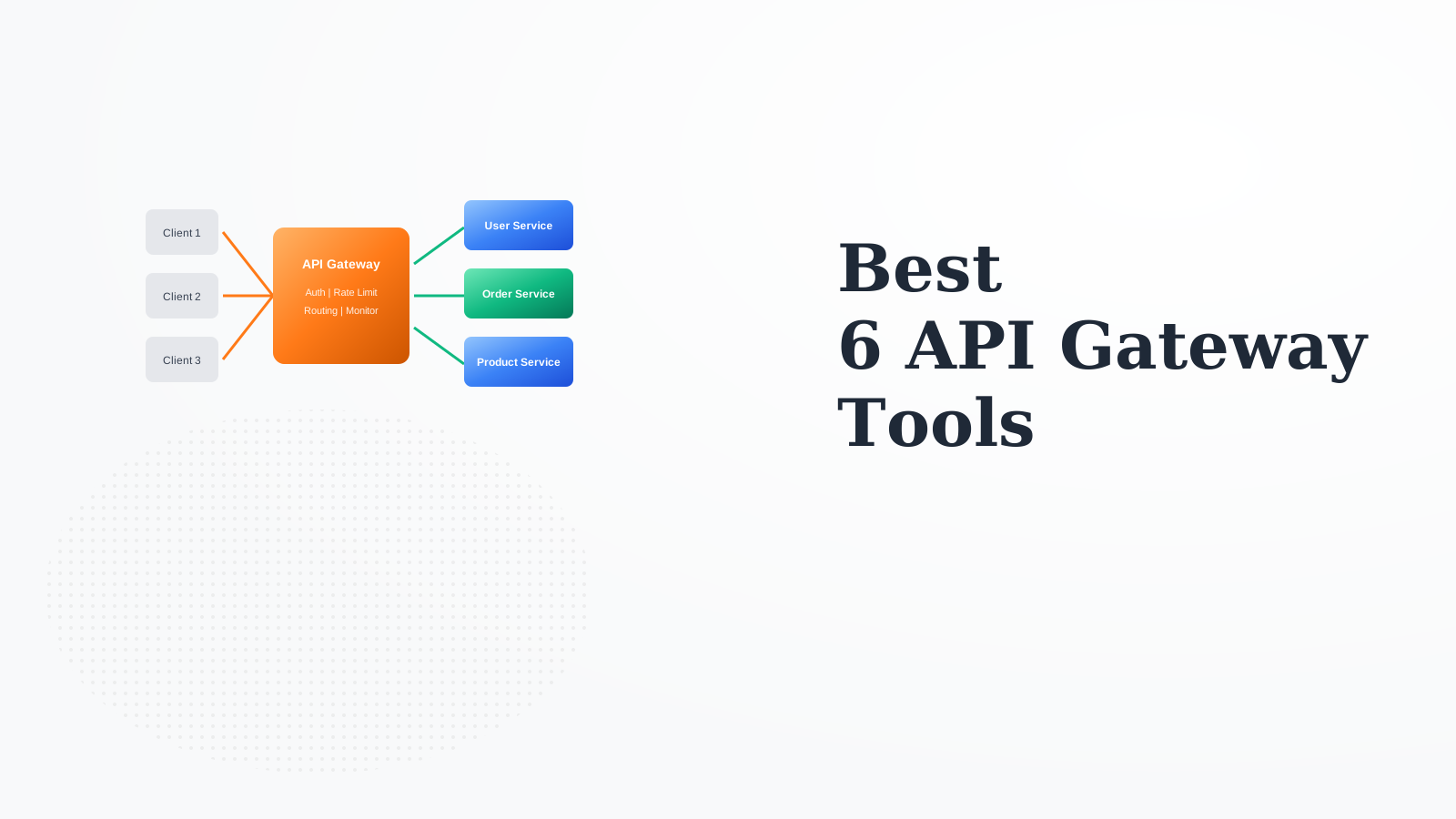
6 Best API Gateway Tools for Microservices in 2026
As applications move to microservices, API gateways become essential for routing, authentication, rate limiting, and monitoring. The right gateway handles cross-cutting concerns so your services can focus on business logic. We evaluated 10 API gateways on performance, features, and operational complexity.
Kong is the most mature and feature-rich open-source API gateway. Built on NGINX, it delivers excellent performance while providing a plugin ecosystem for authentication, rate limiting, logging, and more. Kong Ingress Controller integrates natively with Kubernetes. Enterprise adds RBAC, developer portal, and support.
Strengths
Most mature ecosystem
Extensive plugin library
Excellent Kubernetes support
High performance
Strong community
Enterprise features available
Limitations
Complex for simple use cases
Postgres/Cassandra dependency
Enterprise pricing unclear
Who it's for: Best for teams needing a production-ready gateway with extensive features and plugin ecosystem.
AWS API Gateway is fully managed - no servers to provision or maintain. It integrates natively with Lambda for serverless APIs and with other AWS services. HTTP APIs offer lower cost and latency than REST APIs. Pay only for requests made.
Strengths
Zero operational overhead
Native AWS integration
Pay-per-request pricing
Automatic scaling
Built-in caching
WebSocket support
Limitations
AWS lock-in
Limited customization
Cold starts with Lambda
Complex pricing
Who it's for: Ideal for AWS-native teams wanting managed infrastructure and serverless integration.
Traefik automatically discovers services and configures routing. Point it at Docker or Kubernetes and it handles the rest. Built-in Let's Encrypt integration provides automatic HTTPS. The simplicity makes it perfect for teams new to API gateways.
Strengths
Automatic service discovery
Built-in Let's Encrypt
Simple configuration
Great dashboard
Native Docker/K8s support
Active development
Limitations
Less feature-rich than Kong
Plugin ecosystem smaller
Enterprise features paid
Who it's for: Perfect for teams wanting simple, automatic API gateway with minimal configuration.
NGINX is the proven workhorse powering millions of sites. As an API gateway, it offers unmatched performance for routing and load balancing. The configuration is powerful but requires more manual setup. NGINX Plus adds dynamic configuration and monitoring.
Strengths
Best raw performance
Proven reliability
Massive community
Excellent caching
Low resource usage
Well documented
Limitations
Manual configuration
Less API-specific features
No service discovery
NGINX Plus expensive
Who it's for: Best for teams prioritizing raw performance with existing NGINX expertise.
Envoy is a cloud-native L7 proxy designed for microservices. It powers Istio service mesh and offers the best observability with detailed metrics, tracing, and logging. The xDS API enables dynamic configuration. More complex to operate standalone.
Strengths
Best observability
Cloud-native design
Powers Istio
Dynamic configuration
CNCF graduated
Free and open source
Limitations
Complex standalone operation
Steep learning curve
Better as part of mesh
YAML configuration
Who it's for: Ideal for teams building service mesh or needing deep observability.
Tyk is a complete API management platform, not just a gateway. It includes a developer portal, analytics dashboard, and API documentation. Native GraphQL support sets it apart. The open-source version is capable; cloud adds convenience.
Strengths
Complete API management
Developer portal included
GraphQL native support
Good analytics
Open source core
Multi-data center
Limitations
Gateway performance lower
Complex setup
Cloud pricing high
Less ecosystem
Who it's for: Best for teams needing full API management platform with developer portal.