8 Best CI/CD Tools for Continuous Deployment in 2026
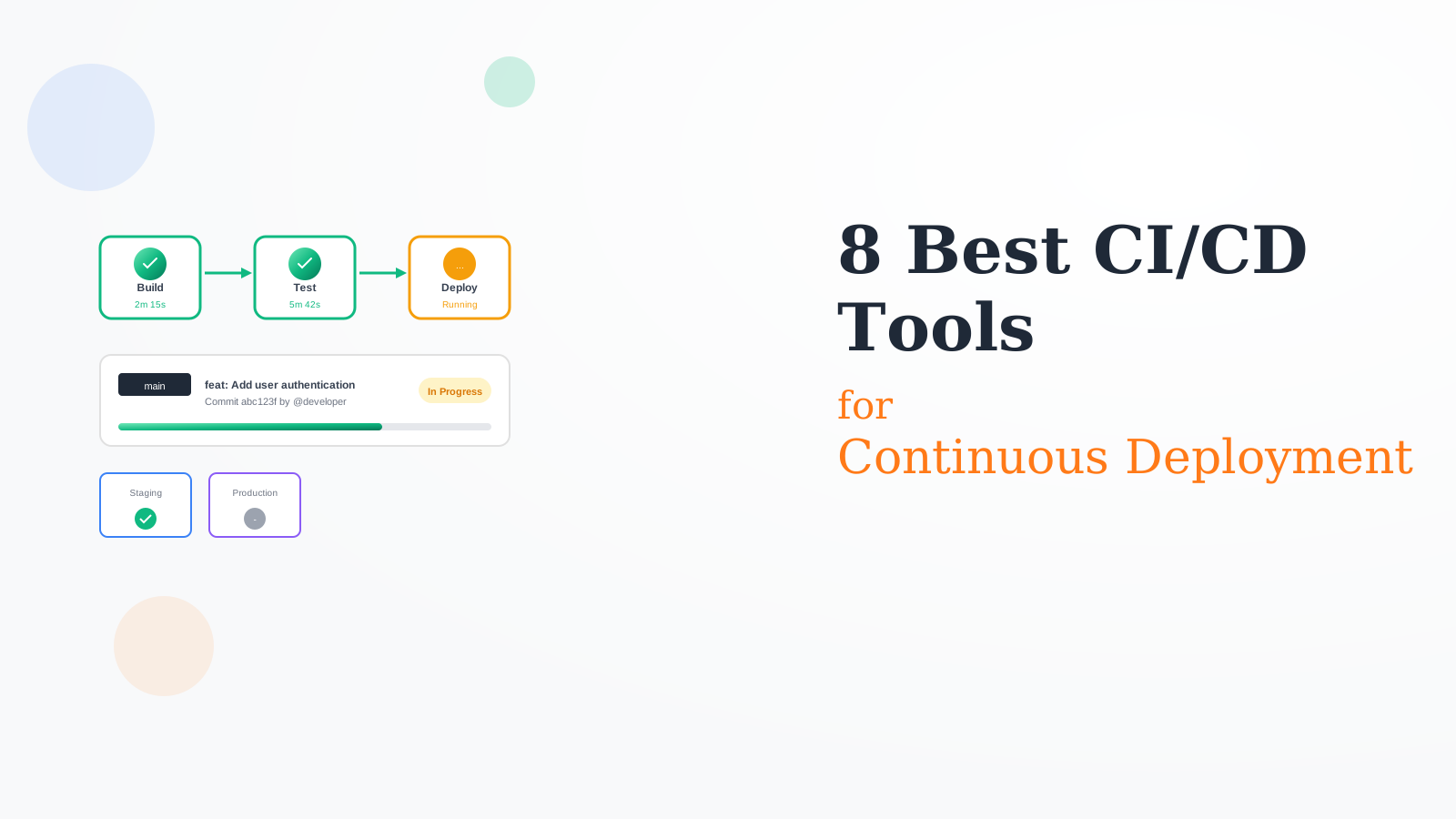
We tested 15+ CI/CD platforms to find the best for automated deployments. These tools help you build, test, and deploy code automatically, catching issues early and shipping faster with confidence.
GitHub Actions is CI/CD native to where code lives. No separate service to configure. Massive marketplace of reusable actions. Matrix builds test across environments. Free tier is generous. The obvious choice for GitHub projects.
Starting priceFree
Strengths
Native GitHub
Marketplace
Great free tier
Matrix builds
Easy start
Limitations
GitHub only
YAML complexity
Debug harder
Minutes limits
Who it's for: Best for teams already on GitHub who want native CI/CD.
GitLab CI/CD is part of a complete DevOps platform. Auto DevOps detects languages and creates pipelines. Security scanning built-in. Self-hosted option for control. The all-in-one choice for teams wanting integrated DevOps.
Starting priceFree
Strengths
All-in-one DevOps
Auto DevOps
Security built-in
Self-hosted option
Good free tier
Limitations
GitLab ecosystem
Can be heavy
Learning curve
Performance varies
Who it's for: Best for teams wanting complete DevOps in one platform.
Jenkins is the granddaddy of CI/CD. Thousands of plugins for any need. Self-hosted for full control. Groovy pipelines are powerful. Free and open-source. The choice for teams needing maximum flexibility.
Starting priceFree
Strengths
Free forever
Endless plugins
Full control
Flexible
Huge community
Limitations
Self-maintenance
Dated UI
Security concerns
Plugin conflicts
Who it's for: Best for teams wanting free, self-hosted CI/CD with maximum flexibility.
CircleCI focuses on speed. Smart caching reduces build times. Parallelism splits tests. Orbs provide reusable config. Insights show bottlenecks. Great for teams who need fast feedback loops.
Starting priceFree
Strengths
Fast builds
Smart caching
Orbs ecosystem
Good insights
Docker native
Limitations
Pricing scales
Less flexible
Debugging harder
Config complexity
Who it's for: Best for teams prioritizing fast build times and developer experience.
Azure DevOps is Microsoft complete DevOps suite. Pipelines, repos, boards, and artifacts together. Native Azure integration. Enterprise features and compliance. The choice for Microsoft shops.
Starting priceFree
Strengths
Microsoft integration
Complete suite
Enterprise features
Good free tier
Hybrid support
Limitations
Microsoft-centric
Learning curve
UI complexity
Can be slow
Who it's for: Best for enterprises using Microsoft and Azure technologies.
Bitbucket Pipelines is built into Bitbucket. Simple YAML configuration. Links to Jira for visibility. Good for Atlassian teams. Easy start without separate service.
Starting priceFree
Strengths
Built-in
Jira integration
Simple config
Atlassian suite
Easy start
Limitations
Bitbucket only
Fewer features
Build minute limits
Less ecosystem
Who it's for: Best for teams using Bitbucket and Atlassian tools.
Buildkite offers hybrid CI/CD. Cloud control plane manages self-hosted agents. Fast builds on your own infrastructure. Scales to massive workloads. Great for teams needing control with convenience.
Starting priceFree
Strengths
Hybrid model
Fast
Scalable
Your infrastructure
Good UX
Limitations
Agent management
More setup
Smaller community
Pricing per user
Who it's for: Best for teams wanting cloud management with self-hosted execution.
Drone is container-native CI. Every step runs in its own container. Simple YAML configuration. Self-hosted and lightweight. Modern approach for container-first teams.
Starting priceFree
Strengths
Container native
Simple
Lightweight
Modern
Free core
Limitations
Smaller ecosystem
Self-hosted only
Less enterprise
Fewer integrations
Who it's for: Best for container-first teams wanting lightweight self-hosted CI.
We tested each platform for real-world CI/CD workflows.
Ease of Setup (20%) — Time to first successful pipeline.
Build Speed (25%) — Execution time and optimization options.
Ecosystem (20%) — Integrations, plugins, and reusable components.
Flexibility (20%) — Handling complex workflows and customization.
Pricing (15%) — Value for teams of different sizes.
How to Choose
Choose GitHub Actions if you need use GitHub.
Choose GitLab CI/CD if you need want all-in-one.
Choose Jenkins if you need need free + flexible.
Choose CircleCI if you need prioritize speed.
Choose Azure DevOps if you need Microsoft shop.
Common Questions
Cloud is easier to start and maintain. Self-hosted gives control and can be cheaper at scale. Consider hybrid approaches like Buildkite. Security requirements may dictate choice for some teams.
Cache dependencies between builds. Parallelize test suites. Use faster runners or larger machines. Only build what changed. Optimize Docker layers. Profile to find bottlenecks.
Yes for CI (build and test). Maybe not for CD (deploy). Use branch rules - PRs always run CI, main branch may auto-deploy. Feature branches can skip expensive tests until merge.