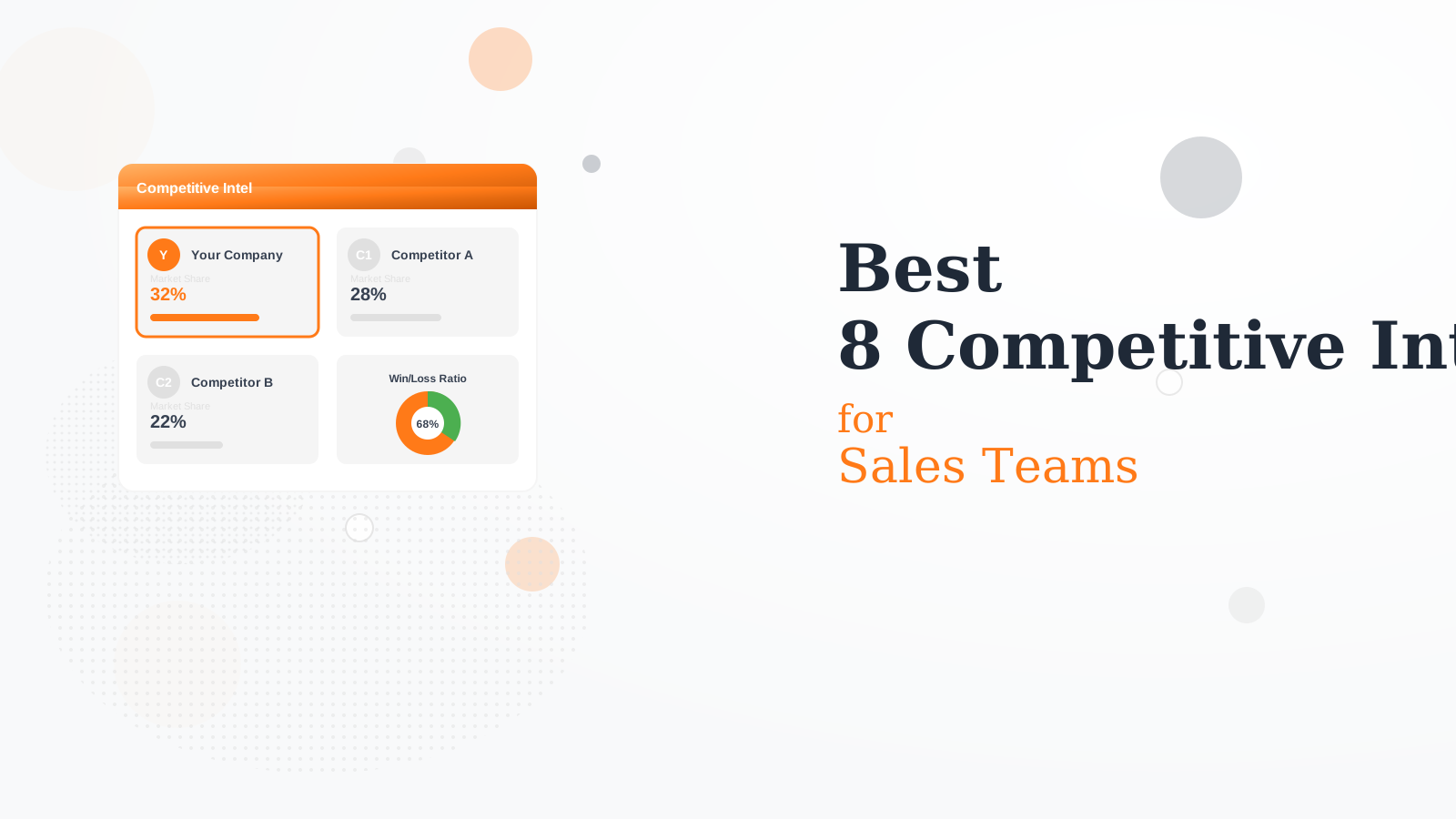
8 Best Competitive Intelligence Tools for Sales Teams in 2026
We tested 14+ competitive intelligence platforms to find the best for sales teams. These tools help you track competitor moves, analyze win/loss patterns, and arm reps with battlecards.
Klue is the complete competitive enablement platform. AI collects intel from 100+ sources automatically. Battlecards surface in Salesforce and Slack when reps need them. Win/loss analysis reveals why deals are won or lost against specific competitors.
Starting priceCustom
Strengths
Complete platform
AI intel collection
Great battlecards
Win/loss built-in
CRM integration
Limitations
Expensive
Enterprise focused
Implementation time
Requires content effort
Who it's for: Best for mid-market and enterprise sales teams with defined competitors.
Crayon monitors competitors in real-time across websites, news, reviews, and social. Automatic alerts notify you of changes. Battlecard builder helps sales teams compete effectively. Analytics show which intel gets used most.
Starting priceCustom
Strengths
Real-time tracking
Wide source coverage
Good alerts
Analytics
Battlecards
Limitations
Custom pricing only
Can be noisy
Battlecards need work
Learning curve
Who it's for: Best for teams needing comprehensive competitor monitoring.
Contify provides broader market intelligence beyond just competitors. Track industry news, regulations, and market trends. Custom news feeds and newsletters. API allows integration into existing workflows.
Starting priceCustom
Strengths
Market intelligence
Custom feeds
API access
Broad coverage
Enterprise ready
Limitations
Beyond competitive
Complex setup
Less sales focused
Custom pricing
Who it's for: Best for teams needing broader market intelligence.
Clozd specializes in win/loss analysis through buyer interviews. Professional interviewers conduct unbiased conversations. Reports reveal why buyers chose you or competitors. Trends show patterns over time.
Starting priceCustom
Strengths
Deep win/loss
Buyer interviews
Unbiased insights
Professional service
Actionable reports
Limitations
Win/loss only
Service based
Not real-time
Higher touch
Who it's for: Best for teams needing deep win/loss insights from buyers.
Semrush provides digital marketing competitive intelligence. Track competitor SEO, ads, and content strategies. Traffic analysis shows digital market share. Gap analysis reveals opportunities they are missing.
Starting price$129/mo
Strengths
SEO intel
Ad tracking
Traffic data
Content gaps
Affordable
Limitations
Digital only
No battlecards
Marketing focused
Not sales specific
Who it's for: Best for teams needing digital marketing competitive intel.
Gong surfaces competitive insights from sales conversations. See how often competitors are mentioned and in what context. Track competitor sentiment over time. Coaching helps reps handle competitive objections.
Starting priceCustom
Strengths
Real conversations
Competitor mentions
Trend analysis
Coaching
Already using Gong
Limitations
Need Gong license
Call-based only
No external tracking
Limited battlecards
Who it's for: Best for teams already using Gong wanting competitive insights.
Similarweb shows digital market share and traffic benchmarks. Compare website traffic across competitors. Understand audience overlap and referral sources. Useful for competitive positioning in digital markets.
Starting price$149/mo
Strengths
Traffic data
Market share
Audience insights
Benchmarks
Affordable
Limitations
Traffic only
Estimated data
No sales features
Digital focused
Who it's for: Best for teams needing digital traffic competitive analysis.
We tested each platform with real competitive tracking workflows.
Intel Collection (25%) — Breadth and accuracy of competitive data sources.
Sales Enablement (25%) — Battlecard quality and CRM integration.
Automation (20%) — Tracking automation and alert quality.
Analysis (20%) — Win/loss analysis and trend reporting.
Value (10%) — Features relative to investment.
How to Choose
Choose Klue if you need complete CI platform.
Choose Crayon if you need real-time tracking.
Choose Clozd if you need deep win/loss analysis.
Choose Semrush if you need digital marketing intel.
Choose Gong if you need conversation insights.
Common Questions
Focus on 3-5 primary competitors that you encounter in deals regularly. Add 5-10 secondary competitors for broader awareness. Quality of intel matters more than quantity of competitors tracked.
Review battlecards quarterly at minimum. Set alerts for major competitor changes like pricing, features, or leadership. The best tools update battlecards automatically when intel changes.
Yes, if you have enough closed deals for patterns. Start with 10-20 interviews per quarter. Focus on competitive losses first to understand where you are losing. Third-party interviews get more honest feedback.
Integrate battlecards into CRM where reps already work. Surface them at the right moment in deals. Keep them concise with talk tracks. Get rep feedback and iterate. Celebrate wins using intel.