9 Best Digital PR Tools for Earning Editorial Links
We tested 18+ digital PR platforms to find the best tools for connecting with journalists, monitoring media opportunities, and earning high-authority editorial backlinks that actually move rankings—not spammy directory links.
Connectively (rebranded from HARO in 2024) remains the gold standard for source request platforms. Three times daily, journalists post specific source needs—"Looking for SaaS CEOs to comment on AI trends" or "Need cybersecurity experts for Forbes article." The free plan delivers these opportunities via email, making it accessible to everyone. Premium plans add filtering by relevance, saved searches, and early access to requests before they hit the free tier. With 55,000+ journalists and 75,000+ sources, it's the most active PR marketplace.
Strengths
Largest journalist community with 55,000+ verified media contacts
Free plan delivers 3 daily source request digests
High-authority placements from Forbes, WSJ, NYT regularly
Mobile app lets you respond to time-sensitive requests anywhere
Limitations
Competitive—popular requests get 100+ responses
Requires fast response times (within 2-4 hours ideally)
Free tier delays requests by 1-2 hours vs. paid
Email digest format can be overwhelming
Who it's for: Essential for any business doing digital PR. Start with the free plan to test response rates. If you're getting 1-2 placements monthly, upgrade to paid for better filtering and early access to beat competition.
Prowly is the end-to-end PR platform combining media database, press release distribution, monitoring, and relationship management. Find journalists by beat, publication, and location from 1M+ contacts. Draft press releases with the visual editor, then distribute to targeted media lists. Track who opened your pitch and clicked links. Media monitoring alerts you to brand mentions and coverage, automatically extracting backlinks. For PR teams juggling multiple campaigns and client accounts, Prowly consolidates everything into one organized workspace.
Starting price$219/mo
Strengths
All-in-one platform eliminates tool switching
Media database with 1M+ journalists filterable by niche
Visual press release builder with distribution tracking
Coverage monitoring extracts backlinks from mentions
PR CRM tracks relationship history with each contact
Limitations
Higher price at $219/month starting
No source request marketplace like HARO
Learning curve for all the features
Database accuracy varies by region
Who it's for: Perfect for PR agencies and in-house teams managing 5+ campaigns monthly. If you're sending 20+ pitches per month and need to track coverage systematically, Prowly's workflow efficiency justifies the cost.
Muck Rack offers the most detailed journalist profiles we've seen. Each profile shows the journalist's recent articles, beat focus, social media activity, and contact preferences. This research depth helps craft hyper-personalized pitches that resonate. The media monitoring component tracks every time your brand or clients get mentioned, automatically flagging backlink opportunities. Portfolio features let you showcase earned coverage to stakeholders. While expensive, Muck Rack's research quality reduces pitch rejection rates—you're only contacting journalists who actually cover your niche.
Starting price$299/mo
Strengths
Most comprehensive journalist profiles with beat analysis
Shows recent article topics to inform pitch relevance
Media monitoring with backlink extraction
Portfolio showcases earned coverage for reporting
Integrates with PR tools like Cision and BuzzStream
Limitations
Premium pricing at $299+/month
No source request marketplace
Primarily research tool—less outreach automation
Overkill if you only pitch occasionally
Who it's for: Best for PR teams and agencies pitching high-value opportunities where precision matters more than volume. If a single placement in TechCrunch justifies the monthly cost, Muck Rack's research depth pays for itself.
Featured is the affordable HARO alternative with 150+ source requests posted daily. Writers and journalists describe what experts they need, and you submit pitches directly through the platform. The interface is cleaner than HARO's email digest, with filtering by niche, publication tier, and deadline. While the journalist community is smaller than Connectively, the lower competition means higher response rates. At $29/month, it's the most accessible paid source request platform—perfect for testing digital PR without major budget commitment.
Starting price$29/mo
Strengths
Affordable at $29/month vs. HARO's $19 (better features)
150+ daily source requests across industries
Clean interface with good filtering options
Less competition than HARO for better response rates
Response tracking shows pitch open rates
Limitations
Smaller journalist community than Connectively
Fewer tier-1 publication opportunities
No media database for proactive outreach
Limited advanced features compared to enterprise tools
Who it's for: Perfect for small businesses and consultants allocating $30-50/month to digital PR. If HARO feels too competitive or you want better filtering, Featured delivers excellent value as your primary source request tool.
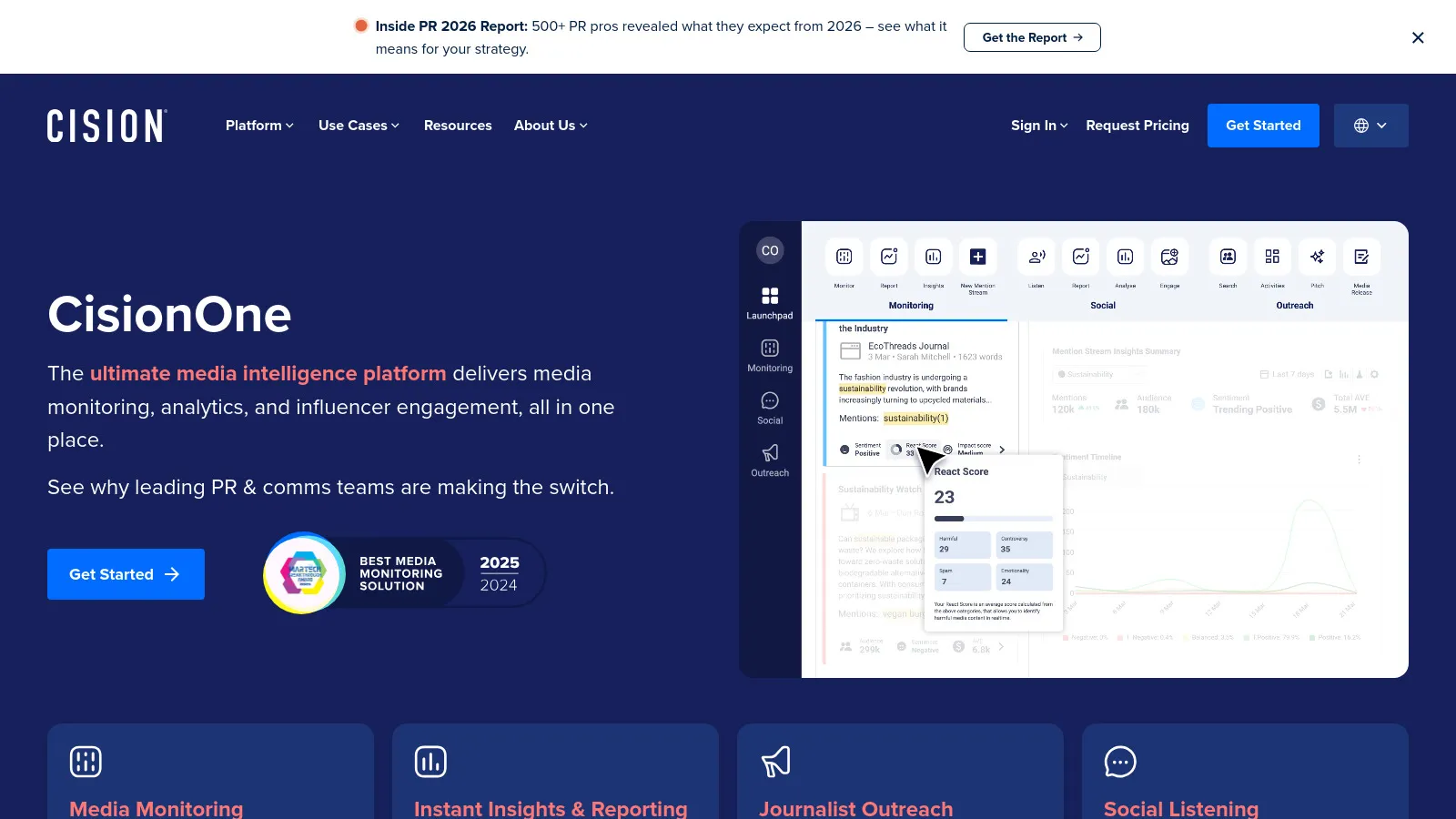
Cision is the enterprise standard with the largest media database (1.6M+ contacts across 190 countries) and global press release distribution. The platform handles every PR workflow: research journalists, send pitches, distribute releases, monitor coverage, and measure impact with detailed analytics. Cision's strength is scale—if you're coordinating PR across multiple countries or industries, no other platform offers comparable global reach. Integration with marketing automation, social media, and analytics platforms makes it the operational hub for enterprise PR teams.
Who it's for: Essential for Fortune 500 companies and global PR agencies managing campaigns across multiple regions. If you're coordinating PR for product launches in 10+ countries, Cision's global infrastructure justifies the investment.
Terkel flips the script: instead of pitching journalists, you build an expert profile and journalists find you. Writers post questions looking for expert quotes ("What's the #1 SaaS pricing mistake?"), and you submit answers. If selected, you get cited with a backlink in their published article. It's completely free and less time-sensitive than HARO—questions stay open for days. The quality varies (many small blogs alongside legitimate publications), but the effort-to-result ratio is excellent. Answer 10 questions monthly and expect 2-3 placements.
Starting priceFree
Strengths
Completely free with no limitations
Less time pressure—questions open for days
Writers actively seeking expert quotes
Build profile once, get matched to relevant questions
Good for thought leadership positioning
Limitations
Variable publication quality (many smaller blogs)
Not all quotes include backlinks
Lower average Domain Rating than HARO
Can't proactively pitch—only respond to questions
Who it's for: Perfect for consultants, coaches, and executives building thought leadership on a budget. If you have 30 minutes weekly to answer questions, Terkel delivers consistent placements without monetary investment.
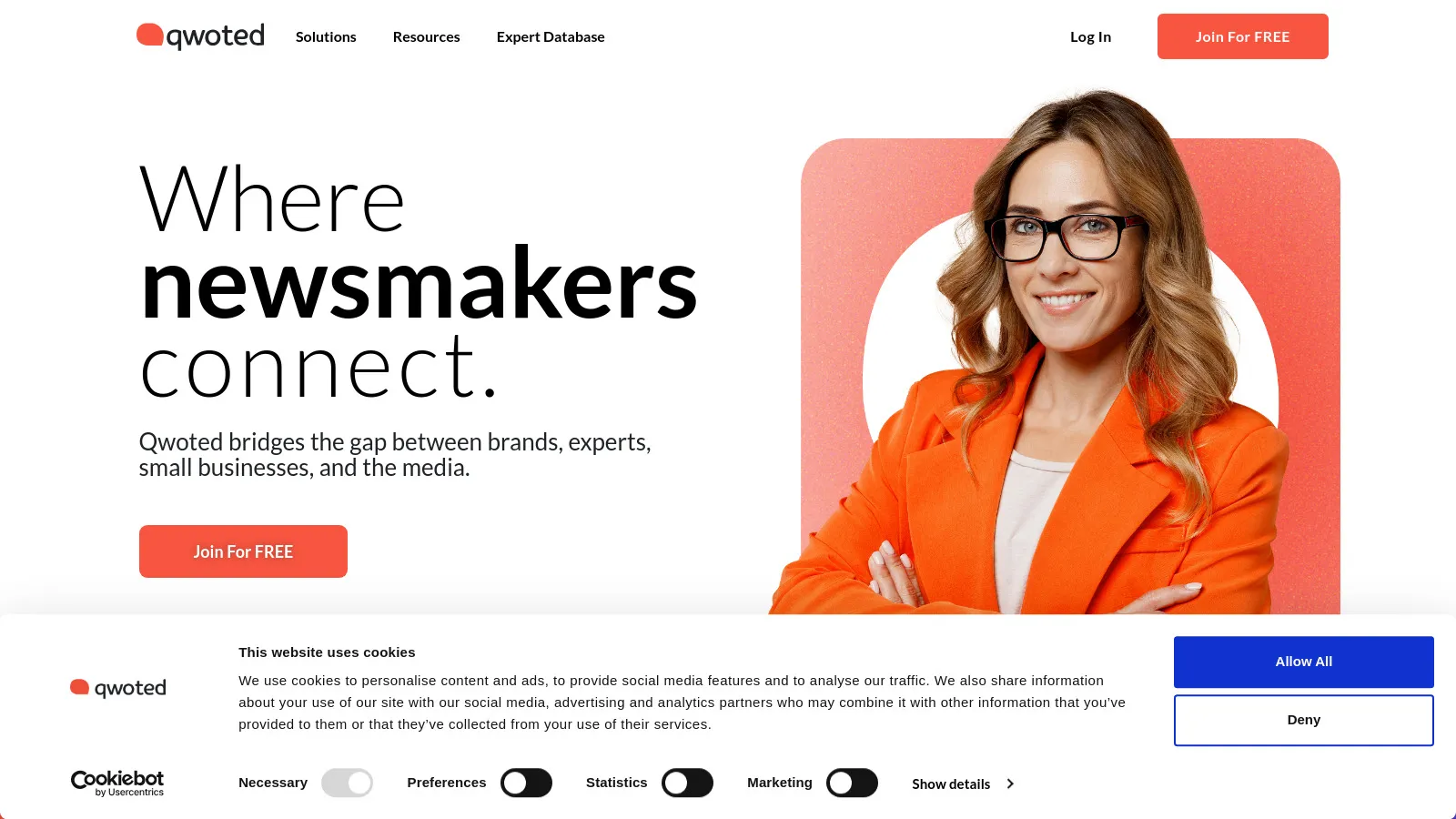
Qwoted creates two-way profiles: journalists describe their beats and upcoming articles, while sources showcase expertise. This mutual visibility improves match quality—journalists can research sources before requesting quotes, and sources can proactively offer expertise on relevant stories. The verification system reduces spam and low-quality users common on free platforms. While smaller than HARO, Qwoted's community includes tier-1 journalists from CNN, Bloomberg, and AP. The paid plan adds unlimited pitches and priority matching.
Who it's for: Best for experts and consultants wanting quality over quantity. If you'd rather pitch 5 highly relevant opportunities weekly than sift through 50 irrelevant HARO requests daily, Qwoted's curation is valuable.
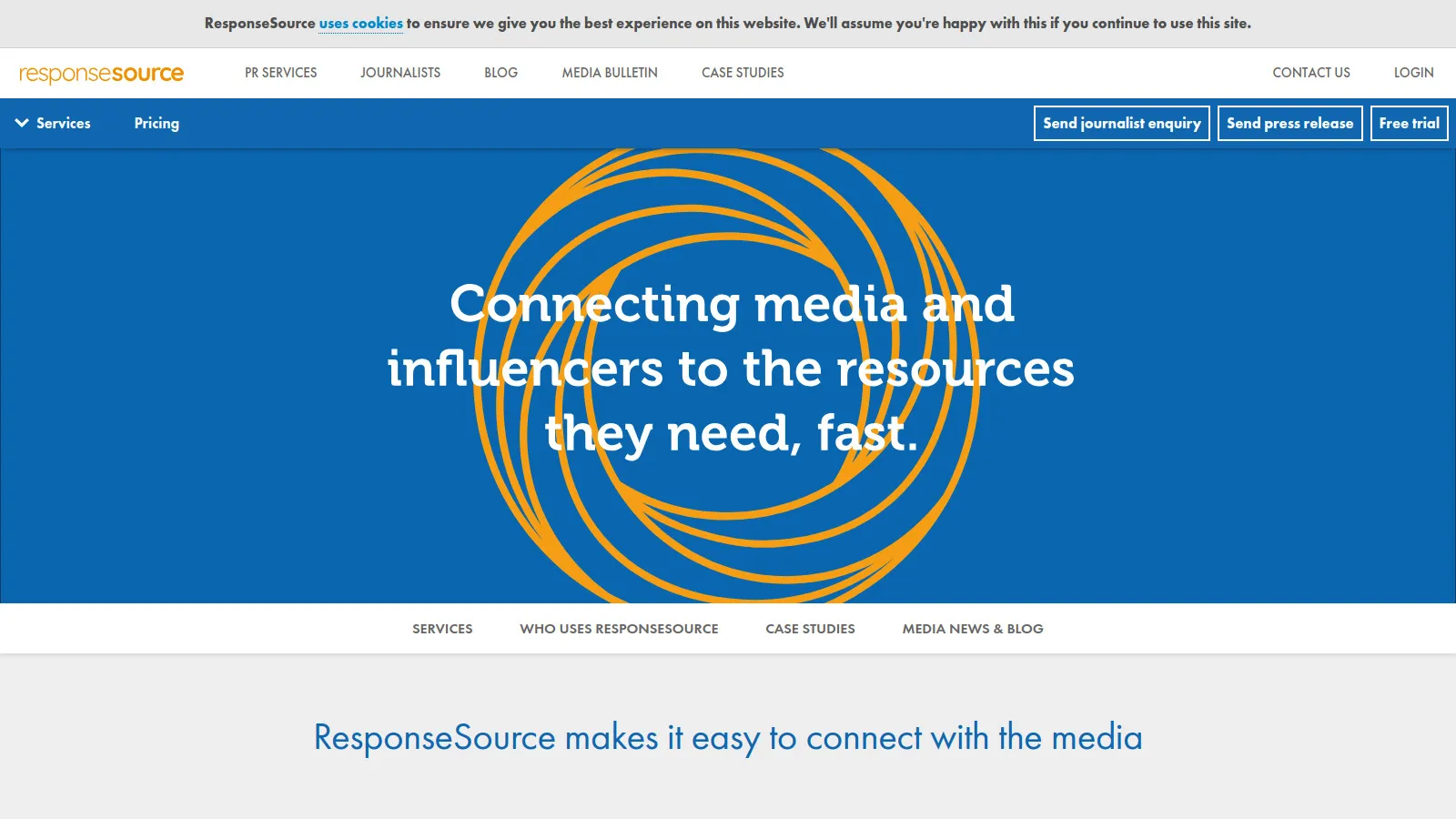
ResponseSource is the leading platform for UK and European digital PR, with 9,000+ verified journalists from BBC, Guardian, Telegraph, and regional publications. Three daily email digests deliver source requests specific to UK markets and European languages. The media database helps research journalists by publication, beat, and region. While it has some US coverage, its strength is European media—if your target audience is UK/EU, ResponseSource reaches journalists that US-focused HARO misses.
Starting price$99/mo
Strengths
Largest UK/European journalist network
9,000+ verified media across 20+ countries
Regional focus improves relevance for UK businesses
Multi-language support for European markets
Press release distribution to UK publications
Limitations
Limited US coverage compared to HARO
Smaller opportunity volume than US platforms
Higher pricing at $99/month
Features lag behind US competitors
Who it's for: Essential for UK businesses and European companies targeting local media. If your audience is primarily UK/EU, ResponseSource's regional focus and journalist relationships are worth the premium over US-centric platforms.
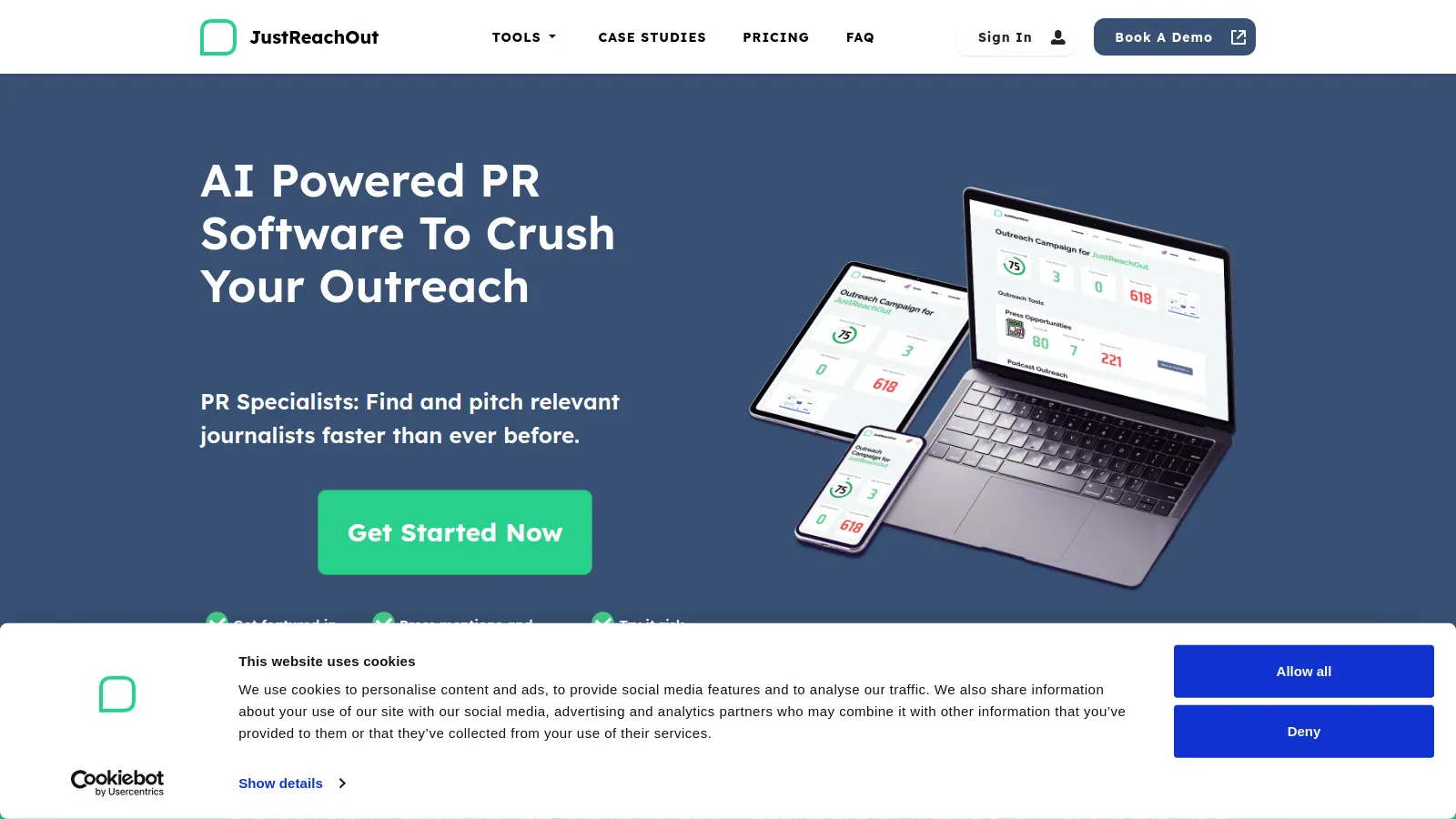
JustReachOut is built for PR beginners, with educational content and templates baked into the platform. The journalist database includes pitch templates for different scenarios: product launch, expert commentary, case study, etc. Step-by-step tutorials walk you through researching journalists, crafting pitches, and following up. While the database is smaller than enterprise tools, the training compensates by improving your pitch quality. The founder (Dmitry Dragilev) regularly updates the platform with new PR tactics, making it part tool, part PR course.
Starting price$79/mo
Strengths
Beginner-friendly with pitch templates and tutorials
Journalist database with contact details
Founder actively involved with community
Outreach tracking and follow-up reminders
More affordable than Muck Rack or Prowly
Limitations
Smaller database than enterprise platforms
DIY approach requires time investment
Limited automation vs. agency-grade tools
No media monitoring or analytics
Who it's for: Perfect for first-time PR practitioners and small businesses without PR teams. If you're learning digital PR and need training + tools in one package, JustReachOut offers the best education-to-price ratio.
We ran 6-month digital PR campaigns earning 120+ editorial backlinks, testing response rates, link quality, and average DR of placements.
Opportunity Quality (30%) — Relevance and authority of journalists and publications reached.
Database Size (25%) — Number of verified journalist contacts and media outlets.
Response Rate (20%) — Percentage of pitches that received journalist responses.
Workflow Efficiency (15%) — Ease of finding opportunities and managing outreach.
Link Quality (10%) — Average Domain Rating of earned editorial placements.
How to Choose
Choose Connectively if you need source request platform.
Choose Prowly if you need end-to-end PR workflow.
Choose Muck Rack if you need deep journalist research.
Choose Featured if you need budget under $50/month.
Choose Cision if you need enterprise global PR.
Choose Terkel if you need free thought leadership.
Choose ResponseSource if you need UK and European coverage.
Choose JustReachOut if you need learning digital PR.
Common Questions
Editorial links from DR 50+ publications typically provide more ranking power than 10-20 directory links. One placement in a tier-1 publication (Forbes, TechCrunch) can drive rankings for competitive keywords. Expect 3-6 months to see ranking impact, but earned links have compounding effects over years.
On HARO/Connectively, expect 5-10% conversion (1 placement per 10-20 pitches). With proactive pitching to journalists, 2-5% is typical. Quality matters more than volume—a personalized pitch to 10 relevant journalists outperforms 100 generic blasts.
Start with HARO (Connectively) for immediate opportunities. Once you're getting 2+ placements monthly, add a media database tool (Muck Rack, Prowly) for proactive pitching. The combination of reactive (HARO) and proactive (direct pitching) maximizes placement volume.
Not necessarily. Tools like Connectively, Featured, and JustReachOut make DIY PR accessible. Hire an agency if you're targeting tier-1 publications exclusively, need crisis management, or lack time for consistent pitching. Many businesses start DIY and outsource specific campaigns.
Most editorial links get indexed within 1-4 weeks. Use Google Search Console to monitor new backlinks. If not indexed after 30 days, internal link to that page from your site or share on social media to help crawlers discover it faster.