8 Best Keyword Clustering Tools for Topic Authority in 2026
We analyzed 20+ keyword clustering platforms to find the best tools that use AI to group keywords by search intent, helping you build topical authority and dominate entire content clusters rather than chasing individual keywords.
Keyword Insights uses the most sophisticated AI clustering algorithm we tested. It analyzes SERP context—not just keyword similarity—to group keywords by true search intent. The platform automatically detects whether keywords need separate pages or can share a single page, solving the biggest challenge in keyword clustering. Content briefs generated from clusters are production-ready and include semantic keyword recommendations.
Starting price$58/mo
Strengths
Best-in-class AI understands search intent from SERP patterns
Automatic detection of single-page vs. multiple-page opportunities
Generates content briefs with semantic keyword lists automatically
Cluster refinement tools let you split or merge groups easily
API access for programmatic workflows
Limitations
Higher price point than budget alternatives
Learning curve for advanced clustering settings
Credit-based pricing can add up for large projects
Who it's for: Perfect for SEO agencies and in-house teams managing 50+ content pieces monthly who need accuracy over cost savings. The SERP-based clustering justifies the premium for teams where content mistakes are expensive.
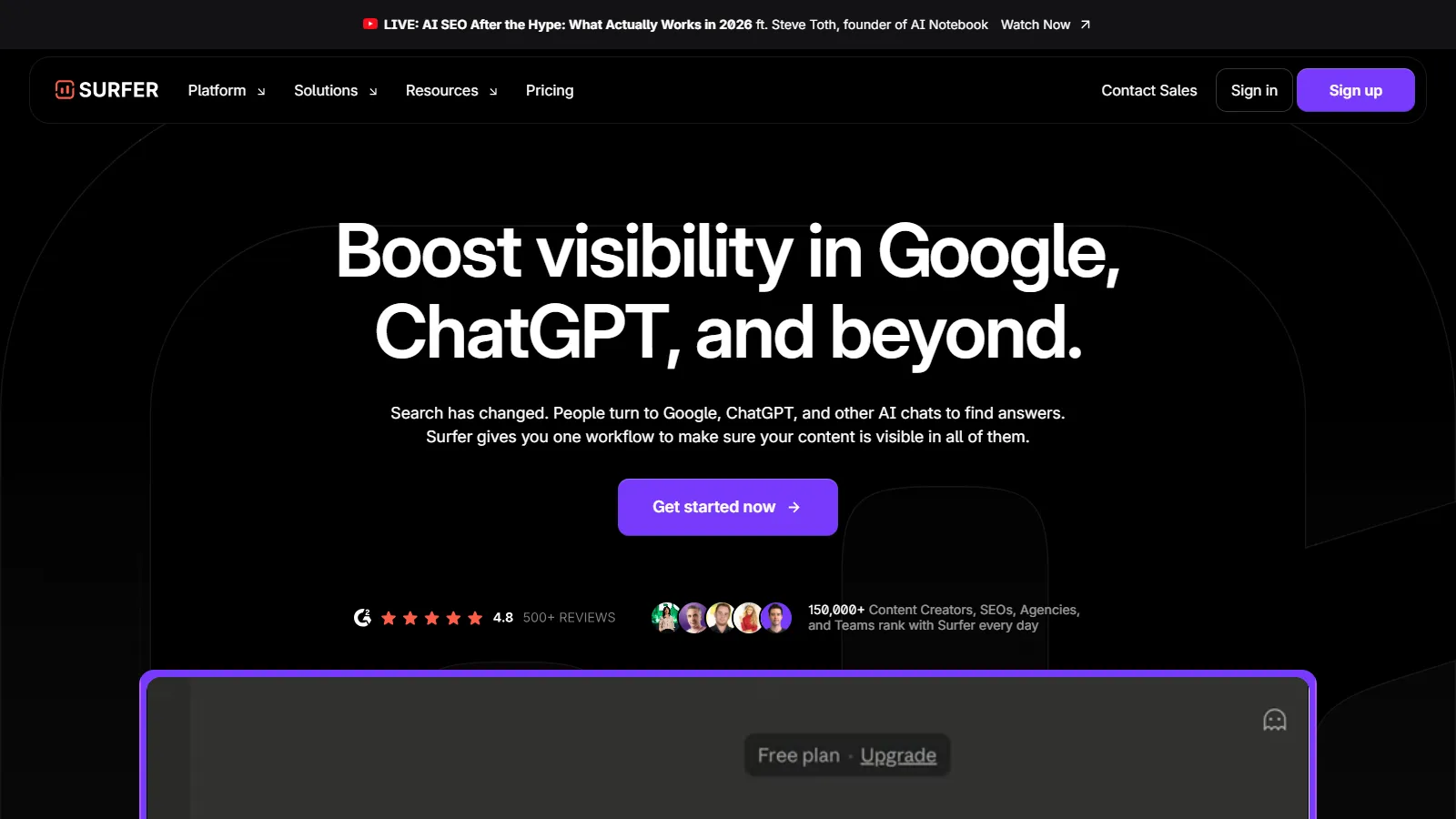
Surfer SEO combines keyword clustering with content optimization in one platform. Its topical maps visualize your entire content cluster, showing gaps, cannibalization risks, and internal linking opportunities. The Content Editor integrates directly with clusters, letting you write optimized content while seeing which related keywords to include. This unified workflow eliminates tool-switching and keeps content strategy centralized.
Starting price$89/mo
Strengths
Visual topical maps make cluster relationships intuitive
Integrated content editor with real-time optimization
Identifies cannibalization and internal linking opportunities
Team collaboration features with shared workspaces
Chrome extension brings clustering into Google Sheets
Limitations
Clustering is secondary to optimization features
No bulk cluster export for programmatic SEO
Higher tiers required for advanced topical features
Can feel overwhelming with so many features
Who it's for: Best for content teams that want clustering and optimization in one tool. Ideal if you already use Surfer for content scoring and want to add strategic keyword planning without switching platforms.
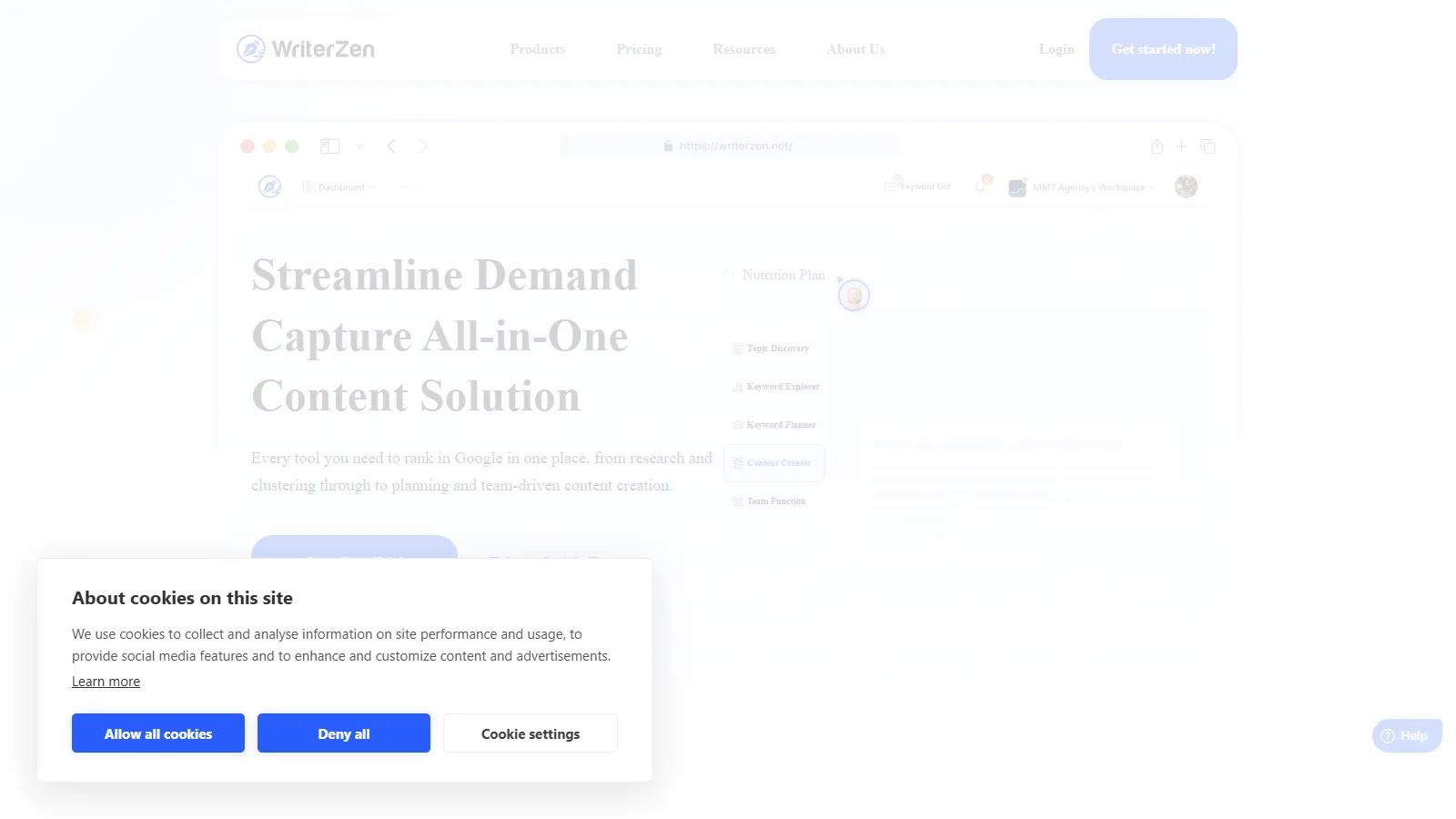
WriterZen delivers impressive keyword clustering at a fraction of competitors' prices. The "Golden Filter" is a unique feature that automatically identifies low-competition keyword clusters—perfect for finding content opportunities that competitors haven't saturated. Unlimited clustering and content creation at $27/month makes it the clear budget winner. The integrated content creator lets you move from cluster to finished draft without leaving the platform.
Starting price$27/mo
Strengths
Best value with unlimited clustering and content creation
Golden Filter finds untapped low-competition clusters
Built-in AI content writer for turning clusters into posts
Team workspaces included even on basic plans
GPT-3 integration for cluster-based outlines
Limitations
Clustering AI less sophisticated than premium tools
No SERP context analysis
Interface can feel cluttered
Slower processing for 5,000+ keyword lists
Who it's for: Perfect for solo bloggers, small agencies, and startups building topical authority on a budget. If you're creating 10-20 cluster-based articles per month, WriterZen pays for itself quickly.
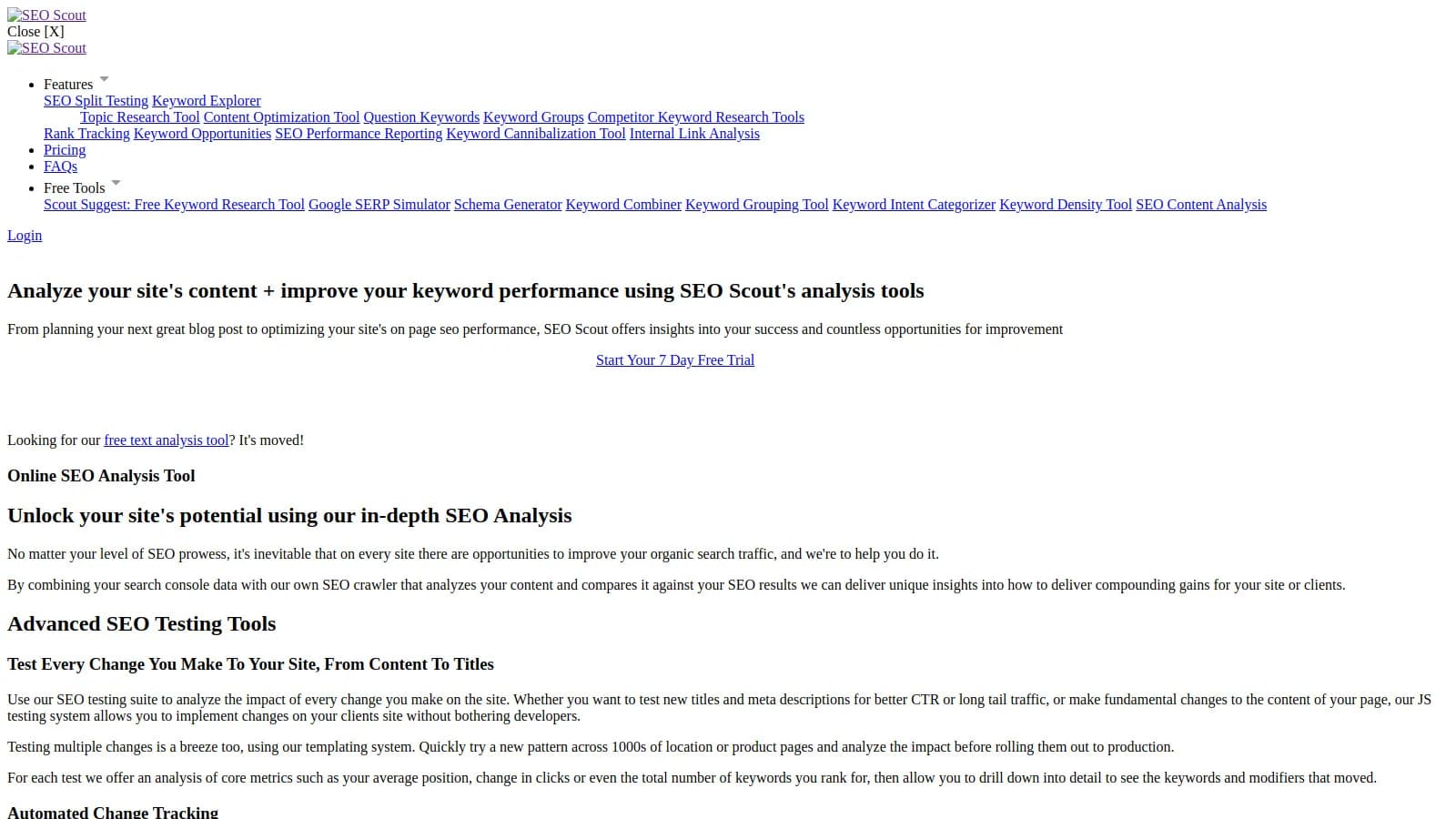
SEO Scout is purpose-built for programmatic SEO teams managing thousands of keyword-driven pages. While other tools focus on manual content creation, SEO Scout excels at bulk cluster export with template-friendly formats. You can export clusters as JSON, CSV with hierarchies, or directly to Google Sheets with column structures optimized for programmatic workflows. The API makes it easy to automate cluster generation and integrate with build pipelines.
Starting price$49/mo
Strengths
Built specifically for programmatic SEO workflows
Bulk cluster export in multiple template-friendly formats
API for automated cluster generation
Handles 10,000+ keywords efficiently
Cluster hierarchies for category/subcategory structures
Limitations
No built-in content brief generation
Manual cluster refinement tools are basic
Not ideal if you're writing content manually
Fewer integrations than competitors
Who it's for: Essential for pSEO teams building location pages, comparison matrices, or any site with 1,000+ keyword-targeted pages. If you template content generation, SEO Scout eliminates manual cluster organization.
Clearscope brings enterprise-grade reliability to keyword clustering and content optimization. Beyond clustering new keywords, it maintains a content inventory—tracking which clusters you've already covered and identifying decay in existing content. The platform integrates with Google Docs, WordPress, and content calendars, making it the operational hub for large content teams. Enterprise features include SOC 2 compliance, dedicated support, and custom onboarding.
Starting price$170/mo
Strengths
Content inventory tracks which clusters are covered
Decay monitoring alerts when existing content needs updates
Deep integrations with Google Docs and WordPress
Enterprise security and compliance
Dedicated customer success for onboarding
Limitations
Expensive at $170/month starting price
Overkill for small teams or solo creators
Clustering features less advanced than specialized tools
Annual contracts required for enterprise features
Who it's for: Built for enterprise content teams with 5+ content creators managing 100+ articles. If you need content inventory management, compliance, and integrations more than advanced clustering, Clearscope delivers operational excellence.
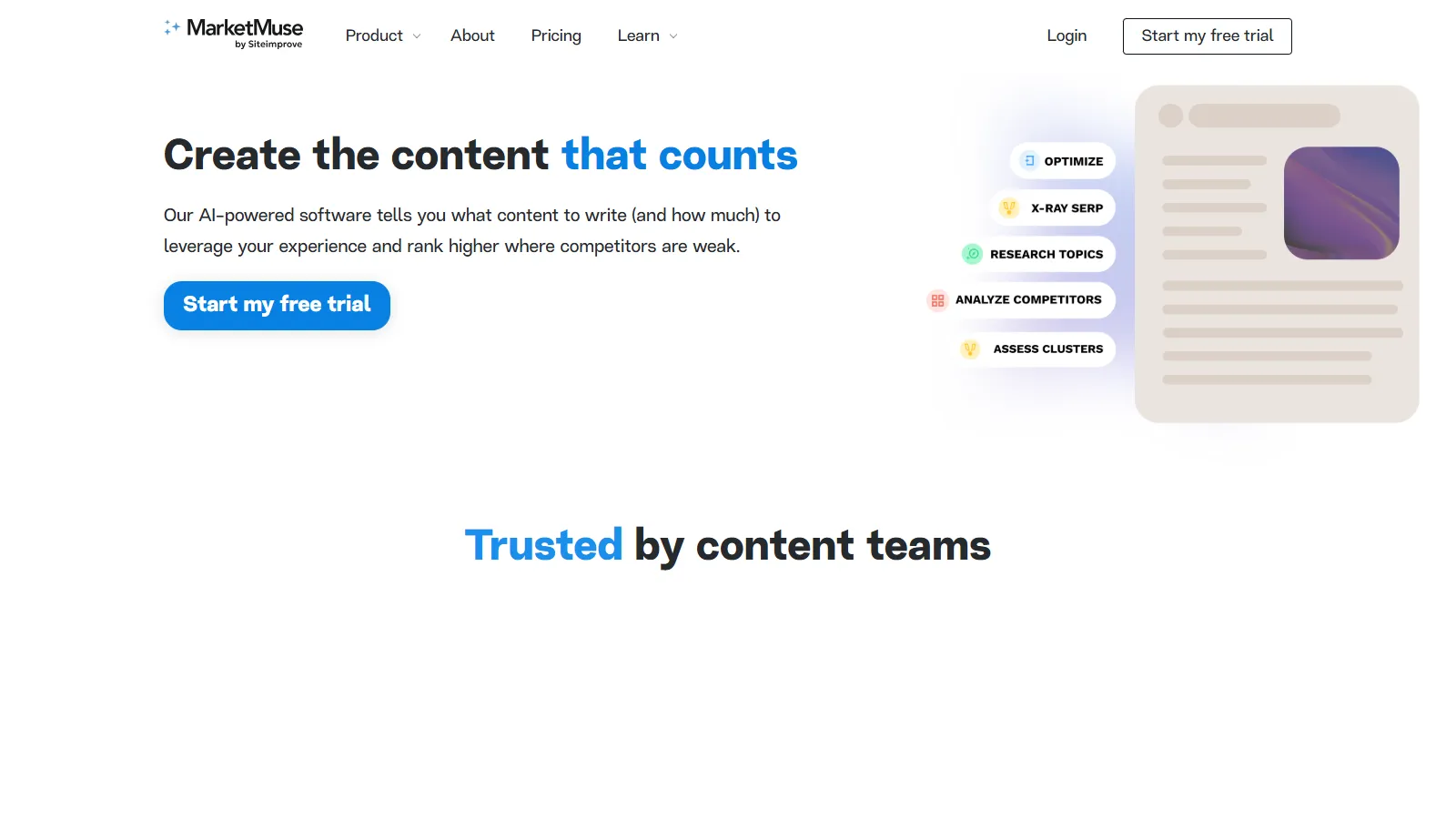
MarketMuse approaches clustering through the lens of topic authority. Instead of just grouping keywords, it models your site's authority in each topic cluster and compares it to competitors. The platform tells you which clusters to prioritize based on where you can realistically compete and where you need more content depth. This strategic layer helps allocate content budget efficiently—building strength in winnable clusters rather than spreading thin across too many topics.
Starting price$149/mo
Strengths
Topic authority scoring prioritizes which clusters to attack
Competitive gap analysis per cluster shows where you're weak
Content planning shows how many articles needed per cluster
Cluster difficulty scoring helps set realistic expectations
Research mode for deep topic exploration
Limitations
Premium pricing at $149+/month
Complex interface with steep learning curve
Better for strategy than tactical clustering
Query limits can be restrictive on base plans
Who it's for: Best for content strategists and SEO directors planning quarterly content strategies. If you need to justify content budgets with competitive authority modeling, MarketMuse provides the strategic data layer.
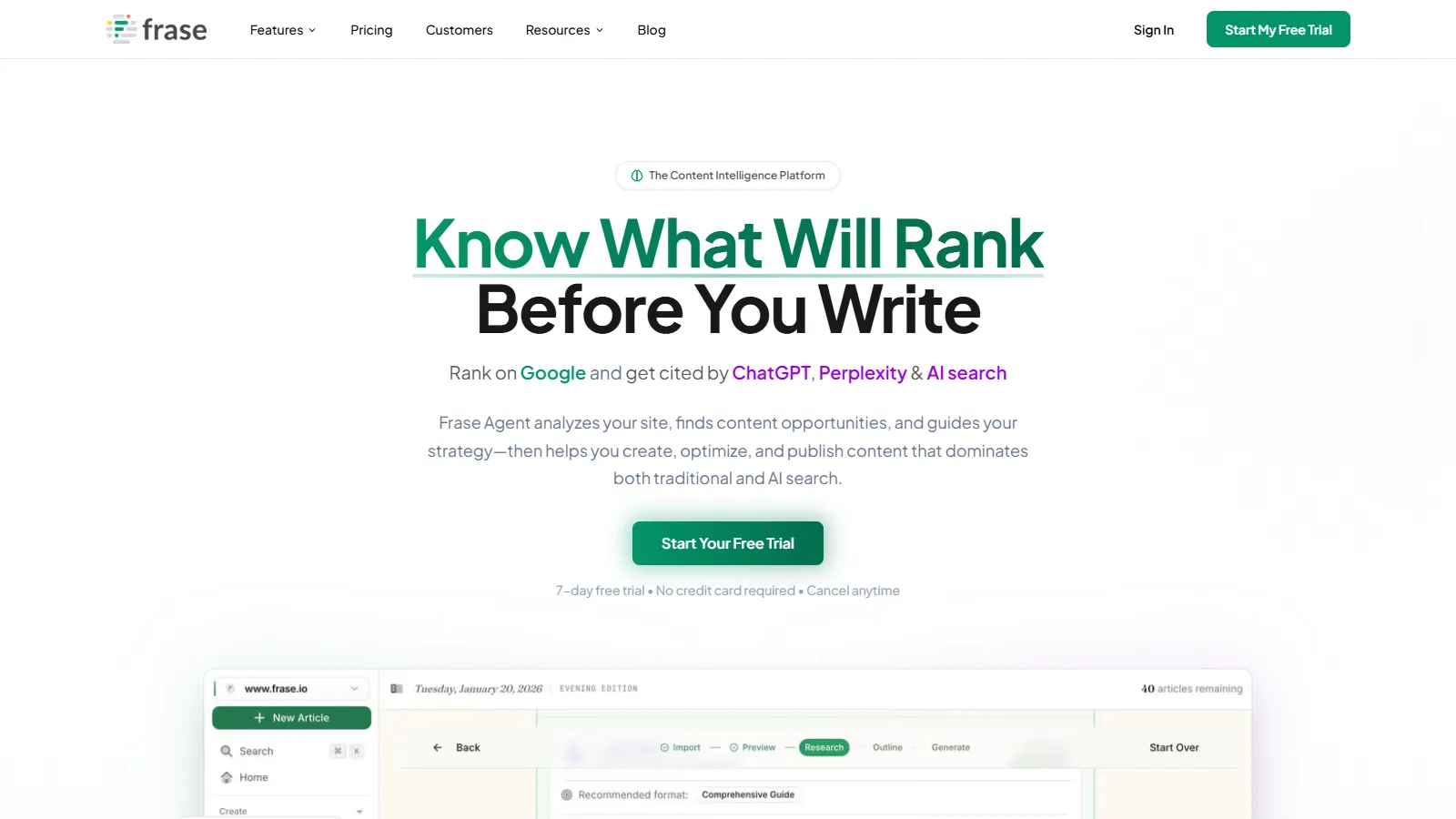
Frase takes a question-first approach to keyword clustering, making it uniquely good at capturing "People Also Ask" clusters. It groups questions by topic, helping you create comprehensive FAQ sections and target featured snippet opportunities. The AI writer integrates directly with question clusters, so you can generate answers to entire topic groups in one session. For beginners, Frase's simple three-step workflow (research → outline → write) makes clustering approachable without overwhelming options.
Starting price$15/mo
Strengths
Best at clustering "People Also Ask" questions by topic
Simple three-step workflow perfect for beginners
AI writer creates answers to clustered questions
Affordable at $15/month for solo creators
SERP analysis shows which clusters need comprehensive coverage
Limitations
Not true AI clustering—more manual grouping
Limited to question-based content strategies
No bulk processing for large keyword lists
Export options are basic CSV only
Who it's for: Perfect for bloggers and content creators focused on question-based content and featured snippets. If your strategy is answering customer questions comprehensively, Frase's question clustering is unmatched.
Topic is the researcher's tool—built for people who want full control over how keywords are clustered. Unlike AI-first tools that automate clustering, Topic provides a research workspace where you manually organize keywords into logical groups. This hands-on approach works well for complex B2B topics where AI clustering misses nuanced intent differences. The platform shines in collaborative research mode, where teams can comment on keyword assignments and build shared understanding of content strategy.
Starting price$99/mo
Strengths
Full control over cluster assignments
Collaborative research mode for team strategy
Note-taking and annotation per keyword
Export to various formats including mind maps
Good for complex B2B topics needing human judgment
Limitations
No AI clustering automation
Time-consuming for large keyword lists
Expensive at $99/month for manual tool
No content brief generation
Requires more SEO expertise than automated tools
Who it's for: Best for experienced SEO strategists and content planners who prefer manual control over automation. If you're researching complex topics where AI gets it wrong, Topic provides the research workspace you need.
We tested each platform with real keyword lists from 100-10,000 keywords across different industries, measuring accuracy, speed, and output quality.
Clustering Accuracy (30%) — How well AI groups keywords by actual search intent vs. just lexical similarity.
SERP Integration (25%) — Whether clusters consider actual ranking URLs and SERP features.
Output Quality (20%) — Usefulness of content briefs, topic maps, and export formats.
Scale & Speed (15%) — Ability to process large keyword lists (5,000+) efficiently.
Workflow Integration (10%) — How well it fits into existing content planning workflows.
How to Choose
Choose Keyword Insights if you need best accuracy and SERP-based clustering.
Choose Surfer SEO if you need content optimization + clustering together.
Choose WriterZen if you need budget under $30/month.
Choose SEO Scout if you need programmatic SEO at scale.
Choose Clearscope if you need enterprise content teams.
Choose MarketMuse if you need strategic authority planning.
Choose Frase if you need question-based content and snippets.
Choose Topic if you need manual control over clusters.
Common Questions
Keyword clustering groups related keywords by search intent so you can target multiple keywords with a single comprehensive page instead of creating thin content for each variation. This builds topical authority, reduces keyword cannibalization, and aligns with how Google understands topics in 2026.
AI clustering is faster and better for most use cases, especially with 500+ keywords. Manual clustering makes sense for complex B2B topics where AI misses subtle intent differences, or when you're planning strategic pillar content that needs human judgment.
Typically 10-100 keywords per cluster. Smaller clusters (10-30 keywords) work for specific topics, while larger clusters (50-100+) suit comprehensive pillar pages. The key is that all keywords in a cluster share search intent—they should be answerable by the same content.
Not usually. If keywords share SERPs (similar ranking URLs), they belong in one cluster on one page. For example, "best CRM" and "top CRM software" share intent. But "best CRM for small business" vs. "best CRM for enterprise" need separate pages despite similarity.
Yes! Cluster your existing URLs' target keywords to find cannibalization (multiple pages competing for the same cluster) and content gaps (missing clusters competitors own). This is one of the fastest SEO wins—consolidating or differentiating existing content.