
Key Takeaways
- •Different goals: Classic SEO drives clicks; AI search drives citations
- •Complementary tactics: Most optimizations help both channels
- •Structure is key: Clear, extractable content wins in AI search
- •Don't choose: Optimize for both with a unified approach
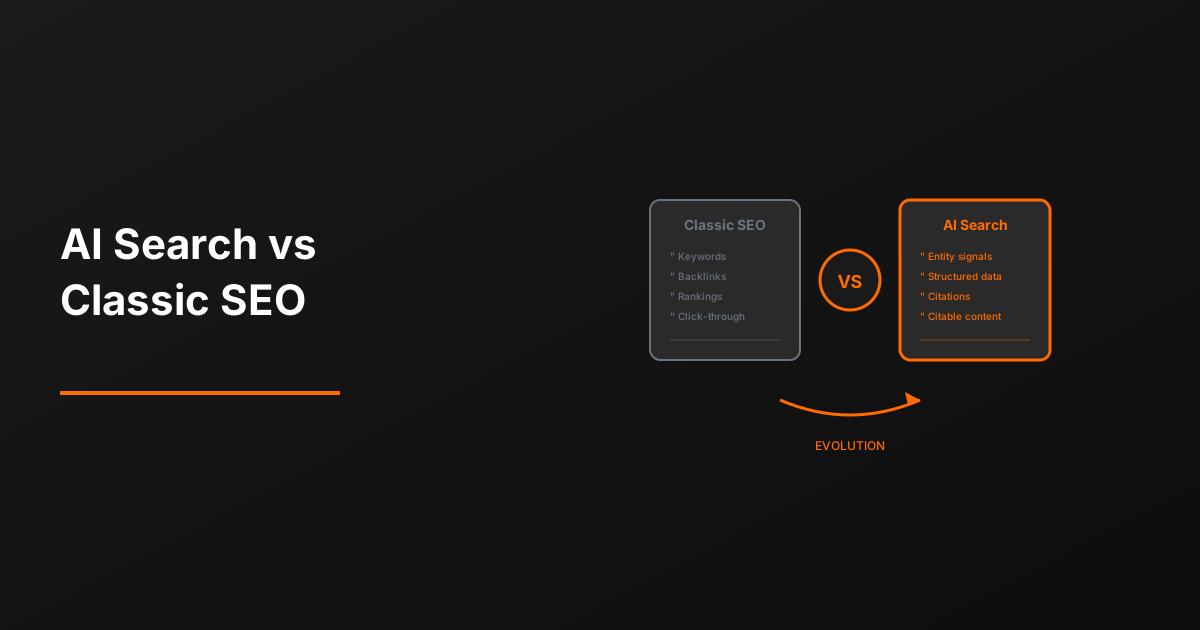
Classic SEO and AI search optimization (GEO) have different primary goals, but the tactics overlap significantly. This guide explains the key differences and shows how to win in both channels with your best-of pages.
Core Differences#
| Aspect | Classic SEO | AI Search (GEO) | |
|---|---|---|---|
| Primary goal | Rank in SERPs | Get cited in AI answers | |
| User behavior | Clicks through to page | Reads answer directly | |
| Success metric | Traffic, rankings | Citations, mentions | |
| Content format | Optimized for engagement | Optimized for extraction | |
| Keywords | Exact match + variations | Semantic understanding | |
| Updates | Important for freshness | Critical for accuracy |
Classic SEO Focus Areas#
Traditional SEO optimizes for ranking factors and user engagement:
- Title tags and meta descriptions for click-through
- Header structure (H1, H2, H3) with keywords
- Page speed and Core Web Vitals
- Backlinks from authoritative sites
- User engagement signals (time on page, bounce rate)
- Mobile-first design
AI Search Focus Areas#
GEO optimizes for AI understanding and citation:
- Clear, extractable answers in the first paragraph
- Structured data (Schema.org markup)
- Explicit methodology and evidence
- Consistent entity naming
- FAQ sections with direct answers
- Recent update dates for freshness
Where They Overlap#
Good news: most quality signals help both channels:
Optimizing Best-Of Pages for Both#
- 1Lead with the answerState your top pick in the first paragraph. This wins featured snippets and AI citations.
- 2Use comparison tablesTables rank well in classic SEO and are easily parsed by AI.
- 3Add FAQ sectionsTarget "People Also Ask" for SEO; provide Q&A format for AI.
- 4Include schema markupItemList and FAQ schemas help both search engines and AI.
- 5Update regularlyShow last-updated dates prominently. Fresh content wins everywhere.
- 6Build topical authorityMultiple related pages help SEO rankings and AI trust.
Unique Considerations#
Classic SEO Only
- Click-worthy title tags
- Compelling meta descriptions
- Internal link anchor optimization
- Image alt text for image search
AI Search Only
- Entity name consistency
- Explicit methodology sections
- Evidence citations
- Scannable summaries for extraction
The 80/20 Approach
Measuring Success in Both Channels#
| Channel | Primary Metrics | Tools | |
|---|---|---|---|
| Classic SEO | Rankings, traffic, CTR | Search Console, Ahrefs, SEMrush | |
| AI Search | Citations, AI traffic referrals | Perplexity testing, AI domain referrals | |
| Both | Conversions, engagement | Analytics, conversion tracking |
Frequently Asked Questions#
Will AI search kill classic SEO?
No. AI search is additive, not replacement. Users still click through for details, comparisons, and transactions. Both channels will coexist.
Should I prioritize one over the other?
Prioritize classic SEO if you need traffic now. Add AI optimization as a layer—most tactics help both. Don't sacrifice SEO fundamentals for AI-only plays.
How do I track AI search performance?
Monitor referral traffic from AI domains (ai.google.com, perplexity.ai). Test queries in AI tools to see if your content is cited. Some SEO tools are adding AI tracking.

Product Manager at BestPage. Pioneer in AEO research since 2024, exploring the convergence of SEO and GEO (Generative Engine Optimization). Led multiple AI-powered content optimization projects that achieved 300%+ citation increases in ChatGPT and Perplexity.