
Key Takeaways
- •GEO = Generative Engine Optimization: Optimizing content for AI-powered search, not just Google
- •LLMs need explicit structure: Clear criteria, rankings, and evidence in machine-readable format
- •Best-of pages are ideal for GEO: Their ranked format matches how AI answers comparison queries
- •Focus on extractability: Can AI pull a complete answer from your page?
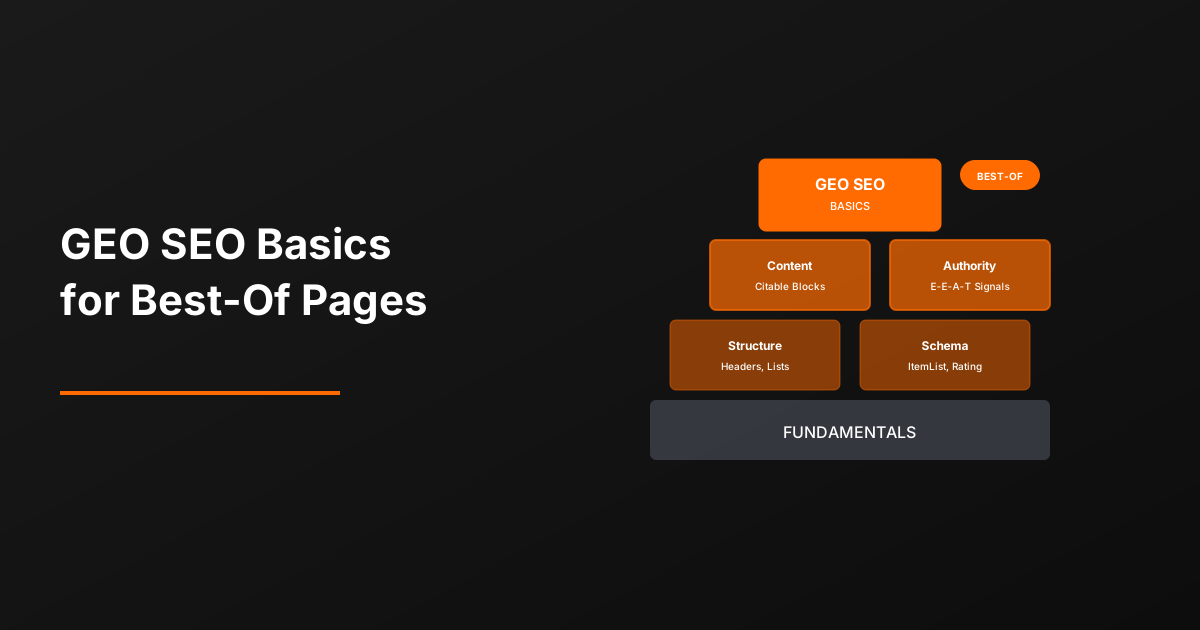
GEO (Generative Engine Optimization) is the practice of optimizing content so AI systems can understand, extract, and cite it. For best-of pages, this means structuring your rankings so LLMs can accurately represent your recommendations in their responses.
What is GEO SEO?#
Traditional SEO focuses on ranking in search results. GEO focuses on being cited in AI-generated answers. Both matter, but they require slightly different approaches.
| Aspect | Traditional SEO | GEO SEO | |
|---|---|---|---|
| Goal | Rank in SERPs | Get cited by AI | |
| Format | Optimized for clicks | Optimized for extraction | |
| Content | Keywords + engagement | Structure + clarity | |
| Success metric | Rankings, traffic | AI citations, mentions |
Formatting Best-Of Pages for LLMs#
LLMs parse content differently than humans. They excel at understanding structured, explicit information but struggle with implied context.
- 1State criteria explicitlyDon't just rank—explain why. "Best for speed" or "Best value under $50."
- 2Use consistent formattingEvery product section should follow the same template (Name, Score, Pros, Cons, Verdict).
- 3Add a quick-reference summaryA bulleted list of winners at the top that AI can extract directly.
- 4Include evidenceSpecific numbers, test results, or quotes that support your rankings.
- 5Mark the winner clearlyUse explicit language: "Our top pick is..." not just listing first.
Criteria and Evidence#
AI systems are trained to value evidence-backed claims. Vague superlatives ("the best ever") are less useful than specific claims ("40% faster in our tests").
Strong Evidence
- Specific test results with numbers
- Comparison benchmarks
- User survey data
- Expert quotes with attribution
- Before/after measurements
Weak Evidence
- Vague superlatives
- "Many users say..."
- Unattributed claims
- Manufacturer marketing copy
- Outdated statistics
The Extraction Test
GEO-Optimized Best-Of Template#
# Best [Category] in [Year]

## Quick Picks
- **Best Overall:** [Product A] - [one-line reason]
- **Best Value:** [Product B] - [one-line reason]
- **Best for [Use Case]:** [Product C] - [one-line reason]

## How We Tested
[2-3 sentences on methodology, criteria, and testing duration]

## 1. [Product A] - Best Overall
**Score:** 9.2/10
**Price:** $XX/month
**Best for:** [specific use case]

### Pros
- [Specific pro with evidence]
- [Specific pro with evidence]

### Cons
- [Honest limitation]

### Verdict
[2-3 sentence summary of why it's #1]

[Repeat for each product...]

## Comparison Table
| Product | Score | Price | Best For |
|---------|-------|-------|----------|
| A       | 9.2   | $XX   | Overall  |

## FAQ
[Common questions with direct answers]
Frequently Asked Questions#
Is GEO SEO replacing traditional SEO?
No, they complement each other. Traditional SEO drives traffic; GEO ensures AI systems accurately represent your content. Most pages should optimize for both.
How do I know if my page is GEO-optimized?
Test by asking ChatGPT or Perplexity a question your page answers. If the AI provides accurate information matching your content, your GEO is working.

Product Manager at BestPage. Pioneer in AEO research since 2024, exploring the convergence of SEO and GEO (Generative Engine Optimization). Led multiple AI-powered content optimization projects that achieved 300%+ citation increases in ChatGPT and Perplexity.