
Key Takeaways
- •Topical authority = AI trust: Comprehensive topic coverage signals expertise to AI systems
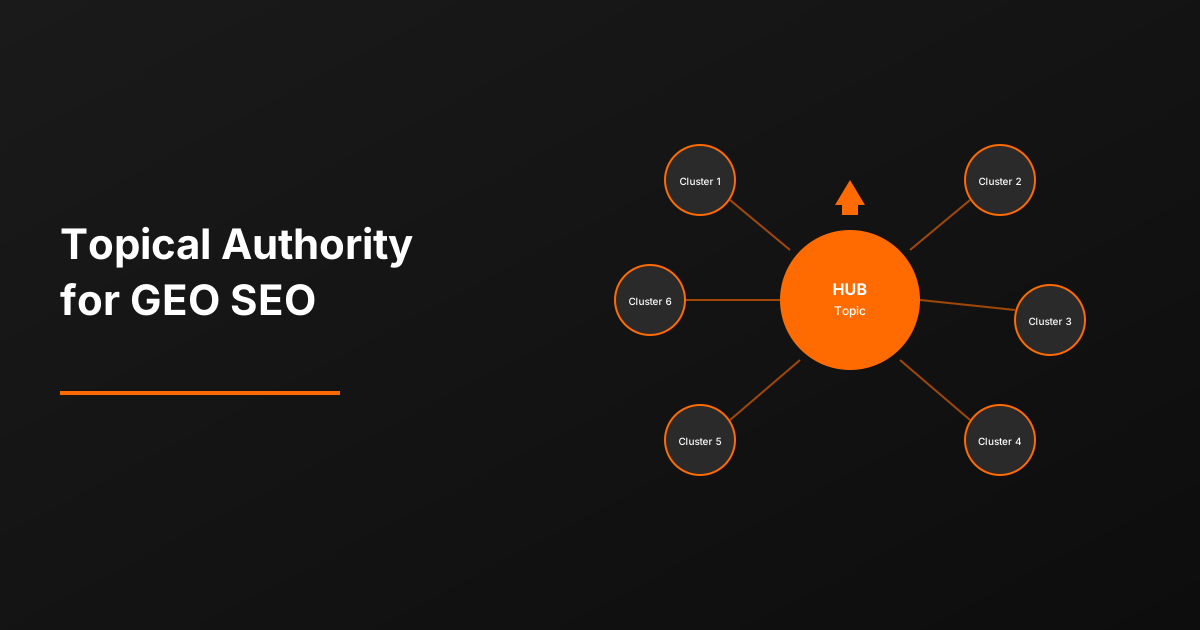
- •Hub-and-spoke model: Central best-of pages supported by detailed guides
- •Internal linking: Connects related content and distributes authority
- •Cross-citation: Covering a topic deeply increases citations across related queries
Topical authority is your website's expertise in a specific subject area. For GEO SEO, building topical authority means AI systems trust your content enough to cite it across multiple related queries—not just one page for one keyword.
Why Topical Authority Matters for AI#
AI systems are trained to identify authoritative sources. When you comprehensively cover a topic with multiple interlinked pieces, AI recognizes your site as a go-to resource.
- Single-page sites rarely get cited—depth matters
- AI cross-references your content across queries
- Comprehensive coverage signals expertise
- Internal links help AI understand topic relationships
The Hub-and-Spoke Content Model#
Structure your content with pillar pages (hubs) supported by detailed articles (spokes):
Hub Pages (Pillars)
- Best-of comparison pages
- Ultimate guides
- Category overview pages
- Target high-volume keywords
Spoke Pages (Clusters)
- Individual product reviews
- How-to tutorials
- Comparison articles (A vs B)
- Use case guides
Example Content Structure#
For a site covering project management tools:
HUB: Best Project Management Tools 2026
├── SPOKE: Notion Review (in-depth)
├── SPOKE: Asana Review (in-depth)
├── SPOKE: Monday.com Review (in-depth)
├── SPOKE: Notion vs Asana (comparison)
├── SPOKE: Best PM Tools for Small Teams
├── SPOKE: Best Free PM Tools
├── SPOKE: How to Choose a PM Tool (guide)
└── SPOKE: PM Tool Pricing Comparison

Each spoke links back to the hub.
The hub links to each relevant spoke.
Strategic Internal Linking#
Internal links distribute authority and help AI understand content relationships:
- 1Hub → SpokesLink from best-of pages to individual reviews for "see full review"
- 2Spokes → HubLink from reviews back to comparison page "see how it compares"
- 3Spokes → SpokesLink between related articles "compare with [competitor]"
- 4Contextual anchorsUse descriptive anchor text that explains the relationship
The 3-Click Rule
Building Authority Over Time#
- Start with the hub page (best-of comparison)
- Add 3-5 individual reviews immediately
- Create comparison articles (A vs B)
- Add use-case guides (best for X, best for Y)
- Update all content quarterly
- Add new spoke pages as products launch
- Audit and refresh internal links regularly
Measuring Topical Authority#
Track these signals to measure your authority growth:
- Rankings for multiple related keywords (not just one)
- Featured snippet wins across the topic cluster
- AI citations in Perplexity, ChatGPT, AI Overviews
- Organic traffic growth to the entire cluster
- Backlinks from other sites in the niche
Frequently Asked Questions#
How many pages do I need for topical authority?
There's no magic number. Aim for comprehensive coverage of your niche. A focused topic might need 10-15 pages; a broad category might need 50+. Quality matters more than quantity.
Should I cover topics outside my niche?
Focus on depth over breadth. Covering unrelated topics dilutes your authority. Only expand to adjacent topics that reinforce your core expertise.

Product Manager at BestPage. Pioneer in AEO research since 2024, exploring the convergence of SEO and GEO (Generative Engine Optimization). Led multiple AI-powered content optimization projects that achieved 300%+ citation increases in ChatGPT and Perplexity.