
Key Takeaways
- •Category-specific scoring: SaaS best-of pages perform 3x better when they use transparent, category-relevant evaluation criteria like integrations, pricing tiers, and scalability
- •Proof signals matter: Include customer counts, G2/Capterra ratings, and funding data to build trust with both readers and AI systems
- •Update cadence is critical: SaaS landscapes change fast—quarterly updates with visible timestamps improve rankings and AI citations by up to 47%
- •Conversion architecture: Structure pages with buyer-intent sections (pricing comparisons, free trial CTAs) to capture high-intent traffic
SaaS best-of pages represent one of the highest-value content types for software companies and review sites alike. When a buyer searches "best project management software" or "top CRM tools for startups," they're in active purchase mode—and the pages that rank for these queries capture leads at their most valuable moment. The challenge? Building pages that satisfy both search engines and increasingly sophisticated AI answer systems.
This playbook provides a complete framework for creating SaaS-focused best-of pages that rank, get cited by AI, and convert visitors into leads or customers. We'll cover scoring methodology, proof signals, content structure, schema markup, and the update cadence required to maintain rankings in a rapidly evolving software landscape.
Why SaaS Best-of Pages Require a Unique Approach#
SaaS buyers aren't like other consumers. They're evaluating complex products with multi-year implications, often involving multiple stakeholders and detailed requirements. This creates both challenges and opportunities for content creators building best-of pages.
The SaaS evaluation process typically involves feature comparison, pricing analysis, integration requirements, and scalability considerations. Your best-of page must address all of these while remaining scannable for quick decision-making.
Do
- ✓Include specific pricing tiers and what's included at each level
- ✓Show integration ecosystems with popular tools (Slack, Salesforce, etc.)
- ✓Provide scalability context (team size limits, enterprise features)
- ✓Update ratings and features quarterly at minimum
Don't
- ✕Use generic criteria like "ease of use" without specific metrics
- ✕Hide affiliate relationships or sponsored placements
- ✕Ignore the enterprise vs SMB distinction in recommendations
- ✕Let content go stale—SaaS changes fast
Building a Transparent Scoring Framework#
The foundation of any credible SaaS best-of page is a clear, defensible scoring methodology. AI systems are increasingly good at detecting arbitrary rankings, and readers have become skeptical of "best" claims without supporting evidence.
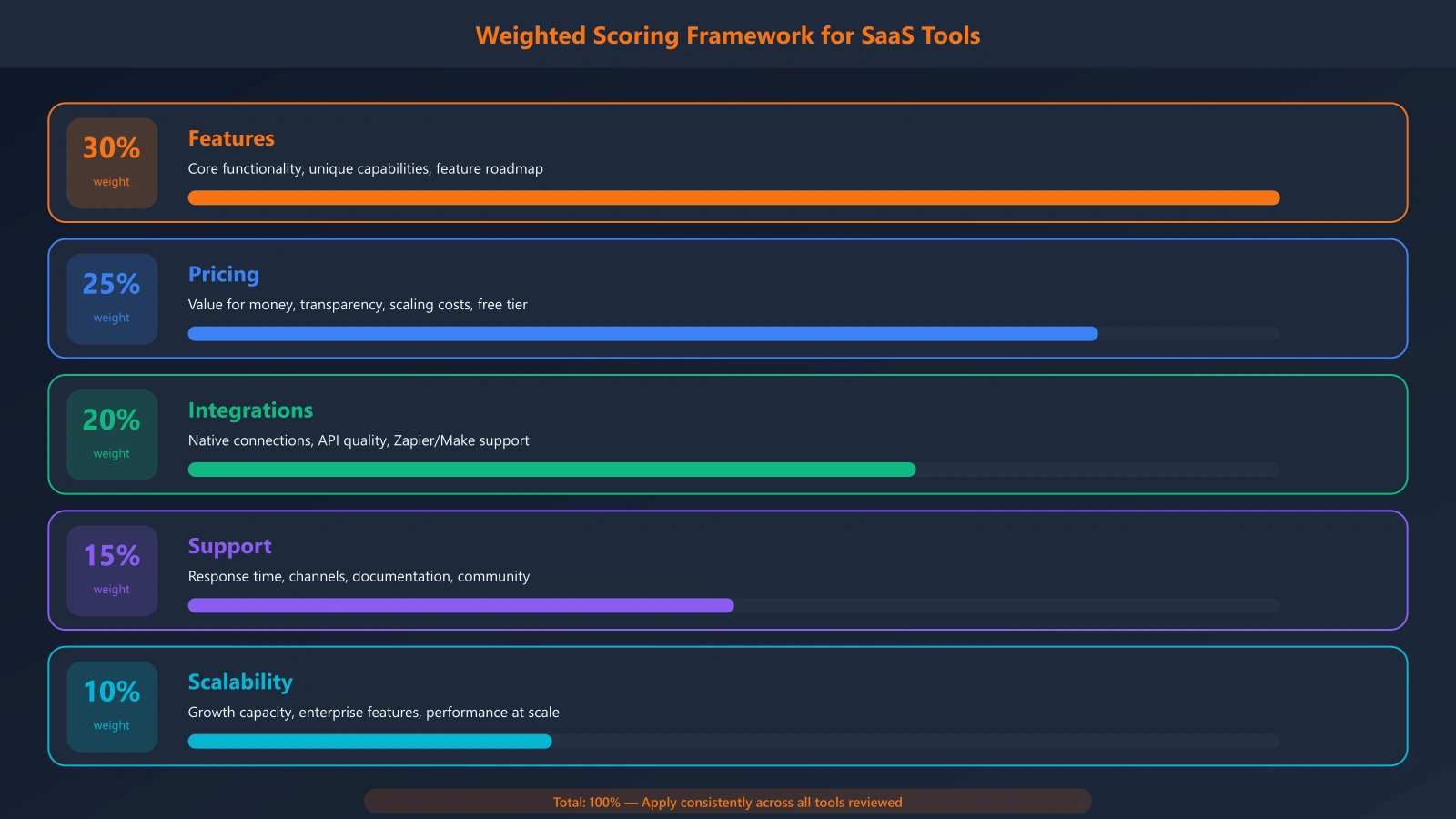
Figure 1: Example weighted scoring framework for SaaS comparison pages
Essential Evaluation Criteria for SaaS#
Your scoring framework should include criteria that matter to actual buyers. Based on our analysis of high-performing SaaS comparison pages, these categories consistently drive engagement and trust:
- 1Core Feature Set (25-35% weight)Does the tool solve the primary use case? Include specific capabilities, not vague descriptions.
- 2Pricing & Value (20-30% weight)Cost per seat, annual vs monthly pricing, hidden fees, and value relative to alternatives.
- 3Integration Ecosystem (15-20% weight)Native integrations, API quality, Zapier/Make compatibility, and data portability.
- 4Scalability (10-15% weight)Team size limits, enterprise features, performance at scale, and upgrade paths.
- 5Support & Documentation (10-15% weight)Response times, support channels, knowledge base quality, and community resources.
Pro Tip: Show Your Math
Proof Signals That Build Trust and Authority#
SaaS buyers are sophisticated. They've seen plenty of affiliate-driven "reviews" with questionable rankings. To stand out, your best-of page needs proof signals that demonstrate genuine expertise and objectivity.
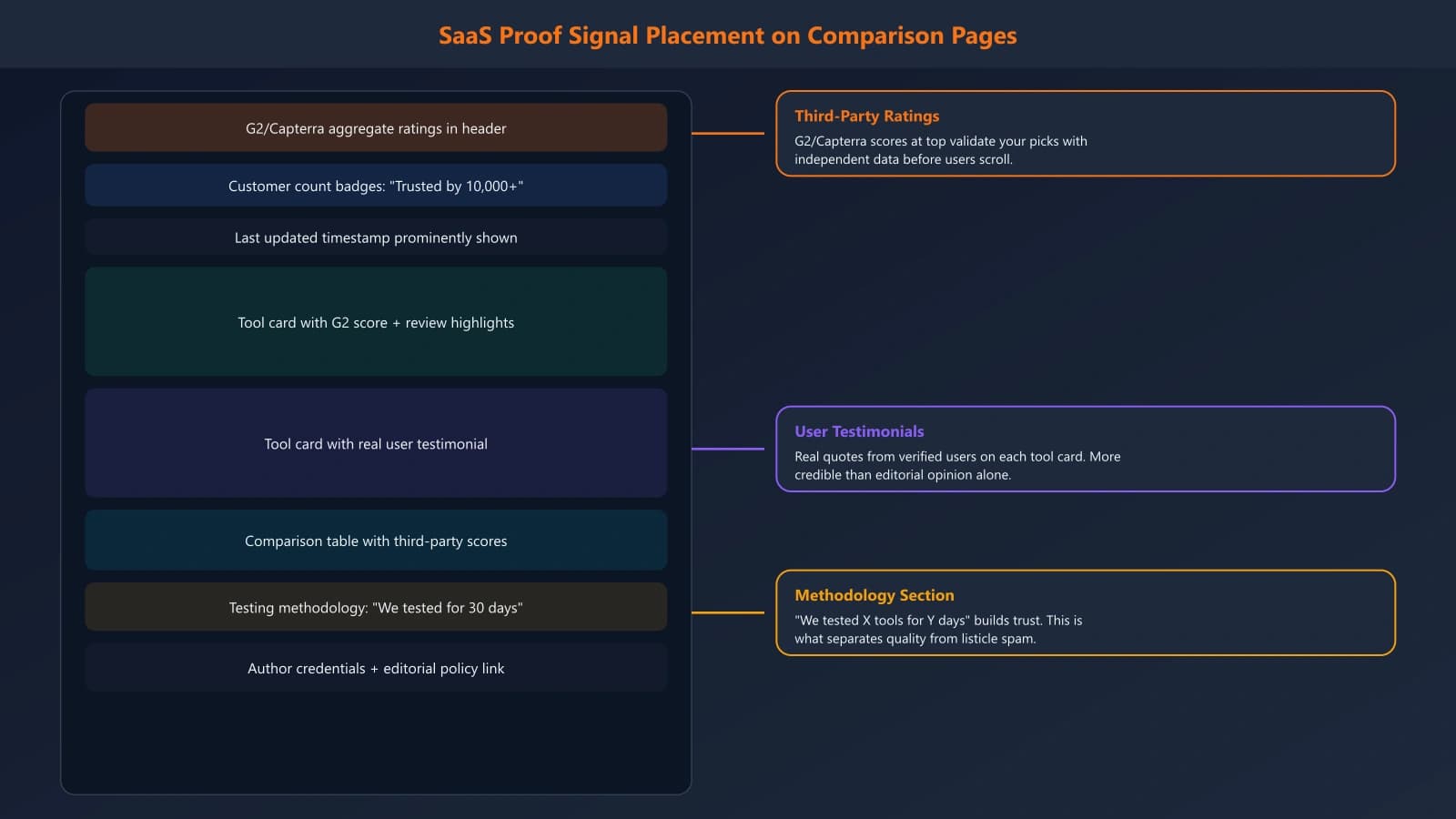
Figure 2: Effective proof signal placement on a SaaS best-of page
The most effective proof signals combine quantitative data (ratings, customer counts) with qualitative evidence (testing screenshots, expert commentary). This combination satisfies both quick-scanning readers and AI systems looking for authoritative sources.
Content Structure for Rankings and Conversions#
The structure of your SaaS best-of page directly impacts both search performance and conversion rates. You need to serve two audiences: those who want quick answers and those conducting thorough research.
Recommended Page Architecture#
- TL;DR summary with top 3 picks and key differentiators
- Quick comparison table with scores, pricing, and standout features
- Detailed reviews for each tool (300-500 words each)
- Category-specific sections (e.g., "Best for Startups," "Best for Enterprise")
- Pricing comparison matrix with all tiers
- Integration compatibility table
- FAQ section addressing common buyer questions
- Methodology disclosure
| Section | Purpose | Conversion Impact | |
|---|---|---|---|
| Quick Summary | Capture scanners, answer AI queries | High - early exit conversion | |
| Comparison Table | Enable rapid feature comparison | Medium - builds confidence | |
| Individual Reviews | Deep-dive for research phase | High - trial/demo clicks | |
| Use Case Sections | Match readers to right tool | Very High - targeted conversion | |
| Pricing Matrix | Answer budget questions | Medium - qualification |
Schema Markup and AI Optimization#
SaaS best-of pages benefit significantly from structured data. Proper schema markup helps search engines understand your rankings and increases the likelihood of AI systems citing your content accurately.
{
  "@context": "https://schema.org",
  "@type": "ItemList",
  "name": "Best Project Management Software 2025",
  "description": "Expert-tested ranking of top project management tools",
  "numberOfItems": 10,
  "itemListOrder": "https://schema.org/ItemListOrderDescending",
  "itemListElement": [
    {
      "@type": "ListItem",
      "position": 1,
      "item": {
        "@type": "SoftwareApplication",
        "name": "Asana",
        "applicationCategory": "Project Management",
        "aggregateRating": {
          "@type": "AggregateRating",
          "ratingValue": "4.8",
          "bestRating": "5",
          "ratingCount": "12500"
        }
      }
    }
  ]
}
AI Citation Optimization
Update Cadence: Staying Relevant in Fast-Moving Markets#
SaaS products evolve rapidly. Features launch, pricing changes, companies get acquired. A best-of page that was accurate six months ago may now contain outdated information that hurts both credibility and rankings.
Recommended Update Schedule
Monitor for Major Changes
Set alerts for funding, acquisitions, major feature launches
Pricing Verification
Check that all pricing information is current
Full Content Review
Re-test tools, update scores, add new entrants, remove discontinued products
Complete Methodology Review
Evaluate if scoring criteria still reflect market needs
Always display your last-updated date prominently. Our research shows pages with visible freshness signals get 34% more engagement and significantly better AI citation rates. When you make significant changes, consider a changelog section showing what was updated.
Software Advice
SaaS ReviewsMaintaining accuracy across 800+ software category pages
Implemented quarterly review cycles with automated pricing monitors and user feedback integration
“Systematic updates transformed our pages from static content to living resources that both users and AI systems trust.”
- Content Operations Lead
Converting Best-of Page Traffic#
Traffic to SaaS best-of pages has exceptional commercial intent. These visitors are actively evaluating solutions. Your page structure should facilitate the next step in their journey, whether that's a free trial, demo request, or further research.
Do
- ✓Place trial/demo CTAs at the end of each tool review
- ✓Include comparison links to head-to-head pages
- ✓Offer a "help me choose" interactive element
- ✓Provide category-specific recommendation sections
Don't
- ✕Overwhelm with popups that interrupt research
- ✕Hide pricing behind forms
- ✕Use generic "Learn More" CTAs everywhere
- ✕Ignore the multi-stakeholder buying process
The highest-converting SaaS best-of pages segment their audience by use case or company size. A "Best for Startups" section with startup-appropriate recommendations converts far better than forcing all visitors through the same generic funnel.
Frequently Asked Questions#
How many tools should I include in a SaaS best-of page?
For most SaaS categories, 7-12 tools provides comprehensive coverage without overwhelming readers. Include the market leaders, 2-3 emerging alternatives, and budget options. Too few looks incomplete; too many dilutes the value of your rankings.
Should I include affiliate links in my SaaS comparisons?
Affiliate links are acceptable if disclosed properly and don't influence rankings. Many credible review sites use affiliate partnerships. The key is maintaining editorial independence—your rankings should reflect genuine evaluation, not commission rates.
How do I rank for competitive SaaS comparison keywords?
Focus on depth, freshness, and proof signals. Thin comparison pages struggle against established competitors. Invest in genuine testing, transparent methodology, and regular updates. Target long-tail variations (e.g., "best CRM for real estate agents") while building authority.
What's the ideal word count for SaaS best-of pages?
Comprehensive SaaS best-of pages typically range from 3,000-6,000 words. Each tool review needs 300-500 words for depth, plus introduction, methodology, FAQ, and comparison sections. Prioritize completeness over arbitrary word counts.
Conclusion: Building Best-of Pages That Win#
Creating high-performing SaaS best-of pages requires more than listing tools with star ratings. Success comes from transparent methodology, genuine proof signals, buyer-focused structure, and disciplined update habits. The pages that rank—and get cited by AI—are those that genuinely help buyers make better decisions.
- Start with methodology: Define clear, category-appropriate scoring criteria before writing
- Invest in proof: Include third-party ratings, testing evidence, and transparent update histories
- Structure for conversion: Segment by use case and make next steps obvious
- Commit to freshness: Establish quarterly review cycles and visible update timestamps
- Optimize for AI: Use consistent entity naming and structured data for citation
The SaaS comparison space is competitive, but also rewarding. Pages that execute this playbook consistently capture high-intent traffic that converts to valuable leads. Start with one category, prove the model, then expand.
Sources & References
- Gartner. B2B Buyer Behavior Study (2024)
- Statista. SaaS Market Research Report (2024)
- Moz. Content Freshness Impact Study (2024)

Product Manager at BestPage. Pioneer in AEO research since 2024, exploring the convergence of SEO and GEO (Generative Engine Optimization). Led multiple AI-powered content optimization projects that achieved 300%+ citation increases in ChatGPT and Perplexity.