

Key Takeaways
- •Freshness signals matter: Search engines use update recency as a ranking factor; AI systems prefer recently-verified content for citations
- •Schedule beats reactive: Calendar-based review cycles prevent pages from going stale; ad-hoc updates create inconsistent quality
- •Monitor triggers, not everything: You can't watch every change—monitor high-impact signals that indicate updates are needed
- •Changelogs build trust: Visible update history shows active maintenance and helps readers understand ranking shifts
Keeping best-of pages updated is often harder than creating them initially. Tools change pricing, release new features, get acquired, or shut down. Reviews accumulate, ratings shift, and competitive landscapes evolve. Without a systematic approach to updates, even excellent content degrades into liability.
This guide provides a framework for maintaining best-of page freshness at scale. We'll cover monitoring systems, update schedules, changelog practices, and the signals that indicate when content needs attention.
Why Freshness Matters#
Content freshness affects rankings, trust, and citation rates. Both search engines and readers evaluate whether your content reflects current reality.
Outdated best-of pages create compounding problems: wrong recommendations damage reader trust, stale signals hurt rankings, and the longer content sits untouched, the more work updates require.
Building Monitoring Systems#
You can't manually check every tool every day. Effective monitoring focuses on high-impact signals that indicate significant changes worth investigating.
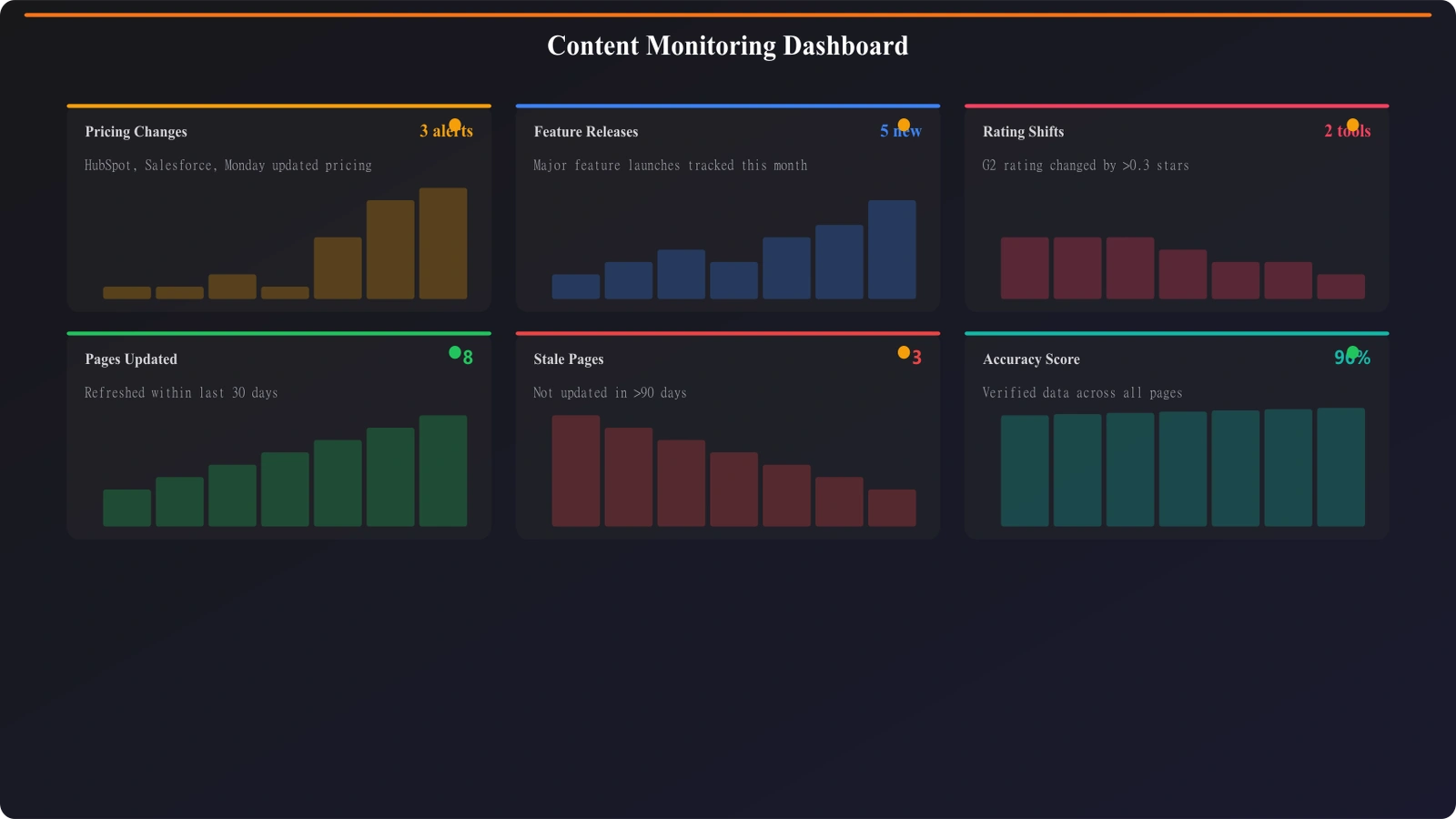
Figure 1: Update monitoring dashboard concept
Alert Prioritization
Creating Update Schedules#
Scheduled reviews ensure consistent freshness across your content library. Different content types need different review cadences.
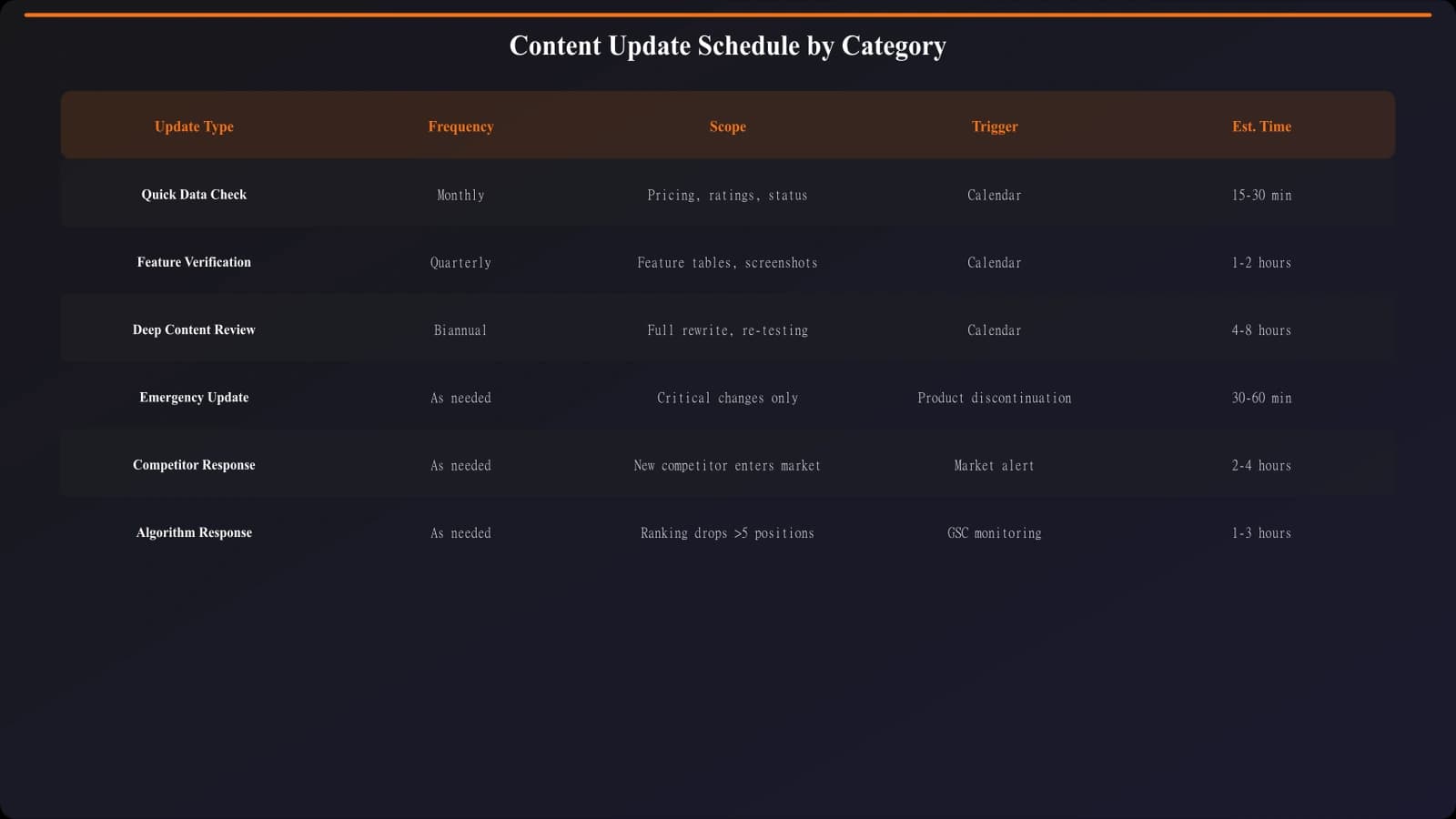
Figure 2: Update schedule framework
| Content Type | Review Cadence | Typical Changes | |
|---|---|---|---|
| SaaS Comparisons | Monthly pricing, quarterly features | Pricing changes, new features, rating shifts | |
| Local/Regional | Quarterly | Business closures, new entrants, review changes | |
| Finance/YMYL | Monthly | Rate changes, regulatory updates, accuracy verification | |
| Evergreen Guides | Bi-annually | Best practices evolution, new tools |
- 1Set calendar remindersBlock review time on your calendar for each content type.
- 2Create update checklistsStandard items to check during each review cycle.
- 3Batch similar contentReview all project management tools together for efficiency.
- 4Track last review dateMaintain a content inventory with review dates for each page.
- 5Escalate overdue contentFlag content past review date for priority attention.
Changelog Best Practices#
Visible changelogs demonstrate active maintenance and help readers understand why rankings may have shifted. They also create accountability that encourages regular updates.
Do
- ✓Note significant ranking changes with brief explanations
- ✓Date-stamp all updates visibly near content top
- ✓Explain methodology changes if scoring approach evolved
- ✓Acknowledge new tools added or removed
Don't
- ✕Silently change rankings without notation
- ✕Hide update history from readers
- ✕Over-explain minor adjustments
- ✕Update dates without actually reviewing content
## Update History

**January 2025:** Full review completed. Tool X moved from #3 to #1
after major feature release. Pricing verified for all tools.

**October 2024:** Added Tool Y to rankings. Removed Tool Z
(discontinued). Minor score adjustments based on updated G2 ratings.

**July 2024:** Initial publication.
Types of Updates#
Not all updates require the same level of effort. Categorize update types to allocate resources appropriately.
| Update Type | Trigger | Effort | Example | |
|---|---|---|---|---|
| Quick Refresh | Date update, minor corrections | Low (15-30 min) | Update "as of" dates, fix typos | |
| Data Update | Pricing/rating changes | Medium (1-2 hours) | Update all pricing, refresh ratings | |
| Content Revision | New tools, methodology change | High (4-8 hours) | Add new entrant, revise scoring | |
| Full Rewrite | Category evolution, major staleness | Very High (1-2 days) | Complete re-evaluation |
Frequently Asked Questions#
How do I handle content I can't keep updated?
Either add prominent "content may be outdated" warnings, redirect to fresher content, or remove it. Stale content with wrong information is worse than no content.
Should I update the date even for minor changes?
Only if the update adds genuine value. Changing dates without substantive review is manipulative and can backfire if detected. "Last reviewed" dates should reflect actual review.
How do I prioritize which pages to update first?
Prioritize by: traffic (high-traffic pages have more impact), staleness (oldest first), and risk (YMYL content, fast-changing categories). Create a scoring system if you have many pages.
What if a ranked tool shuts down?
Remove it promptly with a changelog note. Recommending dead products is a major credibility problem. Check for similar risks (same parent company, funding issues) in other ranked tools.
Conclusion#
Content freshness is a competitive advantage. Systematic monitoring, scheduled reviews, and visible changelogs create best-of pages that stay accurate and continue earning trust over time. The investment in maintenance pays dividends in sustained rankings and reader confidence.
- Build monitoring: Focus on high-impact signals that indicate needed updates
- Schedule reviews: Calendar-based cycles prevent content from going stale
- Publish changelogs: Visible update history demonstrates active maintenance
- Categorize updates: Match effort to update type for efficient resource use
- Retire gracefully: Remove or warn about content you can't maintain
Sources & References
- Moz. Content Freshness as Ranking Factor (2024)
- Nielsen Norman Group. Content Maintenance Best Practices (2024)

Product Manager at BestPage. Pioneer in AEO research since 2024, exploring the convergence of SEO and GEO (Generative Engine Optimization). Led multiple AI-powered content optimization projects that achieved 300%+ citation increases in ChatGPT and Perplexity.