

Key Takeaways
- •Disclosure is legally required: FTC guidelines mandate clear disclosure of material connections—affiliate links, sponsorships, free products
- •Placement matters: Disclosures must be "clear and conspicuous"—near the top of the page, not buried in footers
- •Transparency builds trust: Paradoxically, honest disclosure increases credibility more than hiding relationships
- •Editorial independence is separate: Disclosure doesn't excuse biased rankings—maintain independence regardless of compensation
Disclosure on best-of pages is both a legal requirement and a trust-building opportunity. The FTC requires clear disclosure of "material connections"—financial relationships that might affect your recommendations. Beyond compliance, transparent disclosure signals editorial integrity and actually increases reader trust.
This guide covers what you must disclose, how to disclose it effectively, and how to maintain editorial independence while monetizing content. Whether you use affiliate links, accept sponsored placements, or receive free products for review, these principles ensure compliance and credibility.
What Must Be Disclosed#
The FTC requires disclosure of any "material connection" between you and the products you recommend—anything that might affect the weight readers give your endorsement.
| Connection Type | Disclosure Required? | Example Language | |
|---|---|---|---|
| Affiliate Links | Yes | "We earn commission from links on this page" | |
| Sponsored Placements | Yes | "This post is sponsored by [Company]" | |
| Free Products | Yes | "We received free access for review purposes" | |
| Employment/Ownership | Yes | "The author works for [Company]" | |
| No Relationship | No, but helps | "We have no relationship with these companies" |
Legal Requirement
Disclosure Placement and Visibility#
The FTC requires disclosures to be "clear and conspicuous"—meaning readers must actually notice them before engaging with your recommendations. Buried footer links don't count.
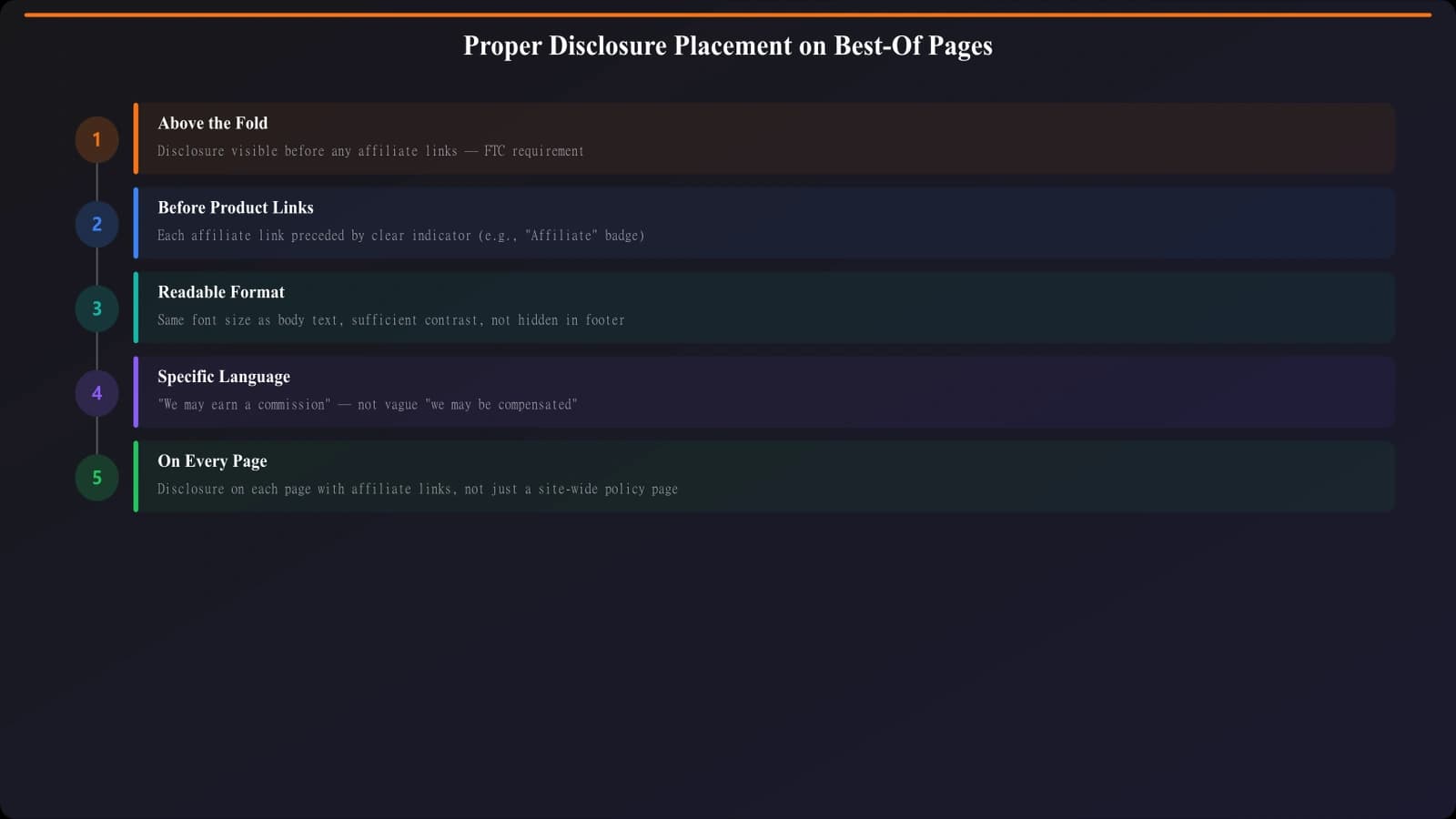
Figure 1: Proper disclosure placement
Do
- ✓Place disclosure near the top of the page, before rankings
- ✓Use readable font size and sufficient contrast
- ✓Use clear language ("we earn commission") not jargon
- ✓Repeat disclosure near individual affiliate links if page is long
Don't
- ✕Bury disclosures in footers or "terms" pages
- ✕Use tiny text or low-contrast colors
- ✕Rely on hover text or expandable sections
- ✕Use vague language like "some links may be affiliate"
Effective Disclosure Language#
Good disclosure is clear, specific, and doesn't require interpretation. Readers should understand immediately what financial relationships exist and how they might affect content.
## Good Disclosure Examples

**Affiliate disclosure:**
"We may earn a commission when you buy through links on this page.
This doesn't affect our rankings, which are based on independent testing."

**Sponsored content:**
"This post is sponsored by [Company]. While they paid for this placement,
our review reflects our honest assessment."

**Free product:**
"We received free access to these tools for review purposes.
Our rankings are based on our evaluation, not the free access."

**Mixed relationships:**
"Some links on this page are affiliate links. We note which tools
we have affiliate relationships with. Rankings are not influenced
by affiliate status."
Maintaining Editorial Independence#
Disclosure doesn't excuse bias. The best practice is maintaining genuine editorial independence—ranking tools based on merit regardless of compensation. This creates sustainable credibility.
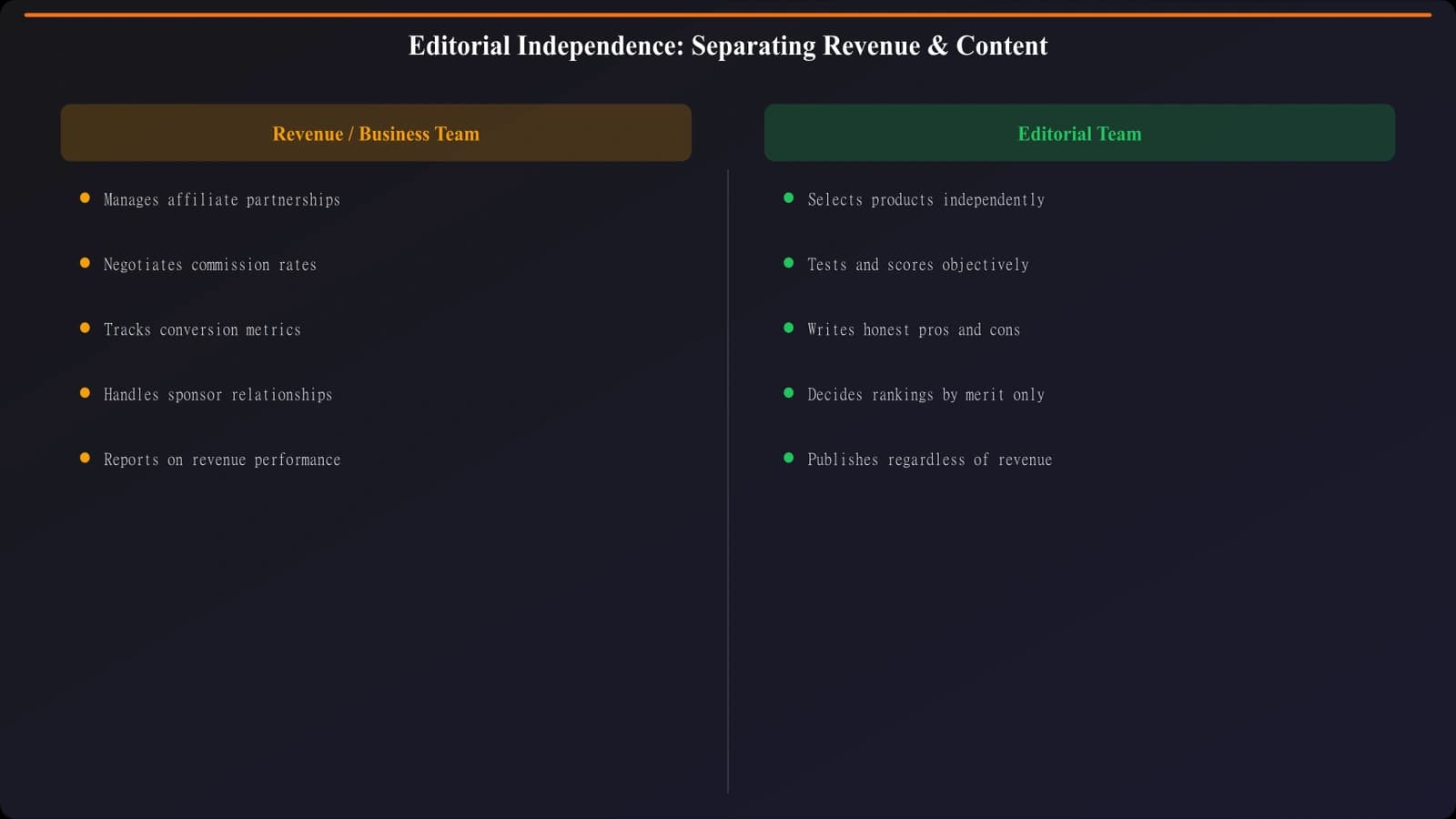
Figure 2: Editorial independence structure
- 1Separate editorial from revenueAffiliate relationships shouldn't influence who does the evaluation or how.
- 2Include non-affiliate toolsRank excellent tools even without affiliate relationships. Exclusion is obvious.
- 3Document your processClear methodology that applies equally to all tools, affiliate or not.
- 4Be willing to rank affiliates lowIf an affiliate product isn't great, rank it accordingly. Integrity matters.
- 5Publish editorial policyMake your independence commitment public and hold yourself to it.
The Long Game
Common Disclosure Mistakes#
Even well-intentioned publishers make disclosure errors. These common mistakes create compliance risk and undermine trust.
Platform-Specific Requirements#
Beyond FTC rules, platforms have their own disclosure requirements. Violating platform rules can result in content removal or account penalties.
| Platform | Key Requirements | Penalty for Violation | |
|---|---|---|---|
| Affiliate disclosure, no hidden links | Ranking penalty, manual action | ||
| YouTube | Paid promotion checkbox, verbal disclosure | Video removal, demonetization | |
| Amazon Associates | Specific disclosure language required | Account termination | |
| Social Media | #ad, #sponsored, platform tools | Post removal, account restrictions |
Frequently Asked Questions#
Do I need to disclose if I don't get paid unless someone buys?
Yes. Affiliate relationships require disclosure regardless of whether you've earned anything yet. The potential for compensation is the material connection.
Can I use an affiliate link if I genuinely think a product is best?
Absolutely. Disclosure doesn't mean you can't recommend products—it means readers understand you have a financial interest. Honest recommendations with disclosure are perfectly appropriate.
What if I disclose but my rankings are still biased?
Disclosure doesn't excuse bias—it's a transparency requirement, not a free pass. Maintain editorial independence and let rankings reflect genuine evaluation.
Do I need separate disclosure for each affiliate link?
For long content, yes—readers shouldn't have to remember a disclosure from the top. A general disclosure early plus brief notes near links is best practice.
Conclusion#
Disclosure is both a legal requirement and a trust-building practice. Clear, prominent disclosure of material connections—combined with genuine editorial independence—creates best-of pages that are compliant, credible, and sustainable. Don't view disclosure as a burden; view it as a foundation for reader trust.
- Disclose everything material: Affiliate links, sponsorships, free products, employment
- Place prominently: Top of page, clear language, readable format
- Maintain independence: Disclosure doesn't excuse bias—rank on merit
- Be specific: Vague disclosure doesn't meet FTC requirements
- Check platform rules: Different platforms have additional requirements
Sources & References
- Federal Trade Commission. FTC Endorsement Guides (2024)
- FTC. Disclosures 101 for Social Media Influencers (2024)

Product Manager at BestPage. Pioneer in AEO research since 2024, exploring the convergence of SEO and GEO (Generative Engine Optimization). Led multiple AI-powered content optimization projects that achieved 300%+ citation increases in ChatGPT and Perplexity.