
EEAT Signals You Can Add Today

Key Takeaways
- •Author Bios: Show credentials, experience, and link to author pages
- •Source Citations: Link to authoritative sources that support your claims
- •Updated Dates: Show when content was last reviewed and updated
- •Trust Elements: About pages, contact info, and editorial standards
Introduction: What is EEAT?#
EEAT stands for Experience, Expertise, Authoritativeness, and Trustworthiness. It's Google's framework for evaluating content quality—particularly for topics that could impact health, finances, or safety (YMYL: Your Money, Your Life).
While EEAT isn't a single ranking factor, it represents the qualities that Google's algorithms and quality raters look for. This guide shows you practical signals you can add to demonstrate EEAT.
The “Experience” Addition
Google added “Experience” to E-A-T in December 2022. It emphasizes first-hand experience—content from people who have actually done the thing they're writing about.
Experience Signals#
Experience is about demonstrating first-hand knowledge. It's the difference between researching a topic and having lived it.
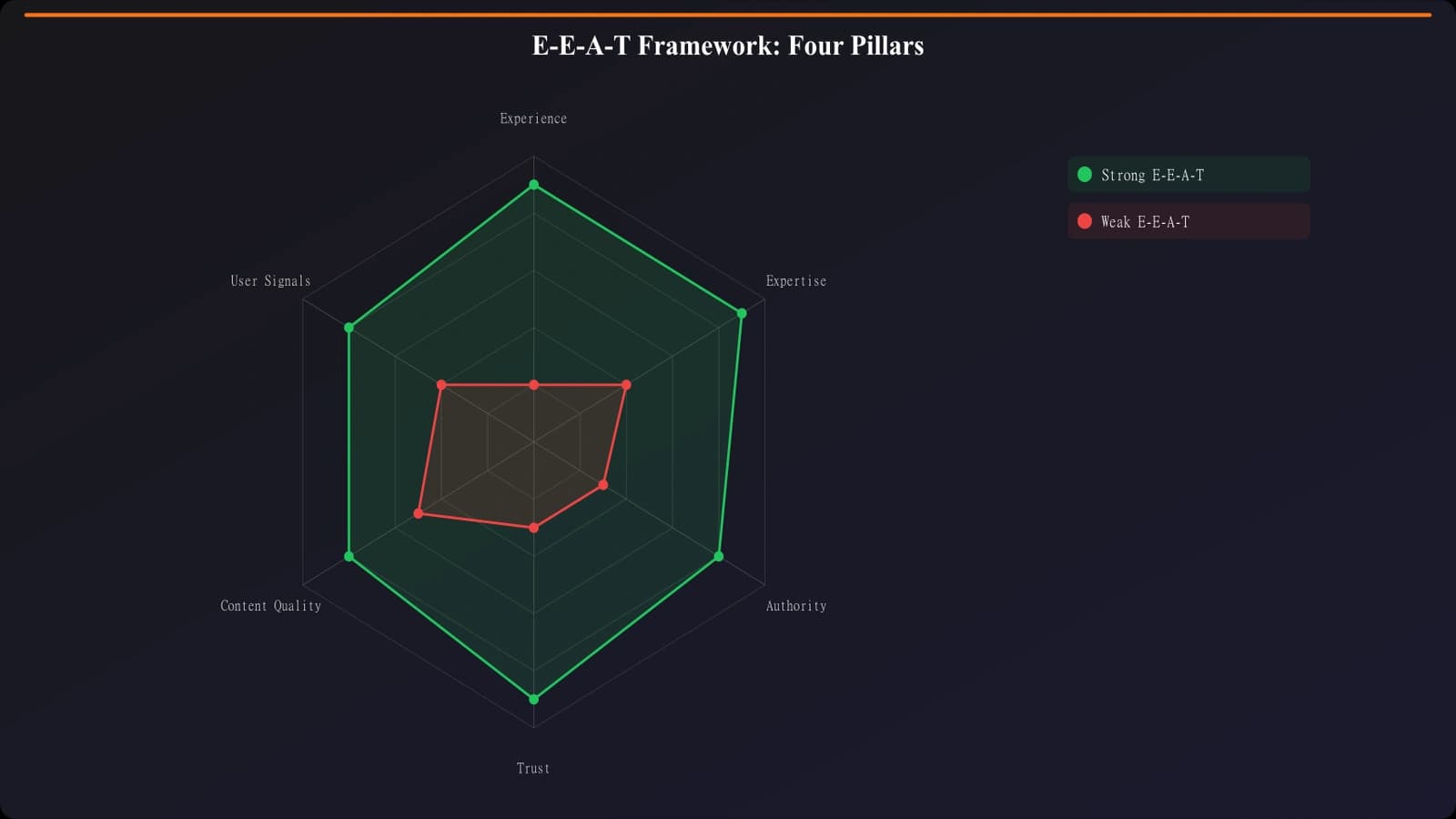
Figure 1: The EEAT framework components
How to Add Experience Signals
- Personal case studies: “When I implemented this strategy, we saw...”
- Original screenshots: Show your own dashboards, results, processes
- First-hand examples: Specific details only someone with experience would know
- Before/after documentation: Show actual results from your work
- Behind-the-scenes insights: Share lessons learned, mistakes made
“Anyone can research what works. Showing what you've personally done—including what didn't work—is what builds trust.”
Expertise Signals#
Expertise is about demonstrating deep knowledge and qualifications on the topic.
Author Bios That Work
Every article should have a visible author with credentials. Include:
- Full name: Real person, not “Admin” or brand name
- Photo: Professional headshot builds trust
- Credentials: Relevant education, certifications, experience
- Experience summary: “15 years in SEO” or “Managed $10M in ad spend”
- Social proof: Links to LinkedIn, published work, speaking engagements
Create Author Pages
Each author should have a dedicated page with:
- Expanded biography
- List of articles by this author
- Links to external credentials
- Contact information (optional)
- Person schema markup
Good Author Bio
- Real name and photo
- Specific credentials
- Years of experience
- Notable achievements
- LinkedIn link
Weak Author Bio
- “Written by Admin”
- No photo or stock photo
- “Marketing enthusiast”
- No verifiable credentials
- No external presence
Authoritativeness Signals#
Authority is about external recognition—being known and cited as a trusted source.
Source Citations
Cite authoritative sources to support your claims:
- Link to primary sources: Studies, official documentation, data sources
- Cite reputable publications: Industry journals, established news outlets
- Quote experts: Include quotes from recognized authorities
- Reference recent data: Current statistics with dates and sources
Becoming a Cited Source
- Original research: Publish studies, surveys, or data analysis
- Expert quotes: Be quoted in other publications
- Industry contributions: Speak at conferences, publish in journals
- Media mentions: Get featured in reputable outlets
Trustworthiness Signals#
Trust is the foundation of EEAT. Users (and Google) need to trust that your content is accurate, honest, and safe.
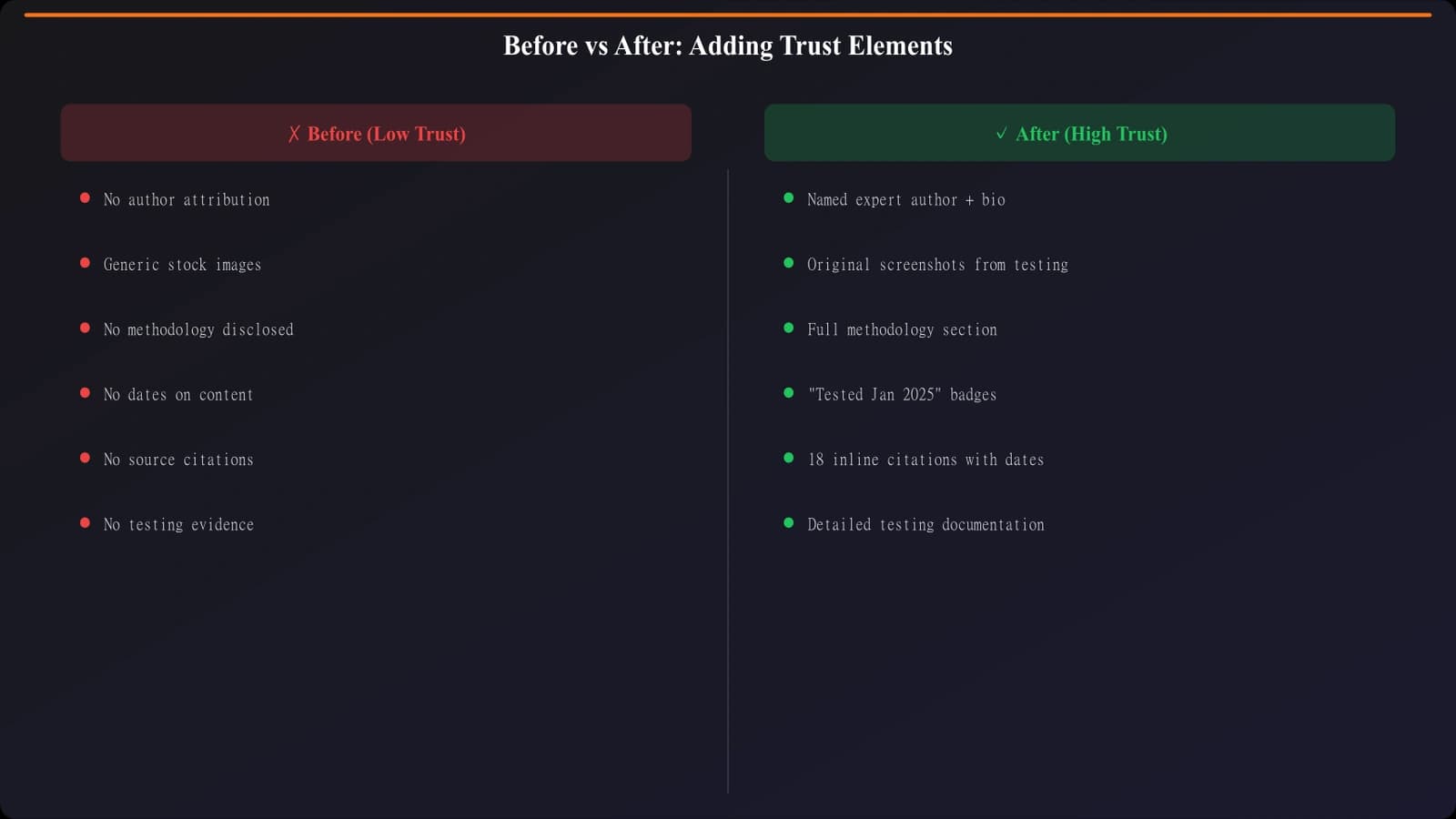
Figure 2: Adding trust signals to your content
Essential Trust Elements
- 1About Page: Who runs this site? What's your mission?
- 2Contact Information: Real ways to reach you (email, address, phone)
- 3Editorial Policy: How do you ensure accuracy? Fact-checking process?
- 4Update Dates: Show when content was published AND last updated
- 5Privacy Policy: Clear policies for user data
- 6Disclosure: Affiliate relationships, sponsored content clearly labeled
Show Update Dates
For content that changes, showing update dates signals that you maintain accuracy:
- “Last updated: January 15, 2026”
- “Originally published: March 10, 2024. Updated for 2026.”
- “This article is reviewed quarterly for accuracy.”
EEAT Implementation Checklist#
Use this checklist to audit and improve your content's EEAT signals:
Quick Wins (Add Today)
- Add author name and photo to all articles
- Include publication and update dates
- Add 3-5 citations to authoritative sources
- Create or improve your About page
- Add contact information to footer/contact page
Medium-Term Improvements
- Create dedicated author pages
- Add first-hand examples and case studies
- Implement author schema markup
- Create an editorial policy page
- Add “reviewed by” for YMYL content
Related Reading#
Explore these related topics: Topical Authority: Build Clusters That Rank, Schema Markup Basics for Blogs, and Content Refresh Workflow.
Conclusion: EEAT is Earned#
EEAT isn't something you claim—it's something you demonstrate. The signals in this guide are ways to make your expertise, experience, and trustworthiness visible to both users and search engines.
Start with the quick wins: author attribution, sources, and update dates. Then build toward stronger signals over time. Every improvement compounds, making your content more competitive in an increasingly quality-focused search landscape.

Product Manager at BestPage. Pioneer in AEO research since 2024, exploring the convergence of SEO and GEO (Generative Engine Optimization). Led multiple AI-powered content optimization projects that achieved 300%+ citation increases in ChatGPT and Perplexity.