

Key Takeaways
- •Prioritize high-risk claims: Focus fact-checking resources on pricing, availability, and comparative claims that change frequently or have legal implications
- •Build verification into workflow: Fact-checking as a final step catches errors before publication; retrofitting is expensive
- •Automate what you can: Price monitoring, availability checks, and rating updates can be semi-automated to reduce manual burden
- •Date everything: "As of January 2025" protects against claims becoming outdated and tells readers when to verify themselves
Fact-checking at scale is the hidden challenge of programmatic SEO. When you're publishing dozens or hundreds of best-of pages, manual verification of every claim becomes impossible. Yet inaccurate information—wrong prices, discontinued products, outdated features—erodes trust and can create legal liability.
This guide provides a practical framework for fact-checking best-of content efficiently. We'll cover what to prioritize, how to build verification into your workflow, and how to prevent the most damaging accuracy problems at scale.
Prioritizing What to Verify#
Not all claims carry equal risk. Prioritize verification based on how often information changes, how serious errors would be, and how easily readers can verify themselves.
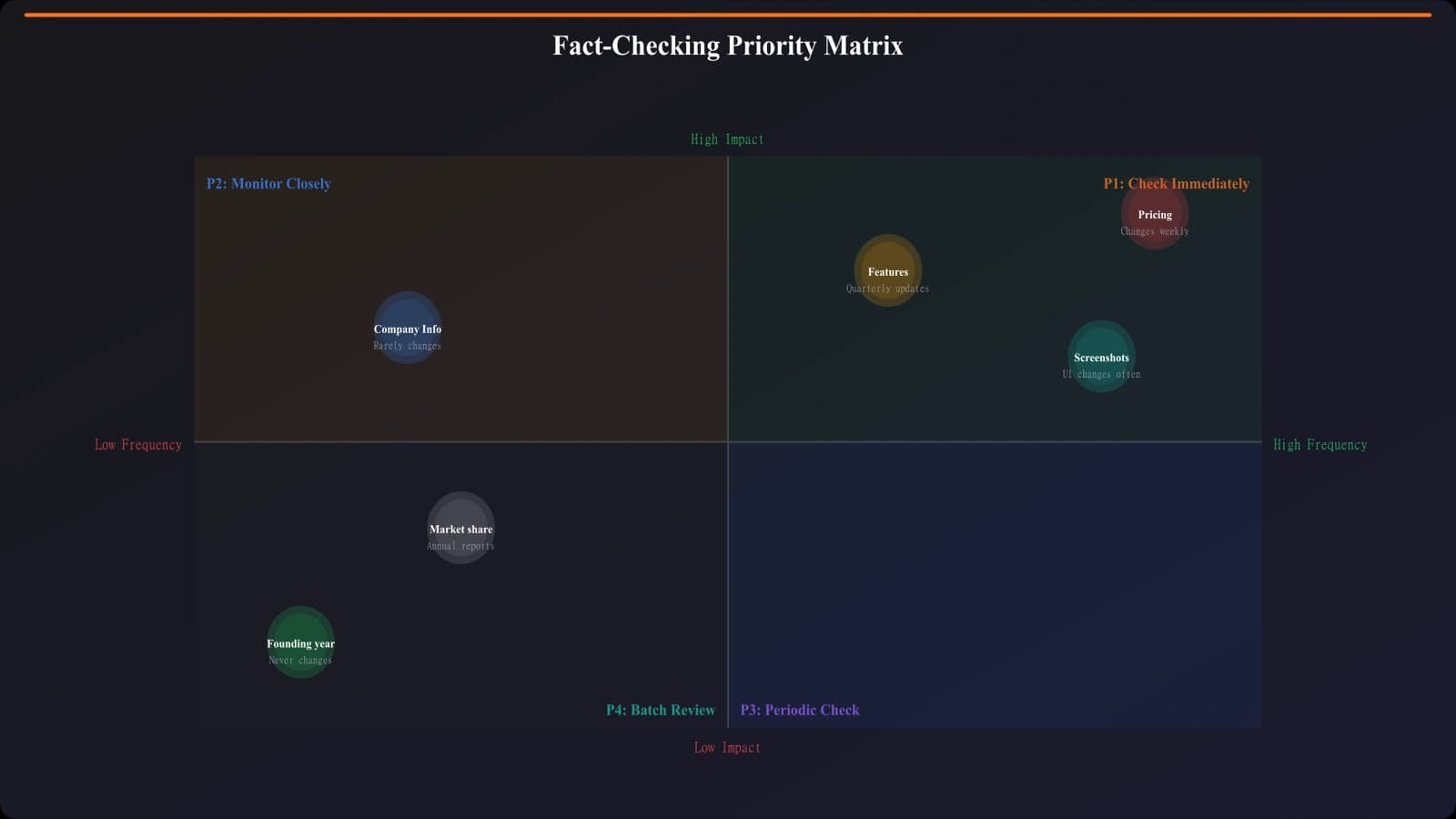
Figure 1: Fact-checking priority matrix
| Claim Type | Change Frequency | Error Impact | Priority | |
|---|---|---|---|---|
| Pricing | High | High (reader frustration, trust loss) | Critical | |
| Availability/Status | Medium | High (recommending dead products) | Critical | |
| Feature Claims | Medium | Medium (reader confusion) | High | |
| Ratings/Reviews | Low | Medium (slightly outdated OK) | Medium | |
| Company Background | Low | Low (rarely impacts decisions) | Low |
High-Risk Claims
Building a Verification Workflow#
Integrate fact-checking into your content creation process rather than treating it as a separate step. Verification at each stage prevents errors from compounding.
- 1Source verification at researchWhen gathering data, note sources and dates. Primary sources (vendor sites) over secondary.
- 2Inline citations during writingCite as you write rather than adding sources later. Makes verification easier.
- 3Pre-publish checklistQuick verification of high-priority claims before going live.
- 4Scheduled re-verificationCalendar-based review of published content for freshness.
- 5Reader feedback loopMake it easy for readers to report errors; treat reports as verification triggers.
Citation and Source Practices#
Good citation serves two purposes: it allows readers to verify claims themselves, and it creates an audit trail for your own future verification.
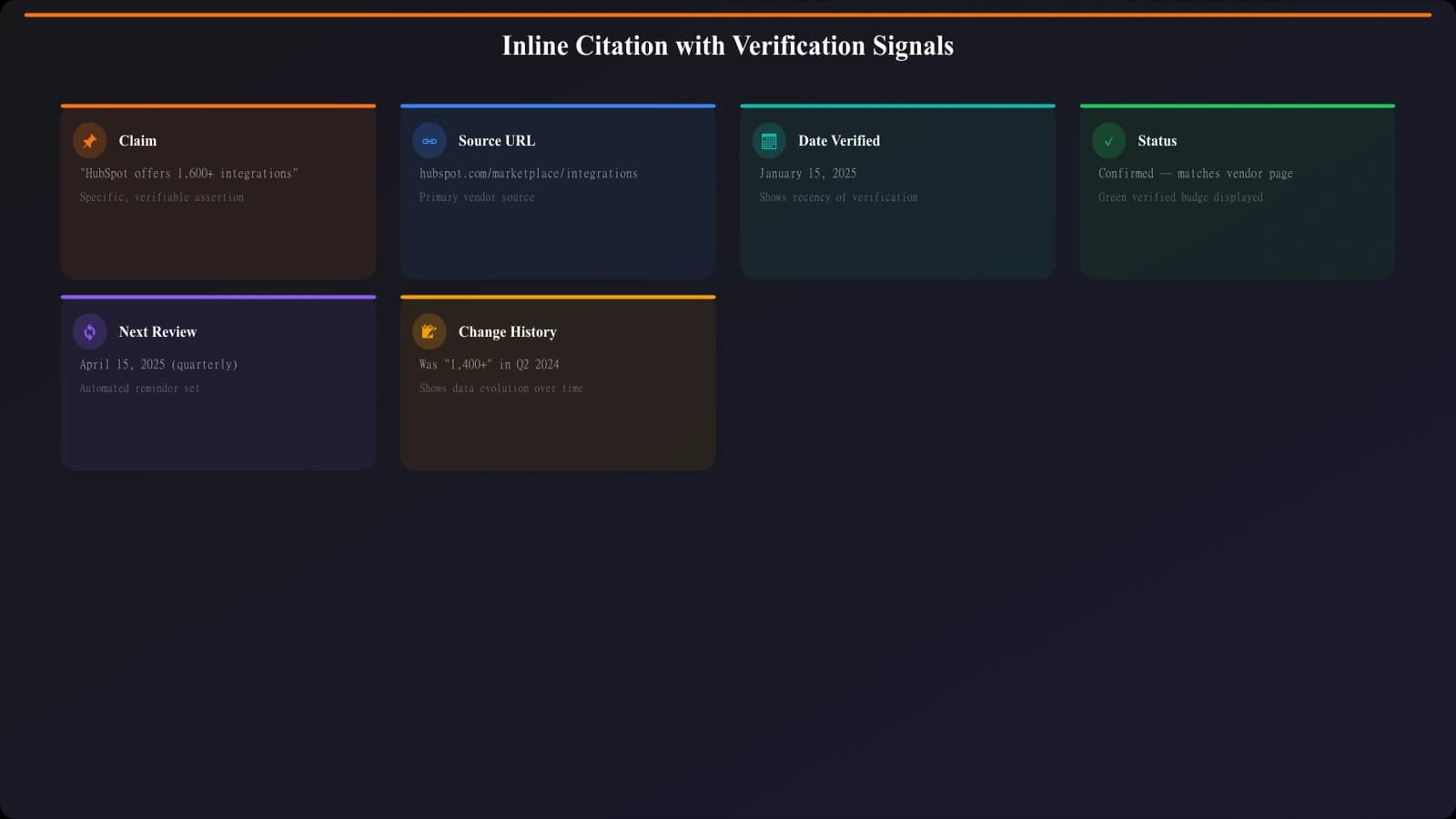
Figure 2: Effective citation with verification metadata
Do
- ✓Link to primary sources (vendor pricing pages, official docs)
- ✓Include "as of" dates for time-sensitive information
- ✓Note when data comes from secondary sources
- ✓Archive sources for claims that might disappear
Don't
- ✕Cite other comparison sites as primary sources
- ✕Leave pricing claims undated
- ✕Assume information found once remains accurate
- ✕Link to login-gated content readers can't verify
Automating Verification at Scale#
For programmatic content, some verification can be automated or semi-automated, reducing manual burden while maintaining accuracy.
Semi-Automation Approach
Preventing Outdated Claims#
The biggest fact-checking challenge isn't initial accuracy—it's preventing information from becoming stale. Content that was accurate at publication can become wrong through no fault of yours.
- Date-stamp time-sensitive claims ("$99/month as of Jan 2025")
- Set calendar reminders for content review cycles
- Monitor vendor news for major changes
- Use language that ages well ("typically costs..." vs "costs exactly...")
- Display "last verified" dates prominently
- Create a correction process for reader-reported errors
Handling Discovered Errors#
When errors are found—by you or readers—how you handle them matters. Quick, transparent corrections build trust; hidden fixes or denial destroys it.
- 1Acknowledge promptlyThank the reporter, confirm you're investigating.
- 2Verify the correctionConfirm the new information is accurate before changing.
- 3Update with notationNote that content was updated and briefly why.
- 4Check related contentIf one page had an error, similar pages might too.
- 5Improve processAsk how the error happened and prevent recurrence.
Frequently Asked Questions#
How often should I re-verify published content?
Quarterly for most best-of pages; monthly for fast-changing categories like SaaS pricing or technology. Prioritize pages with high traffic and high-stakes claims.
What if I can't verify a claim from a primary source?
Use the best available source and note the limitation. "According to user reviews on G2..." is honest about source quality. Avoid claims you can't support at all.
Should I remove content I can't keep updated?
Consider it. Outdated content with wrong information is worse than no content. If you can't maintain accuracy, add prominent "may be outdated" notices or remove.
How do I handle vendor-provided information?
Treat it as a source, not as verified truth. Cross-reference with independent sources when possible. Note when information comes from vendors directly.
Conclusion#
Fact-checking at scale requires prioritization, process integration, and smart automation. You can't verify everything manually, but you can focus resources on high-impact claims, build verification into workflows, and create systems that catch errors before they damage credibility. The goal is trustworthy content that stays accurate over time.
- Prioritize by risk: Focus on pricing, availability, and comparative claims
- Build into workflow: Verify during creation, not just at the end
- Cite properly: Date-stamped links to primary sources
- Automate alerts: Monitor for changes rather than auto-updating
- Handle errors gracefully: Quick, transparent corrections build trust
Sources & References
- Poynter Institute. Content Verification Best Practices (2024)
- Associated Press. Editorial Standards for Digital Content (2024)

Product Manager at BestPage. Pioneer in AEO research since 2024, exploring the convergence of SEO and GEO (Generative Engine Optimization). Led multiple AI-powered content optimization projects that achieved 300%+ citation increases in ChatGPT and Perplexity.