

Key Takeaways
- •Systematic review catches errors: A checklist ensures consistent quality across all pages, not just the ones you happened to review carefully
- •Categories focus attention: Grouping checks by type (content, technical, trust) makes review manageable
- •Automate what you can: Link checking, schema validation, and word counts can be automated to focus human attention on quality
- •Fix before publish: Catching issues before going live is far cheaper than fixing them after they've damaged rankings or trust
Pre-publish QA for best-of pages prevents the small errors that compound into big problems. A broken link is embarrassing; a wrong price damages trust; thin content gets penalized. A systematic checklist catches these issues before they reach readers.
This guide provides a comprehensive QA checklist organized by category. Use it as-is or adapt it to your specific content type. The goal is consistent quality across every page you publish.
Content Quality Checks#
Content quality determines whether your page provides genuine value or falls into the "thin content" penalty zone. These checks ensure substance.
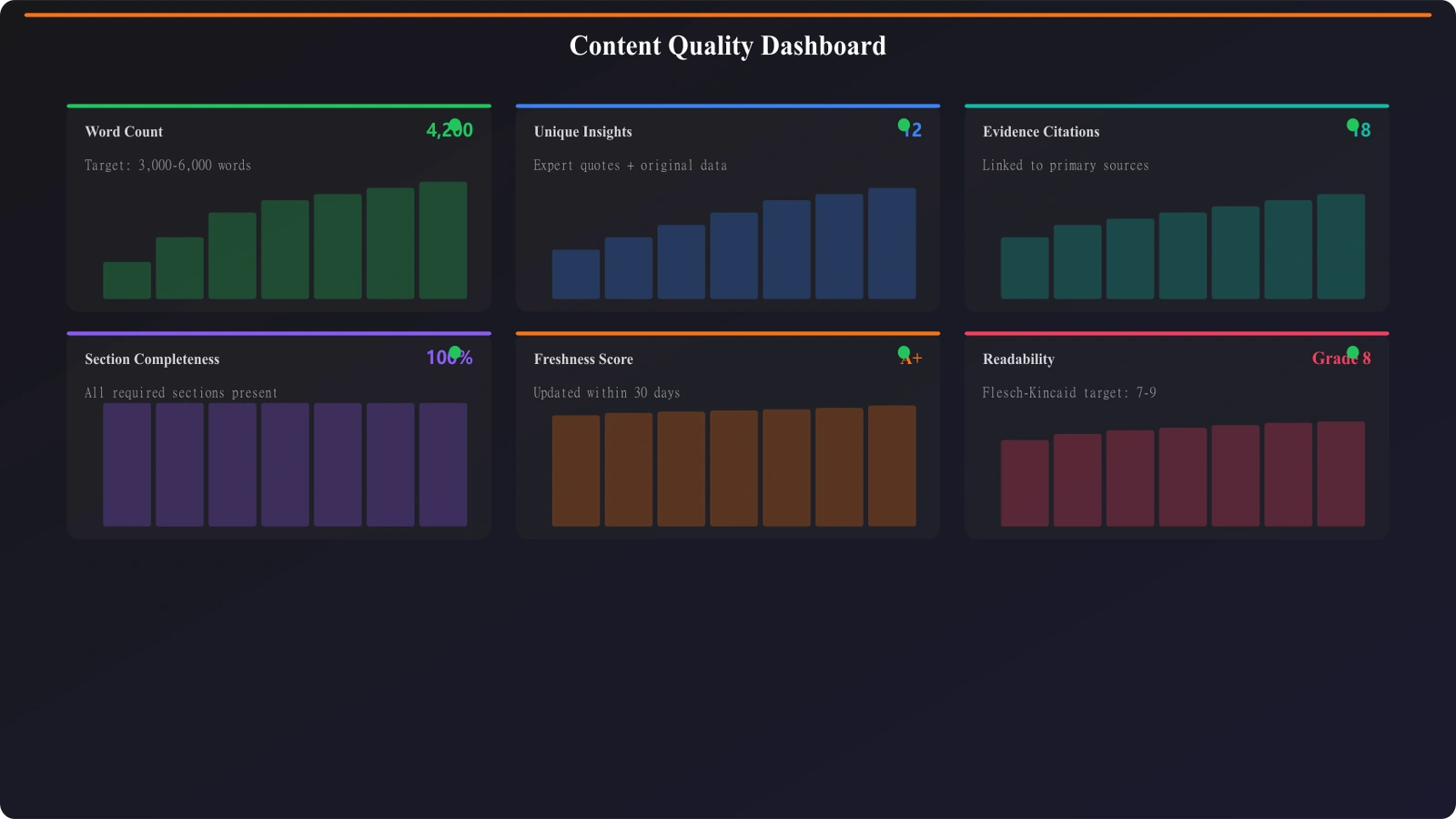
Figure 1: Content quality metrics to verify
- Minimum word count met (typically 1500+ for best-of)
- At least 4 H2 sections with substantive content
- Each ranked item has unique, specific commentary
- Key takeaways block present and valuable
- Introduction provides context without heading label
- Conclusion summarizes actionable insights
- FAQ section addresses real reader questions
- Content is not just reformatted vendor marketing
Evidence and Trust Checks#
Best-of pages need evidence to support rankings. These checks ensure your recommendations are backed by verifiable information.
- Methodology section explains ranking logic
- Criteria and weights are published
- Sources are cited with links
- Testing dates and methods documented
- Third-party ratings included (G2, Capterra)
- Affiliate disclosure is prominent and clear
- Author bio with relevant credentials
- Last updated date is visible
Missing Methodology
Technical Checks#
Technical issues can undermine otherwise excellent content. These checks catch broken functionality and missing optimization.
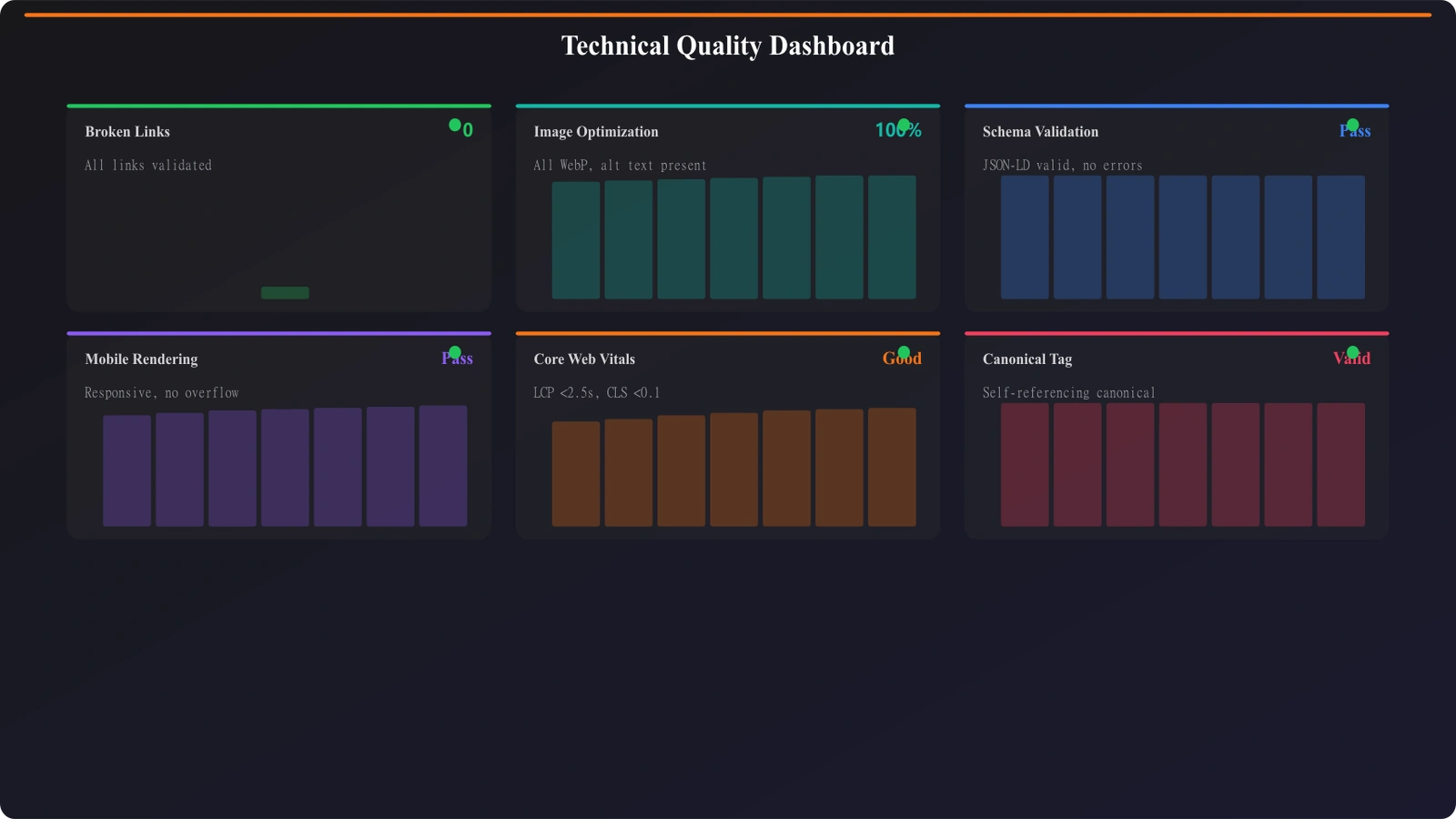
Figure 2: Technical validation checks
- All links functional (no 404s)
- Affiliate links properly tracked
- Images have descriptive alt text
- Hero image present and optimized
- At least 2 in-content images
- Schema markup validates (ItemList, FAQ)
- Page renders correctly on mobile
- Load time acceptable (<3s)
Ranking Logic Checks#
Rankings must be defensible. These checks ensure your ordering makes sense and can withstand scrutiny.
- Rankings follow from stated methodology
- No obvious tool missing from comparison
- Top pick has clear rationale
- Similar tools are distinguishable
- Exclusions explained if any
- Rankings match the target intent
- No affiliate-only inclusion pattern
- Scores mathematically consistent
Accuracy and Freshness Checks#
Outdated or inaccurate information is the fastest way to lose credibility. Verify key facts before publishing.
- Pricing verified as current
- All ranked products still available
- Feature claims verified
- Company information current
- Third-party ratings recently checked
- "As of" dates on time-sensitive info
- No references to outdated events/dates
- Competitive landscape still accurate
SEO Checks#
Basic SEO hygiene ensures your content can rank for target queries.
- Target keyword in title/H1
- Keyword appears naturally early in content
- Related terms included (3-5)
- Meta description compelling and keyword-inclusive
- URL slug is clean and descriptive
- Internal links to related content
- External links to authoritative sources
- Heading structure logical (H2 > H3)
Automating QA Checks#
Many checks can be automated, freeing human reviewers to focus on quality and judgment calls that require human intelligence.
// Example automated QA checks
const qaChecks = {
  wordCount: content.split(/\s+/).length >= 1500,
  hasKeyTakeaways: content.includes('key-takeaways'),
  hasMethodology: content.includes('methodology') || content.includes('how we evaluated'),
  hasImages: (content.match(/src="/g) || []).length >= 3,
  linksValid: await validateAllLinks(content),
  schemaValid: await validateSchema(content),
};

const failures = Object.entries(qaChecks)
  .filter(([key, passed]) => !passed)
  .map(([key]) => key);
Frequently Asked Questions#
How long should QA review take per page?
With automation handling technical checks, human review should take 15-30 minutes. Longer for complex pages, shorter for updates to existing content.
Should I delay publishing to fix minor issues?
Fix critical issues (broken links, wrong pricing, missing disclosure) before publishing. Minor issues (typos, image optimization) can be fixed post-publish if speed matters.
Who should do QA—the writer or someone else?
Ideally someone other than the writer. Fresh eyes catch issues the writer is blind to. At minimum, add time between writing and review.
How do I maintain checklist consistency across a team?
Use a shared checklist tool or template. Document what each check means. Periodically audit completed checklists to ensure consistent interpretation.
Conclusion#
A systematic QA checklist transforms content quality from variable to consistent. By checking content quality, evidence, technical elements, ranking logic, accuracy, and SEO before publishing, you catch issues while they're still cheap to fix. Automate what you can, focus human attention on judgment calls, and never skip the checklist.
- Use categories: Content, evidence, technical, rankings, accuracy, SEO
- Automate technical checks: Links, word counts, schema validation
- Focus human review: Quality, defensibility, accuracy
- Fix before publish: Especially critical issues like pricing and disclosure
- Apply consistently: Every page, every time
Sources & References
- Nielsen Norman Group. Content Quality Checklist Research (2024)
- Poynter Institute. Editorial QA Best Practices (2024)

Product Manager at BestPage. Pioneer in AEO research since 2024, exploring the convergence of SEO and GEO (Generative Engine Optimization). Led multiple AI-powered content optimization projects that achieved 300%+ citation increases in ChatGPT and Perplexity.