

Key Takeaways
- •Criteria must match intent: "Best for beginners" needs different ranking factors than "best for enterprise"—start with what your reader actually needs
- •Weighted scoring creates defensibility: Assign explicit weights to each criterion so rankings can be explained and defended
- •Separate must-haves from nice-to-haves: Some criteria are binary qualifiers; others are sliding scales—handle them differently
- •Document everything: Your methodology section should let readers reconstruct your logic—this builds trust and improves AI citation rates
Ranking tools on best-of pages requires more than subjective preference. Readers and AI systems increasingly expect transparent, defensible criteria that explain why Tool A ranks above Tool B. Without clear methodology, your rankings appear arbitrary—and arbitrary rankings don't earn trust, links, or citations.
This guide provides a practical framework for developing ranking criteria that match search intent, weighting factors appropriately, and documenting your methodology in ways that satisfy both readers and search systems. Whether you're ranking SaaS tools, local services, or physical products, these principles apply.
Starting with Search Intent#
The biggest mistake in ranking methodology is using the same criteria for every query. "Best project management software" implies different priorities than "best free project management tools" or "best project management for remote teams." Your criteria must reflect what the searcher actually wants.
| Query Modifier | Primary Criteria | Secondary Criteria | |
|---|---|---|---|
| "Best [tool]" | Overall quality, features, reliability | Price, support, ecosystem | |
| "Best free [tool]" | Free tier quality, limitations | Upgrade path, feature restrictions | |
| "Best [tool] for beginners" | Ease of use, learning curve, docs | Templates, onboarding, support | |
| "Best [tool] for enterprise" | Security, compliance, scalability | SSO, API, SLAs, support | |
| "Best cheap [tool]" | Value per dollar, core features | Hidden costs, limitations |
Core Criteria Categories#
While specific criteria vary by category, most tool rankings draw from a common set of evaluation dimensions. Understanding these categories helps you build comprehensive, balanced assessments.
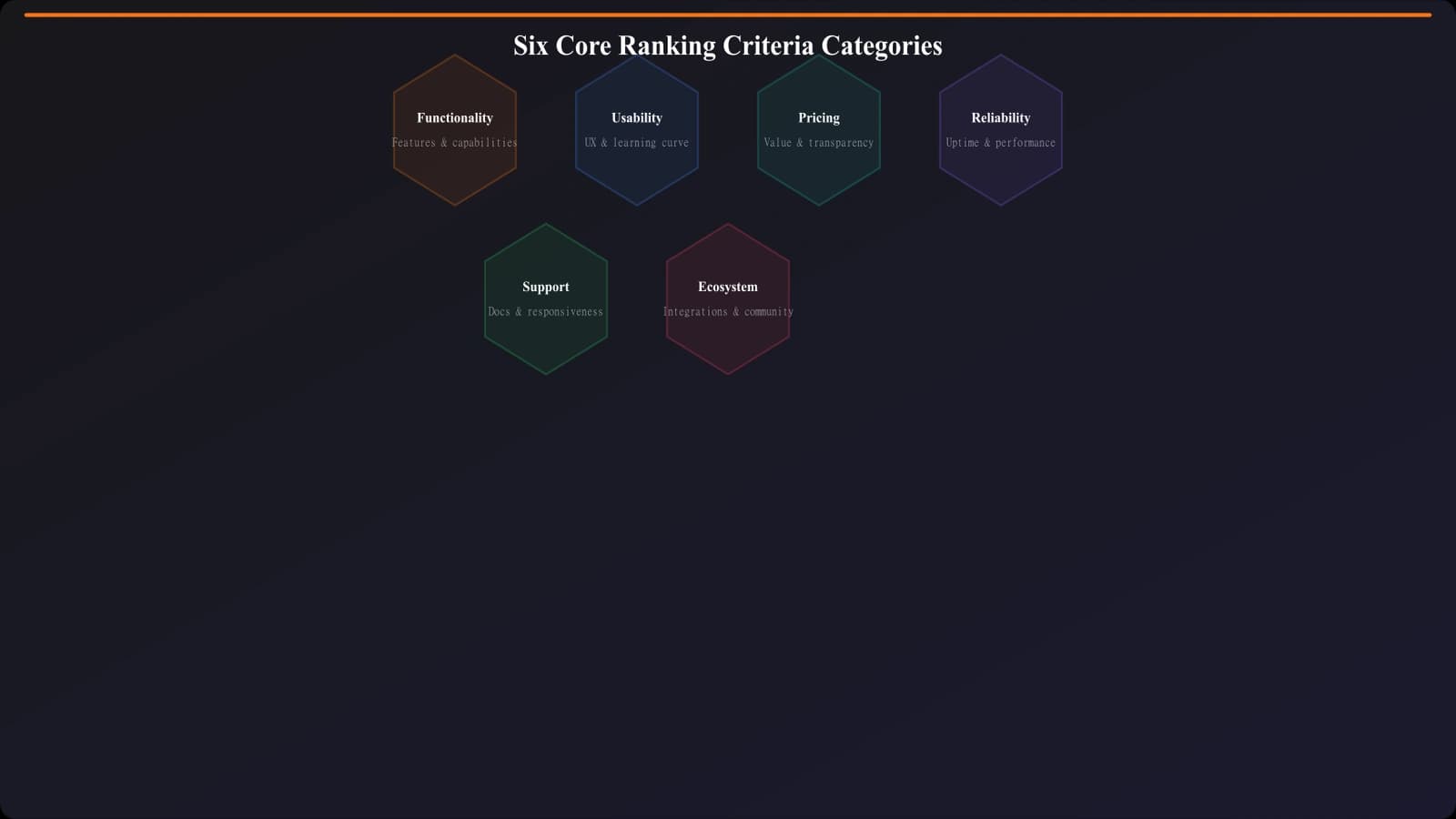
Figure 1: Core criteria categories for tool rankings
Weighting Factors by Intent#
Not all criteria matter equally for every query. Weighting creates rankings that accurately reflect what specific audiences prioritize. A "best for enterprise" query should weight security and compliance heavily; "best for solopreneurs" should emphasize ease of use and pricing.
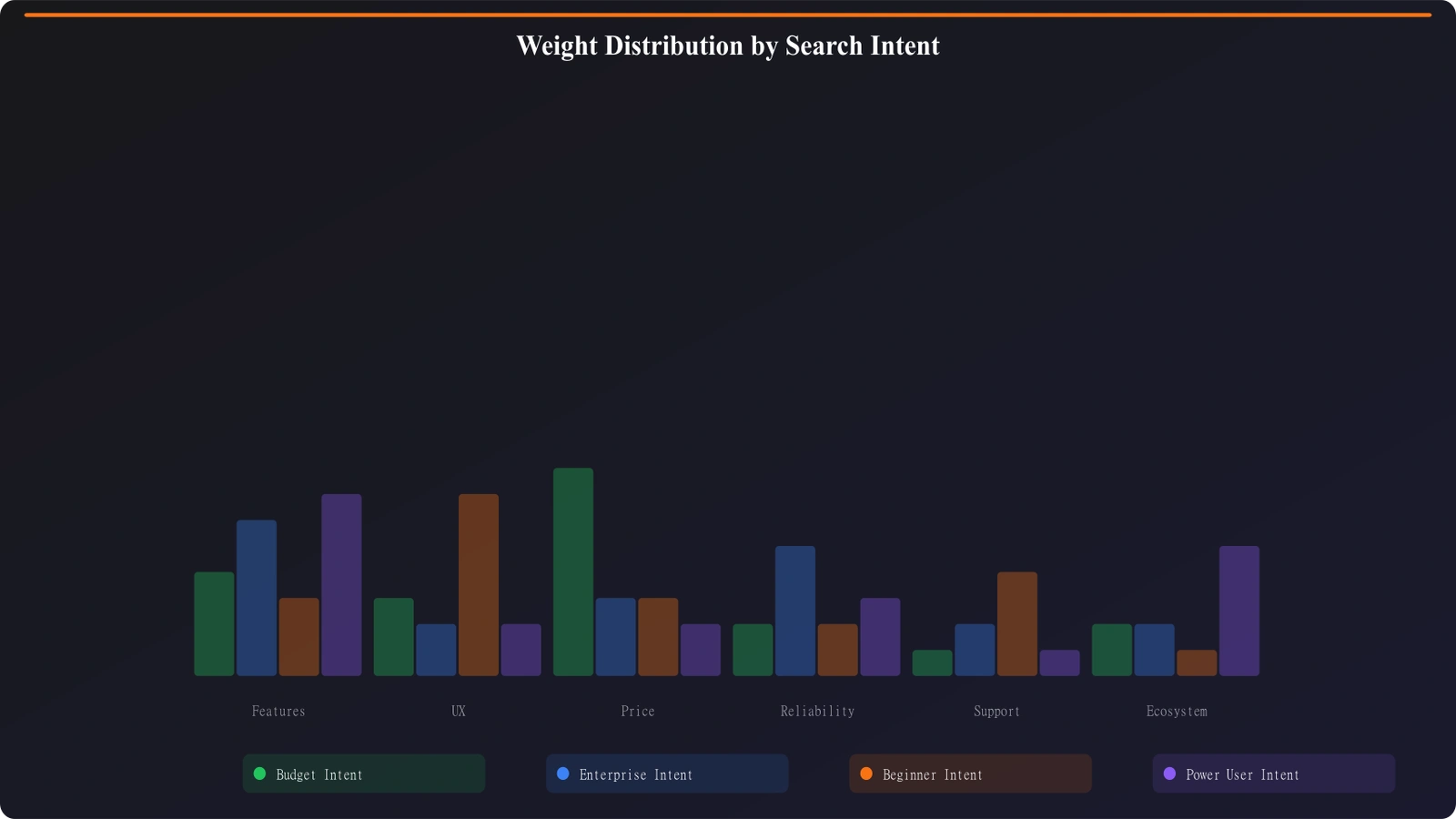
Figure 2: How weighting shifts based on search intent
- 1Identify the primary needWhat is the searcher's #1 priority? This criterion gets 25-35% weight.
- 2Define secondary factorsWhat else matters for this audience? These get 15-20% each.
- 3Include baseline requirementsFactors everyone needs but aren't differentiators. 10-15% each.
- 4Add tie-breakersFactors that separate similar tools. 5-10% for nice-to-haves.
- 5Validate the totalWeights must sum to 100%. Adjust if any category feels over/under-weighted.
Show Your Weights
Qualifiers vs. Scored Criteria#
Not every criterion belongs in a weighted score. Some are binary qualifiers—a tool either meets the requirement or doesn't. Others are sliding scales that contribute to an overall score. Treating these differently produces cleaner, more honest rankings.
Do
- ✓Use qualifiers for must-haves (HIPAA compliance, platform support)
- ✓Use scores for comparative features (feature depth, UX quality)
- ✓Explain why disqualified tools are excluded
- ✓Allow qualifiers to vary by query intent
Don't
- ✕Score binary requirements on a sliding scale
- ✕Exclude tools without explaining why
- ✕Apply enterprise qualifiers to beginner-focused lists
- ✕Treat all criteria as equally scoreable
| Type | Example | How to Handle | |
|---|---|---|---|
| Hard Qualifier | GDPR compliance for EU list | Must have = included; Missing = excluded | |
| Soft Qualifier | Free tier availability | Missing = penalty or separate category | |
| Scored (1-5) | Feature depth | Rate each tool, multiply by weight | |
| Scored (1-10) | Overall UX quality | Higher precision for close comparisons |
Testing and Evidence Collection#
Rankings without evidence are opinions. Strong methodology includes how you gathered data, what you tested, and how long you evaluated each tool. This evidence becomes part of your credibility architecture.
- Hands-on testing with real accounts (not just demos)
- Consistent testing protocol across all tools
- Time period documented (tested January 2025)
- Third-party data cited (G2, Capterra ratings)
- Screenshots from actual testing sessions
- Limitations acknowledged (couldn't test enterprise tier)
Create a testing checklist before you start evaluating. Run the same scenarios on every tool—create a project, invite a user, export data, contact support. Inconsistent testing produces inconsistent rankings.
Documenting Your Methodology#
Your methodology section transforms subjective rankings into defensible analysis. It should be detailed enough that a reader could theoretically reproduce your rankings, but concise enough that people actually read it.
- 1State your criteria explicitlyList every factor you evaluated and why it matters for this query.
- 2Publish your weightsShow exact percentages so readers understand your priorities.
- 3Explain your testingWhat did you actually do? How long? Which tiers/plans?
- 4Acknowledge limitationsWhat couldn't you test? What might bias your view?
- 5Date everythingWhen was testing done? When were scores last updated?
Frequently Asked Questions#
How many criteria should I use?
5-8 weighted criteria typically provides enough granularity without overwhelming readers. Too few (2-3) looks superficial; too many (10+) becomes unwieldy and hard to explain.
Should I use a 5-point or 10-point scale?
5-point scales are easier to apply consistently. 10-point scales provide more precision for close comparisons but require clearer rubrics. Choose based on how close your tools are in quality.
What if my top pick changes after re-evaluation?
Update your rankings with a changelog note. "Updated January 2025: Tool X moved from #3 to #1 after major feature release." Transparency about changes builds trust.
How do I handle tools I couldn't fully test?
Acknowledge limitations explicitly. "We tested the Pro tier; Enterprise features were evaluated based on documentation and customer reviews." Partial data is better than hidden gaps.
Conclusion#
Defensible rankings require intentional methodology. By matching criteria to search intent, weighting factors explicitly, distinguishing qualifiers from scores, and documenting your process transparently, you create best-of pages that earn reader trust and AI citations. The extra effort in methodology pays dividends in credibility.
- Start with intent: Different queries need different criteria and weights
- Weight explicitly: Published weights make rankings defensible
- Separate qualifiers: Binary requirements shouldn't be scored on scales
- Document testing: Evidence transforms opinions into analysis
- Publish methodology: Transparency is the foundation of trust
Sources & References
- Gartner. Software Evaluation Best Practices (2024)
- Nielsen Norman Group. Content Credibility Research (2024)

Product Manager at BestPage. Pioneer in AEO research since 2024, exploring the convergence of SEO and GEO (Generative Engine Optimization). Led multiple AI-powered content optimization projects that achieved 300%+ citation increases in ChatGPT and Perplexity.