

Key Takeaways
- •Choose one model and stick with it: Inconsistent scoring across pages destroys credibility—pick an approach and apply it uniformly
- •Weighted scores work for complex tools: When multiple factors matter, weighted scoring lets you reflect true priorities
- •Simple ratings work for quick comparisons: 5-star ratings suffice when tools are similar and readers want fast answers
- •Show your math: Whatever model you choose, readers should be able to understand how you arrived at each score
Scoring models for best-of pages determine how you translate evaluation into rankings. A well-chosen model makes your methodology transparent and reproducible; a poorly chosen one creates confusion and undermines trust. The goal isn't finding the "best" scoring system—it's finding one that fits your content type and applying it consistently.
This guide covers the most common scoring approaches, when each works best, and how to implement them in ways that build reader trust. Whether you're creating a single comparison or scaling to hundreds of best-of pages, these principles ensure your scores remain meaningful.
Common Scoring Approaches#
Different scoring models suit different contexts. Understanding the tradeoffs helps you choose appropriately for your content type and audience.
| Model | Best For | Complexity | Transparency | |
|---|---|---|---|---|
| Simple Rating (1-5) | Quick comparisons, similar tools | Low | High | |
| Weighted Score | Complex tools, multiple factors | Medium | High if published | |
| Category Scores | Showing strength/weakness areas | Medium | Very High | |
| Rubric-Based | Consistent large-scale scoring | High | Very High | |
| Rank-Only | When scores feel arbitrary | Low | Medium |
Simple Rating Systems (1-5 or 1-10)#
Simple ratings assign a single score to each tool. They're easy to understand and implement, making them ideal for categories where tools are relatively similar or when readers want quick, scannable comparisons.
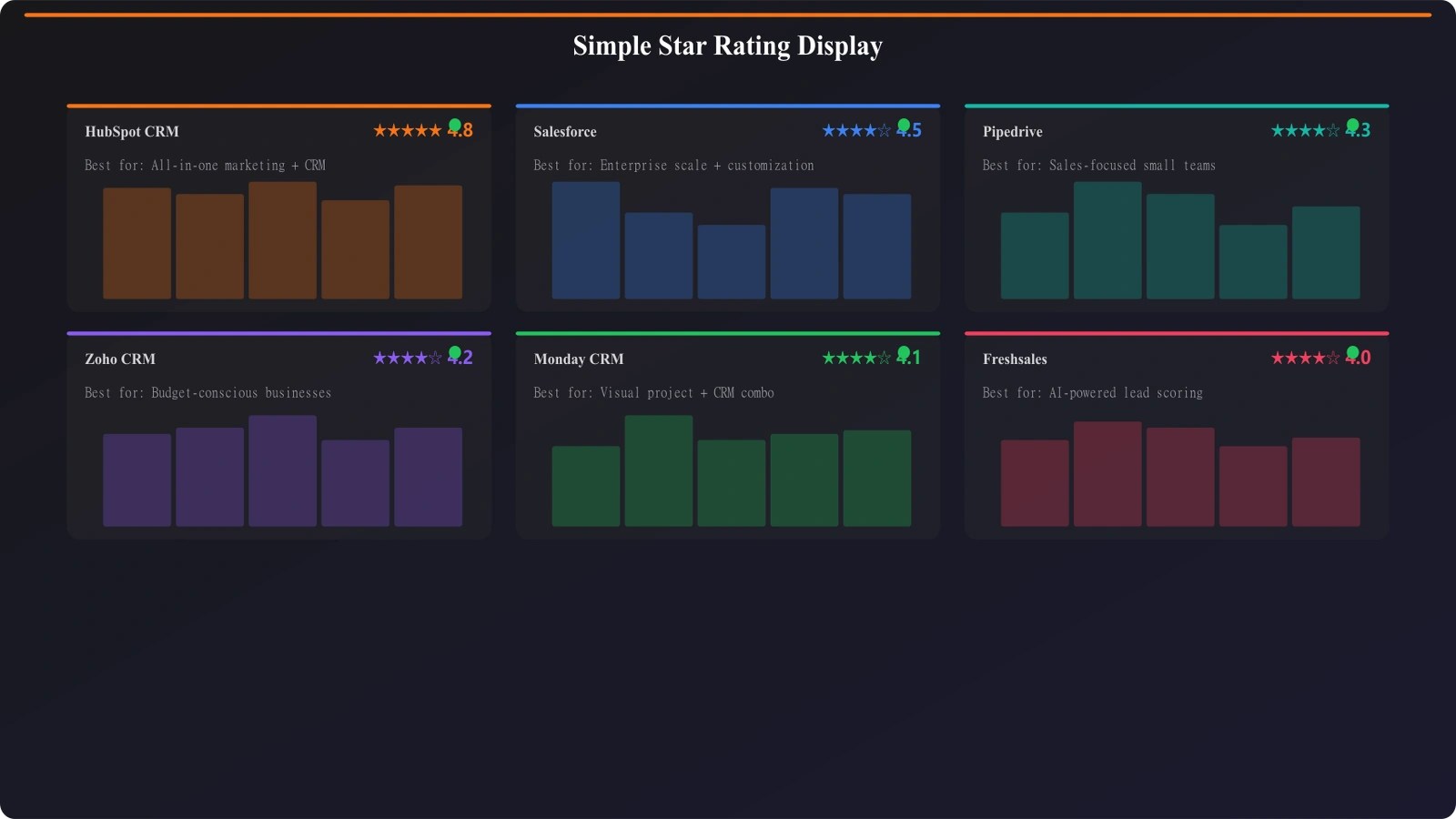
Figure 1: Simple rating display for quick comparison
Do
- ✓Define what each rating level means (5 = Excellent, 4 = Good...)
- ✓Use half-points sparingly for meaningful distinctions
- ✓Keep the scale consistent across all your content
- ✓Include brief justification for each rating
Don't
- ✕Give everything 4+ stars (grade inflation)
- ✕Use 10-point scales if you can't distinguish 7 from 8
- ✕Rate without testing the actual product
- ✕Change your scale meaning between pages
Rating Calibration
Weighted Scoring Systems#
Weighted scoring assigns different importance to different criteria, then calculates an overall score. This approach explicitly shows your priorities and produces defensible rankings when factors aren't equally important.
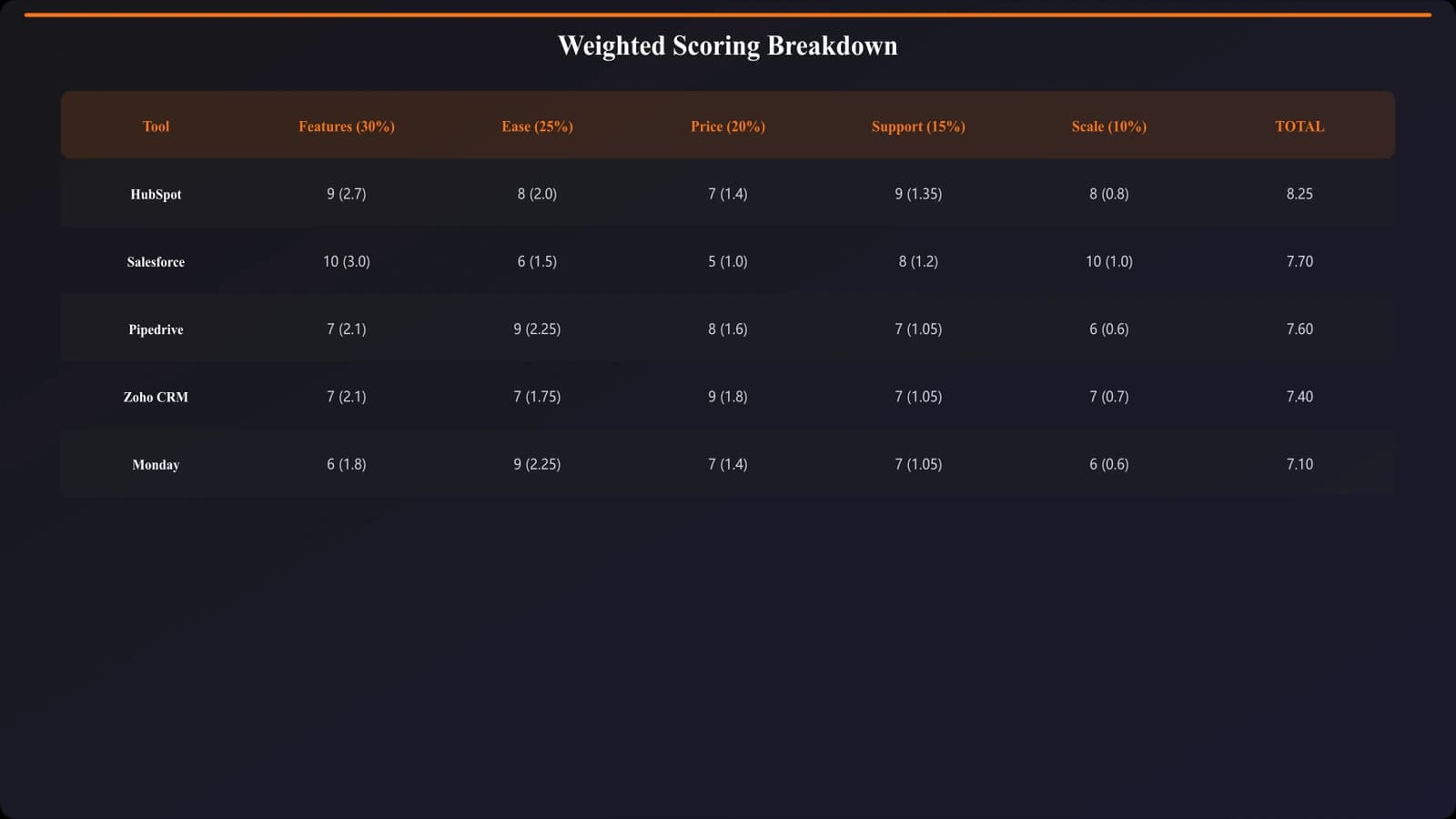
Figure 2: Weighted scoring with visible calculation
- 1Define criteria and weightsList evaluation factors and assign percentage weights totaling 100%
- 2Score each criterion independentlyRate each tool on each factor (typically 1-5 or 1-10)
- 3Calculate weighted scoresMultiply each score by its weight, sum for total
- 4Normalize if neededConvert to consistent scale (e.g., out of 10) for display
- 5Publish the breakdownShow individual scores and weights, not just the total
// Example weighted scoring calculation
const weights = {
  features: 0.30,
  usability: 0.25,
  pricing: 0.20,
  support: 0.15,
  integrations: 0.10
};

const toolScores = {
  features: 4.5,
  usability: 4.0,
  pricing: 3.5,
  support: 4.0,
  integrations: 4.5
};

const weightedTotal = Object.keys(weights).reduce((total, key) => {
  return total + (weights[key] * toolScores[key]);
}, 0);

// Result: 4.075 out of 5
Category Score Systems#
Category scoring rates tools across multiple dimensions without necessarily combining into a single number. This approach highlights where each tool excels and struggles, helping readers match tools to their priorities.
Category scores work especially well when your audience has varied priorities. Enterprise buyers care about different dimensions than solopreneurs—category scores let both extract value from the same page.
Rubric-Based Scoring#
Rubrics define exactly what earns each score level, creating consistency when multiple people evaluate or when you're scoring at scale. They're essential for programmatic SEO where consistency across hundreds of pages matters.
| Score | Features Criterion | Support Criterion | |
|---|---|---|---|
| 5 | All core features + advanced + unique differentiators | 24/7 support, <1hr response, dedicated CSM | |
| 4 | All core features + some advanced | Business hours support, <4hr response | |
| 3 | All core features, limited advanced | Email support, <24hr response | |
| 2 | Most core features, gaps in essentials | Limited support, slow response | |
| 1 | Missing critical core features | No meaningful support |
Rubric Documentation
Choosing the Right Model#
The best scoring model depends on your content type, scale, and audience. Consider these factors when deciding.
- Similar tools, quick decisions → Simple ratings
- Complex tools, multiple stakeholders → Weighted or category scores
- High volume, multiple evaluators → Rubric-based
- Highly varied reader priorities → Category scores
- Editorial, single author → Simpler models work
- Programmatic at scale → Rubrics essential
Frequently Asked Questions#
Should I show decimal scores (4.3) or round to whole numbers?
Decimals suggest precision. Only use them if your methodology actually produces that precision. Showing 4.3 vs 4.2 implies a meaningful difference—if your scoring can't reliably distinguish that, round to whole numbers.
How do I prevent score inflation over time?
Use benchmark tools as anchors and revisit them when updating scores. If your benchmark tool hasn't changed but new tools keep scoring higher, you have inflation. Periodic re-calibration against benchmarks prevents drift.
Can I use different scoring models for different categories?
Yes, but be clear about it. Different content types may need different approaches. Just don't mix models within a single comparison—that creates confusion.
What if two tools score identically?
Either accept the tie (ties are honest) or add a tie-breaker criterion. Don't artificially differentiate scores to force a ranking—readers will notice.
Conclusion#
Scoring models are tools for communicating evaluation, not ends in themselves. The right model makes your methodology transparent and your rankings defensible. Choose based on your context, apply consistently, and always show enough of your work that readers can understand—and trust—your conclusions.
- Match model to context: Simple ratings for simple comparisons; weighted for complex tools
- Define your scale: What does a 5 mean? What does a 3 mean? Document it.
- Use rubrics at scale: Consistency requires explicit criteria definitions
- Show your math: Published weights and breakdowns build trust
- Calibrate regularly: Benchmark tools prevent score drift
Sources & References
- Nielsen Norman Group. Rating Scale Design Research (2024)
- BetterEvaluation. Evaluation Methodology Standards (2024)

Product Manager at BestPage. Pioneer in AEO research since 2024, exploring the convergence of SEO and GEO (Generative Engine Optimization). Led multiple AI-powered content optimization projects that achieved 300%+ citation increases in ChatGPT and Perplexity.