Contentful pioneered the headless CMS category and remains the enterprise standard. Its content infrastructure approach treats content as structured data that can power any digital experience. The platform offers excellent content modeling, powerful APIs, a global CDN, and extensive marketplace of apps. Enterprise teams appreciate the robust permissions, localization, and workflow features.
Starting priceFree/$300/mo
Strengths
Industry-leading enterprise platform
Excellent content modeling
Powerful App Framework
Global CDN with 99.9% uptime SLA
Limitations
Expensive for small teams
No visual page builder
Who it's for: Ideal for enterprise teams building omnichannel content experiences who need robust infrastructure, workflows, and scalability.
Sanity offers the best developer experience in the headless CMS space with its customizable Sanity Studio and powerful GROQ query language. The studio is built on React and can be extensively customized to create perfect editorial workflows. Real-time collaboration, a generous free tier, and excellent documentation make it popular with modern development teams.
Starting priceFree/$99/mo
Strengths
Best developer experience
Fully customizable React studio
GROQ is powerful and flexible
Excellent real-time collaboration
Limitations
GROQ learning curve
Studio customization requires code
Who it's for: Best for development teams who want maximum flexibility and customization with an excellent content API and real-time features.
Strapi is the leading open-source headless CMS, giving teams full control over their content infrastructure. Self-hosting means no per-seat pricing and complete data ownership. The admin panel is customizable, and the plugin system allows extending functionality. Strapi Cloud offers a managed hosting option for teams that don't want to manage infrastructure.
Starting priceFree
Strengths
100% open-source
No per-seat licensing
Full data ownership
Customizable with plugins
Limitations
Self-hosting requires DevOps
Fewer enterprise features than Contentful
Who it's for: Perfect for teams that need full control, data ownership, or have compliance requirements that mandate self-hosting.
Hygraph (formerly GraphCMS) is built entirely around GraphQL, offering a native GraphQL API without REST fallbacks. Its standout feature is Content Federation, which allows combining content from multiple sources (databases, APIs, other CMSs) into a unified GraphQL layer. This makes it powerful for complex content architectures.
Starting priceFree/$199/mo
Strengths
GraphQL-native architecture
Content federation for multiple sources
Powerful schema modeling
Good free tier
Limitations
GraphQL only (no REST)
Content federation adds complexity
Who it's for: Great for teams committed to GraphQL who need to federate content from multiple sources into a unified API.
Storyblok offers the best visual editing experience among headless CMS platforms with its Visual Editor that shows real-time previews as content is created. The component-based approach aligns well with modern frontend frameworks. Marketers and content editors appreciate being able to see exactly how content will appear without bothering developers.
Starting priceFree/$99/mo
Strengths
Best visual editing experience
Real-time preview
Component-based content
Great for marketing teams
Limitations
Visual editor requires specific setup
Learning curve for component architecture
Who it's for: Ideal for teams where non-technical editors need visual, real-time content editing while developers maintain headless architecture.
Payload CMS takes a code-first approach where everything is defined in TypeScript config files. This gives developers complete control and excellent type safety. The admin UI is automatically generated from your configuration. Being free and open-source, it's an excellent choice for developers who prefer code over clicking.
Starting priceFree
Strengths
TypeScript-first development
Completely free and open-source
Auto-generated admin UI
Full type safety
Limitations
Requires TypeScript knowledge
Self-hosting required
Who it's for: Best for TypeScript developers who want code-first CMS configuration with excellent type safety and full control.
Directus is unique in that it wraps any SQL database with a headless CMS layer. Point it at an existing database and get instant REST and GraphQL APIs with an auto-generated admin interface. This makes it powerful for projects with existing databases or when you need direct SQL access alongside the CMS.
Starting priceFree/$99/mo
Strengths
Wraps any SQL database
Existing database support
Open-source and free
No vendor lock-in
Limitations
Less purpose-built than alternatives
Complex relational modeling
Who it's for: Perfect for projects with existing SQL databases that need a CMS layer, or teams wanting direct database access with API convenience.
Our team built real projects with each headless CMS. Here's what we measured:
Developer Experience (25%) — API quality, SDKs, and ease of integration.
Content Modeling (25%) — Flexibility and power of content type definitions.
Editor Experience (20%) — Content creation workflow and editorial features.
Performance (15%) — API speed, CDN, and scalability.
Value for Money (15%) — Pricing model and free tier generosity.
How to Choose
Choose Contentful if you need Enterprise scale.
Choose Sanity if you need Best developer experience.
Choose Strapi if you need Self-hosted requirement.
Choose Storyblok if you need Visual editing for marketers.
Choose Payload CMS if you need TypeScript and code-first.
Common Questions
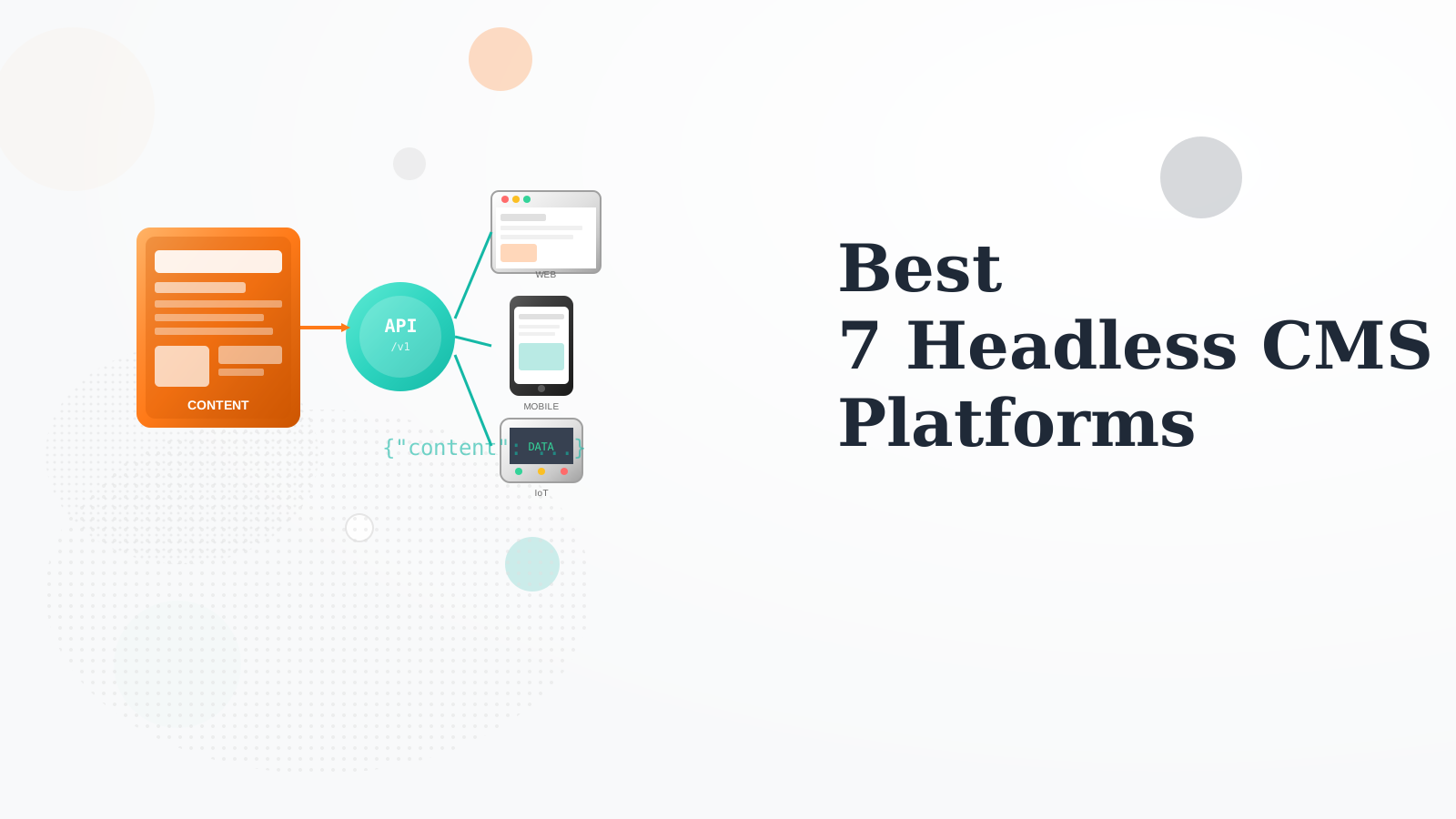
A headless CMS separates content management from content presentation. Content is stored and managed via the CMS, then delivered via API to any frontend (website, mobile app, IoT device, etc.).
Contentful is better for large enterprises needing robust infrastructure and workflows. Sanity offers better developer experience with customizable studio and GROQ. Choose based on team size, budget, and customization needs.
Strapi is the best free option for self-hosting. For managed hosting, Sanity and Storyblok offer generous free tiers. Payload CMS is excellent for TypeScript developers who can self-host.
Headless CMS is best when you need to deliver content to multiple platforms, want developer flexibility in frontend choice, or need API-first content delivery. Traditional CMS may be simpler for basic websites.