10 Best Webinar Platforms for Lead Generation in 2026
Webinars remain one of the highest-converting lead generation channels for B2B marketing. The right platform handles registration, engagement, replays, and CRM integration to turn attendees into pipeline. We tested 16+ platforms to find the best for marketing-focused webinars.
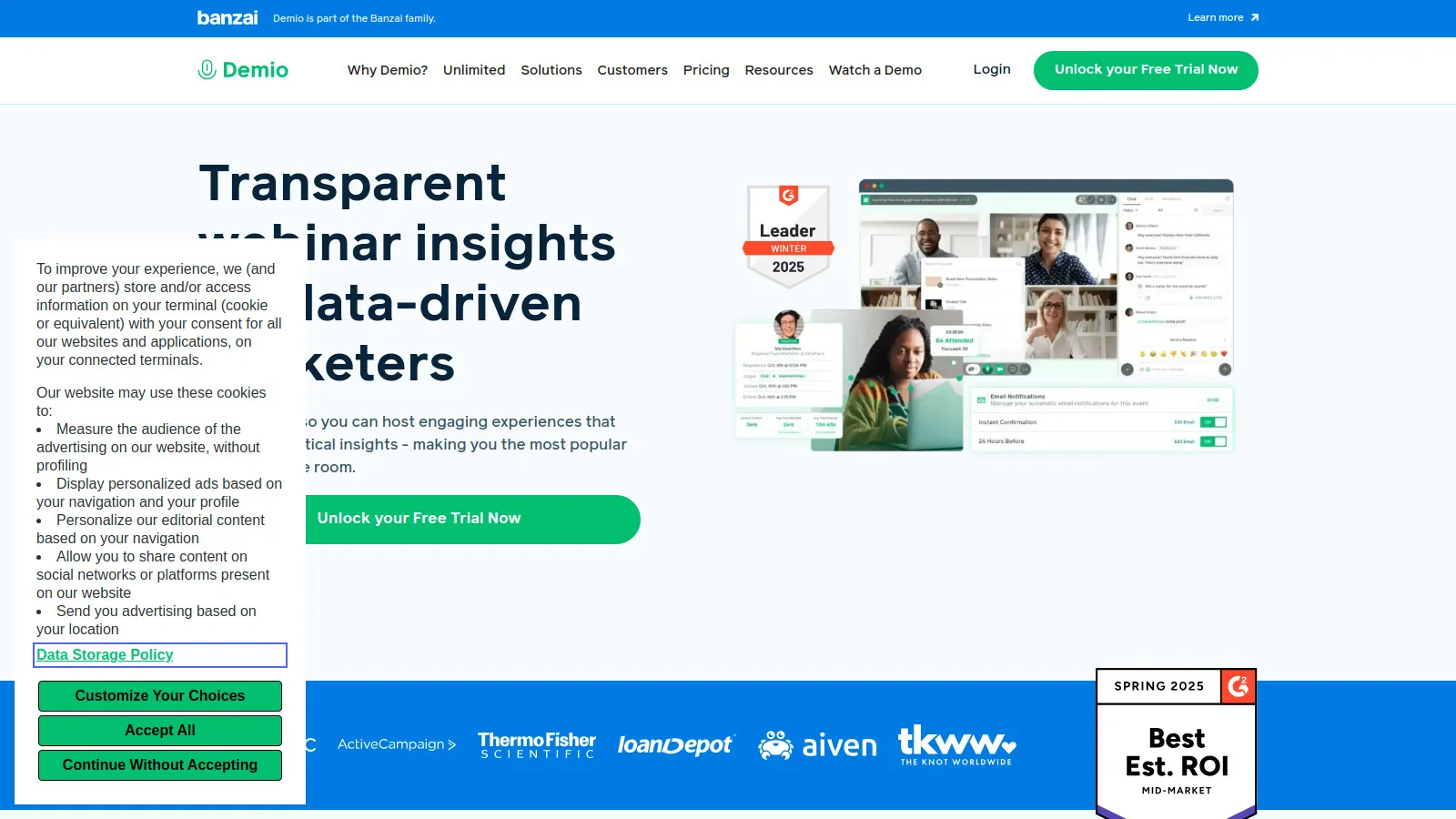
Demio was built from the ground up for marketing webinars. The browser-based experience requires no downloads for attendees. Registration pages are beautiful and customizable. Engagement features include polls, handouts, and featured actions (CTAs). Automated webinars run on schedule or on-demand. CRM integrations sync attendee data to HubSpot, Marketo, and more.
Starting price$49/mo
Strengths
Built specifically for marketing
No downloads for attendees
Beautiful registration pages
Strong engagement tools
Excellent CRM integrations
Limitations
Smaller attendee limits on lower tiers
Less suitable for large enterprises
Recording editing is basic
Who it's for: Best for marketing teams running regular lead gen webinars. Ideal when attendee experience and conversion optimization matter most.
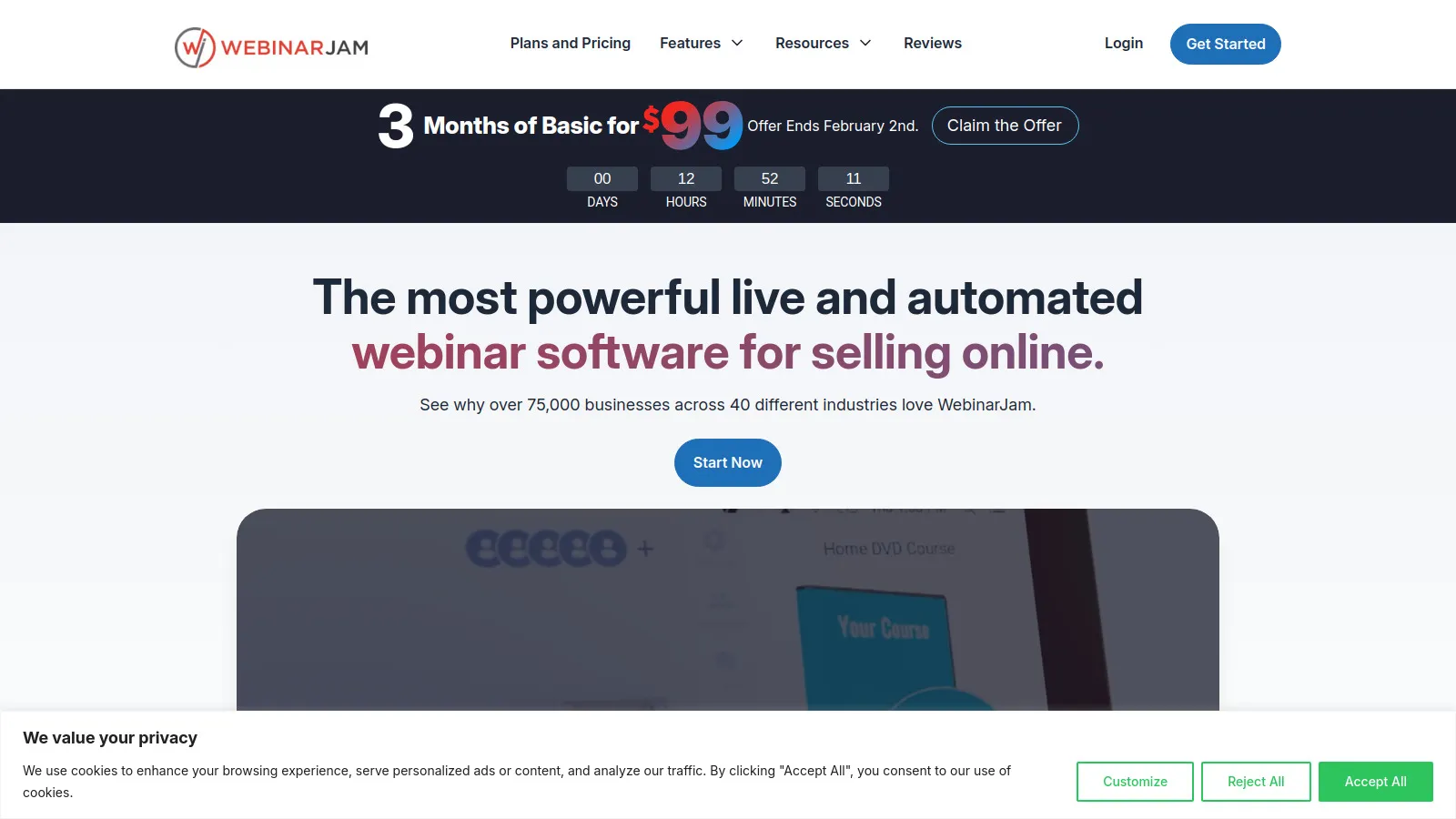
WebinarJam is designed for high-attendance selling webinars. Pop-up offers display CTAs during key moments. The platform handles thousands of attendees reliably. Replay and EverWebinar (sister product) create evergreen funnels. It's the choice for businesses using webinars as sales events.
Starting price$79/mo
Strengths
Built for selling webinars
Pop-up offers and CTAs
High attendance capacity
EverWebinar for evergreen
Reliable streaming
Limitations
Interface feels dated
Less marketing automation
Separate product for evergreen
Annual billing only
Who it's for: Best for businesses running sales-focused webinars with high attendance. Ideal for product launches and live selling events.
Livestorm offers modern video engagement for marketing and customer success. The platform handles webinars, virtual events, and product demos. Analytics track engagement and attribute pipeline. Integrations with Salesforce, HubSpot, and Zapier automate workflows. The interface is clean and modern.
Starting price$99/mo
Strengths
Modern all-in-one platform
Strong analytics and attribution
Multiple event types
Excellent integrations
Clean interface
Limitations
Higher pricing
Learning curve for features
Some features need enterprise tier
Who it's for: Best for growth-stage and enterprise companies wanting a modern, integrated video engagement platform.
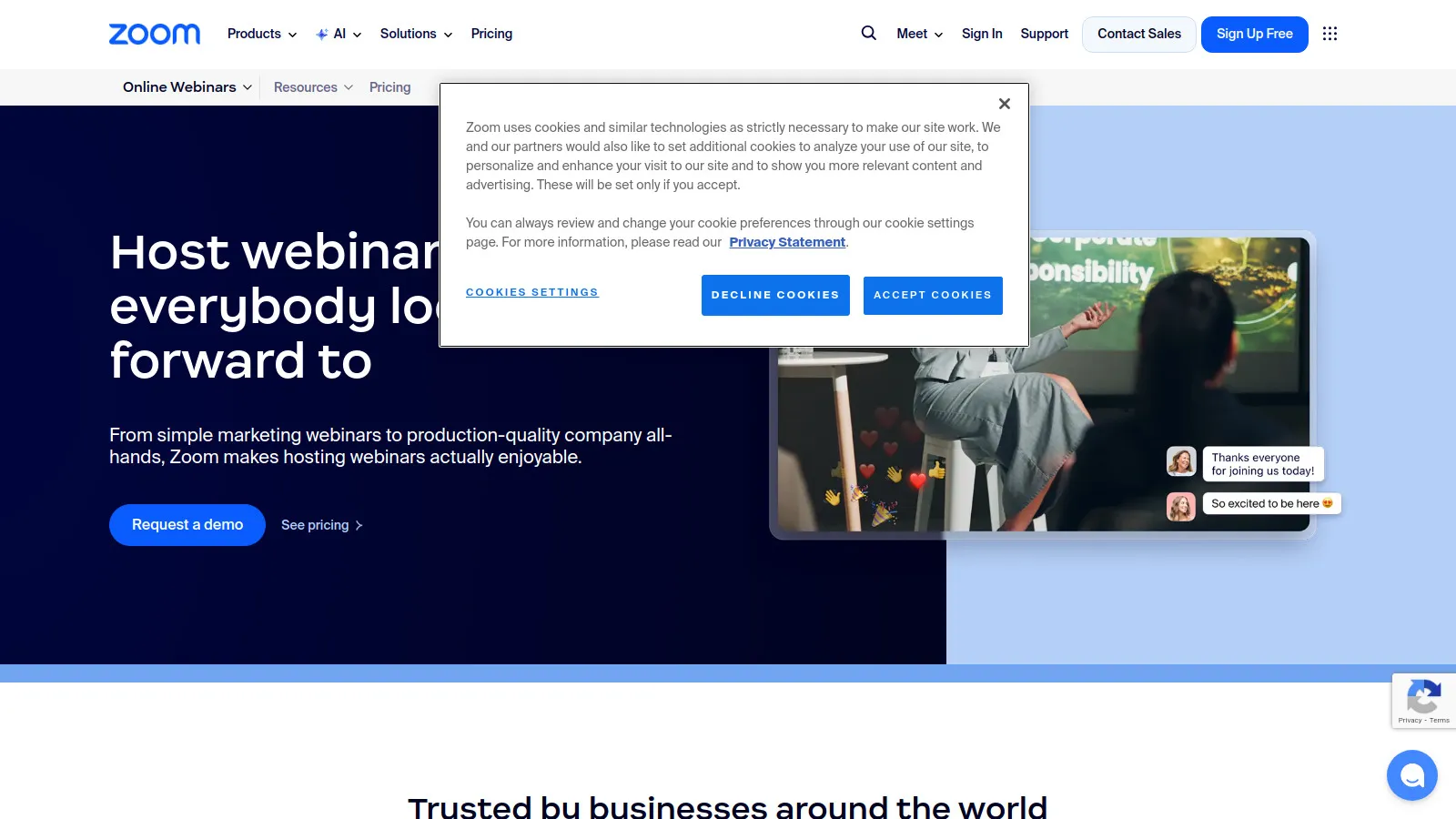
Zoom Webinars extends the familiar Zoom experience to large-scale events. Attendees know the interface, reducing friction. The platform scales to 50,000+ attendees. Practice sessions, Q&A, and polling engage audiences. It's the safe choice when audience familiarity matters.
Starting price$79/mo
Strengths
Familiar interface
Massive scale (50K+ attendees)
Reliable infrastructure
Breakout rooms available
Wide CRM integrations
Limitations
Less marketing-focused
Registration pages are basic
Requires Zoom subscription
Not built for evergreen
Who it's for: Best for enterprises needing large-scale webinars with reliable infrastructure and familiar UX.
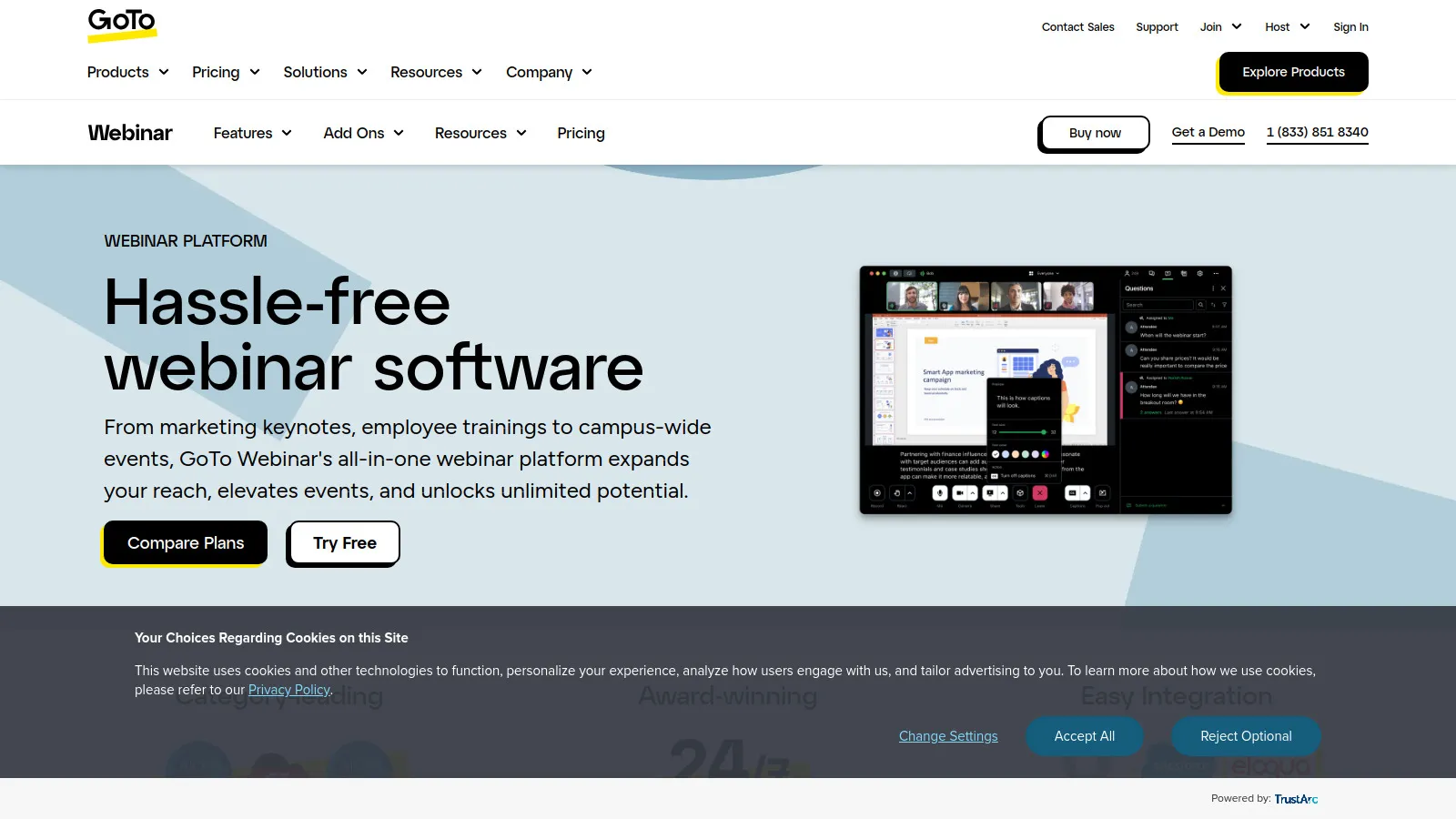
GoTo Webinar is a reliable workhorse for enterprise webinars. The platform has been around for years with proven reliability. Features cover registration, engagement, and analytics. It's straightforward without the bells and whistles of newer platforms.
Starting price$49/mo
Strengths
Rock-solid reliability
Proven enterprise platform
Good analytics
Mobile apps
Affordable entry price
Limitations
Interface feels dated
Limited marketing features
Registration pages basic
Less innovation
Who it's for: Best for enterprises that prioritize reliability and simplicity over cutting-edge marketing features.
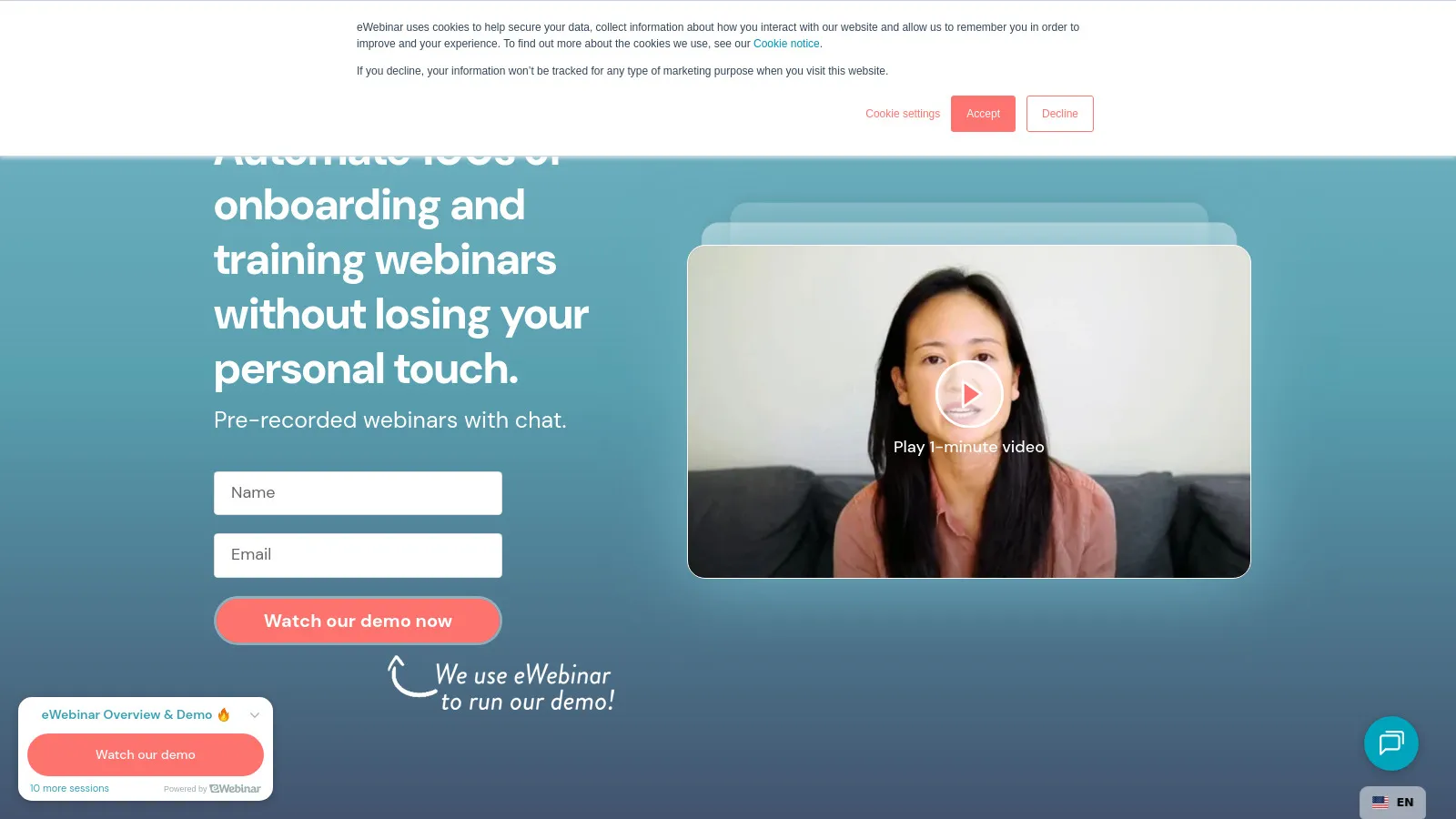
eWebinar specializes in automated and evergreen webinars. Upload a recording, and the platform simulates a live experience with scheduled sessions. Chat interactions happen in real-time (or via email). It's perfect for demos, onboarding, and recurring content that doesn't need live presenters.
Starting price$49/mo
Strengths
Best for automated webinars
Simulates live experience
Real-time chat interactions
Just-in-time sessions
Unlimited attendees
Limitations
Not for live webinars
Requires pre-recorded content
Less engagement than truly live
Who it's for: Perfect for teams running recurring webinars (demos, onboarding) who want to scale without live presenters.
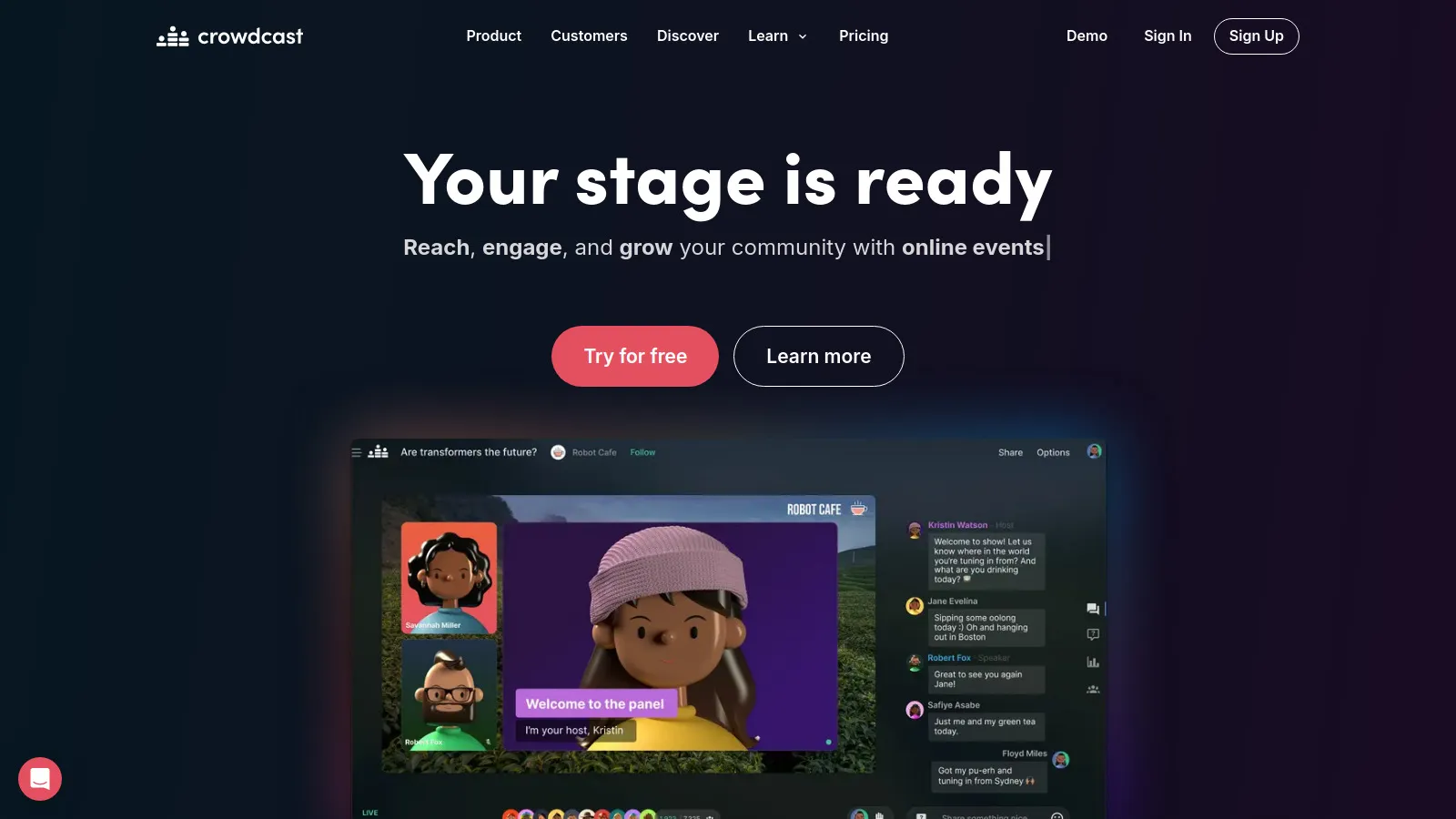
Crowdcast focuses on community and recurring webinar series. The platform makes it easy to host regular shows and build an audience. Attendees can ask questions that get upvoted. Replays are hosted on your Crowdcast channel. It's ideal for thought leadership and community building.
Starting price$49/mo
Strengths
Great for recurring series
Community-focused features
Q&A with upvoting
Replay channel
Easy to use
Limitations
Smaller attendee limits
Less CRM integration
Basic registration pages
Limited automation
Who it's for: Best for creators and brands building community through regular webinar series and thought leadership.
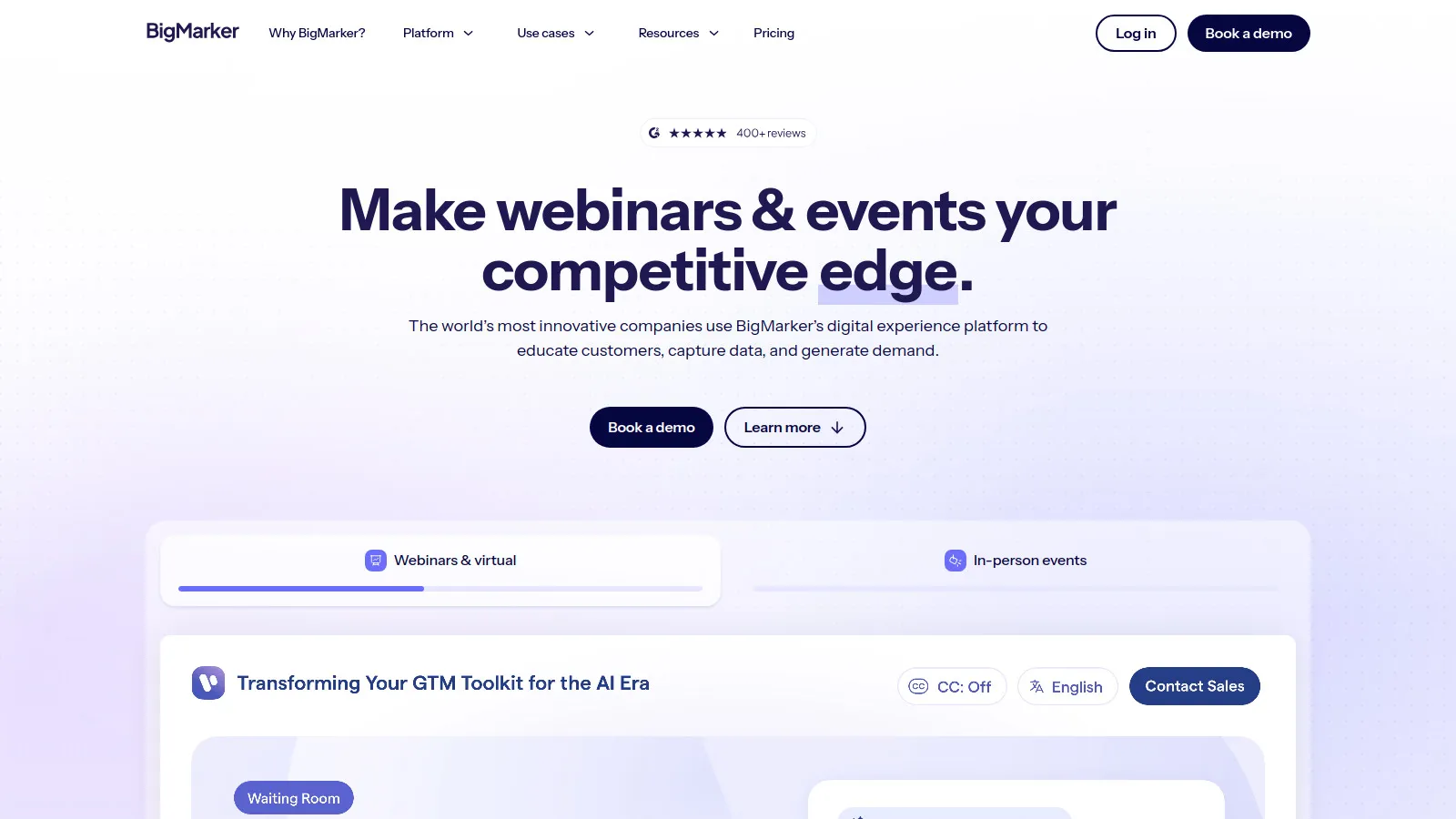
BigMarker handles both webinars and full virtual events. White-label options let agencies and enterprises brand the experience. Landing page builder creates custom registration experiences. The platform supports simulive, on-demand, and live formats.
Starting price$99/mo
Strengths
Webinars and virtual events
White-label capabilities
Landing page builder
Multiple webinar formats
Enterprise features
Limitations
Higher price point
Complex for simple webinars
Learning curve
Interface could be simpler
Who it's for: Best for agencies and enterprises needing white-label virtual event capabilities alongside webinars.
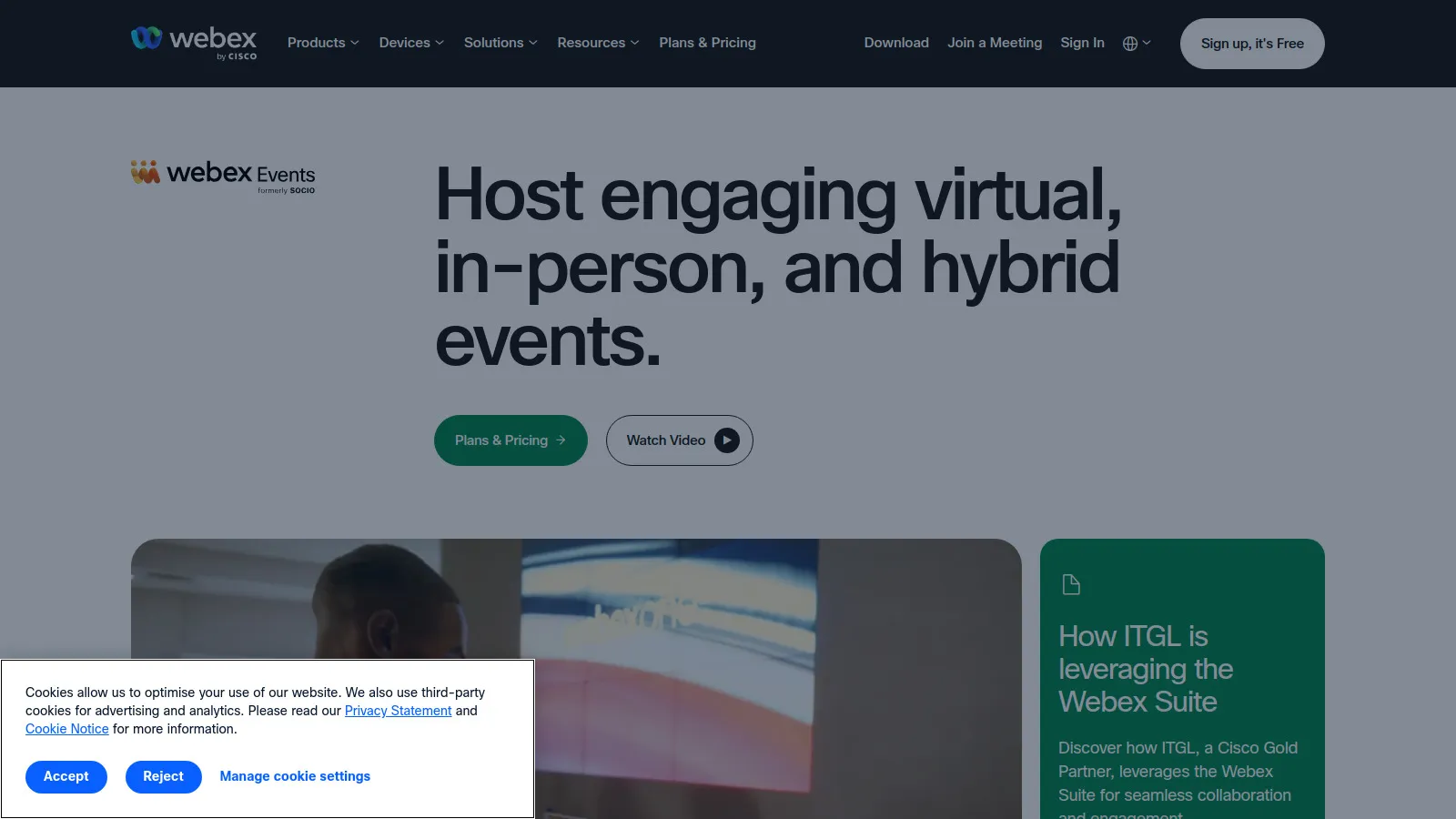
Webex Events (formerly Socio) brings enterprise-grade reliability and security to virtual events and webinars. The platform handles massive audiences with Cisco infrastructure. Security features meet enterprise compliance requirements. It integrates with Webex Meetings for a unified experience.
Starting price$150/mo
Strengths
Enterprise-grade security
Massive scale capacity
Cisco infrastructure
Virtual event features
Compliance-friendly
Limitations
Higher pricing
Less marketing-focused
Complex for small teams
Enterprise-oriented
Who it's for: Best for large enterprises with strict security requirements and existing Cisco/Webex investment.
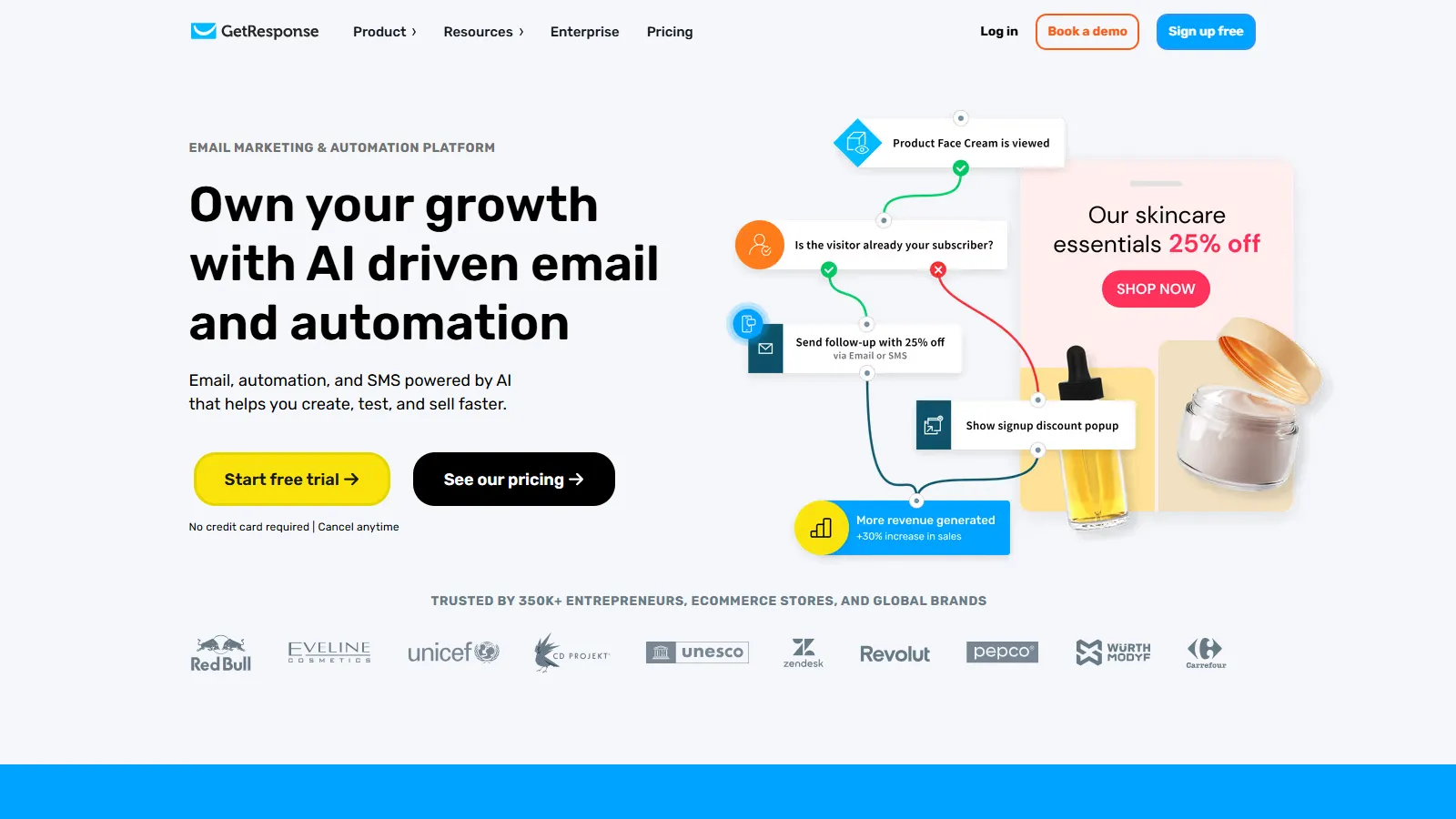
GetResponse includes webinar hosting in its marketing automation platform. No separate webinar subscription needed. Email marketing and webinars work together for seamless promotion and follow-up. It's the economical choice for teams already using GetResponse for email.
Strengths
Included in marketing platform
Email + webinar together
No separate subscription
Funnels and automation
Affordable bundle
Limitations
Fewer webinar-specific features
Smaller attendee limits
Less sophisticated than dedicated platforms
Basic engagement tools
Who it's for: Best for GetResponse users who want webinars without paying for a separate platform.
Choose Demio if you need Marketing-focused webinars.
Choose WebinarJam if you need Sales-focused live selling.
Choose Livestorm if you need Modern enterprise platform.
Choose Zoom Webinars if you need Large-scale events.
Choose GoTo Webinar if you need Reliable enterprise.
Choose eWebinar if you need Automated/evergreen webinars.
Choose Crowdcast if you need Community building.
Choose BigMarker if you need Virtual events + webinars.
Choose GetResponse Webinars if you need Already using GetResponse.
Common Questions
Average webinar attendance is 40-50% of registrants. High-performing webinars see 55-65%. To improve attendance, send reminder emails (day before, 1 hour before, at start), keep webinars at 45-60 minutes, and choose times that work for your audience.
Live webinars work best for high-value prospects, product launches, and interactive sessions. Automated webinars scale demos, onboarding, and recurring content. Many teams use live for flagship events and automated for always-on lead gen.
Send replay emails to registrants who didn't attend (30-50% of registrations). Host replays on landing pages with lead capture. Create on-demand versions that run like live webinars. Replays often generate more pipeline than live attendance.
CRM integration (HubSpot, Salesforce) is essential for lead routing. Marketing automation syncs attendee data for follow-up nurturing. Registration via your marketing platform (vs. webinar platform) often provides better data capture.