9 Best E-commerce SEO Tools for Online Stores in 2026
We tested 17+ e-commerce SEO platforms to find tools that excel at product page optimization, category structure analysis, schema implementation, and faceted navigation management—challenges unique to online stores that general SEO tools struggle with.
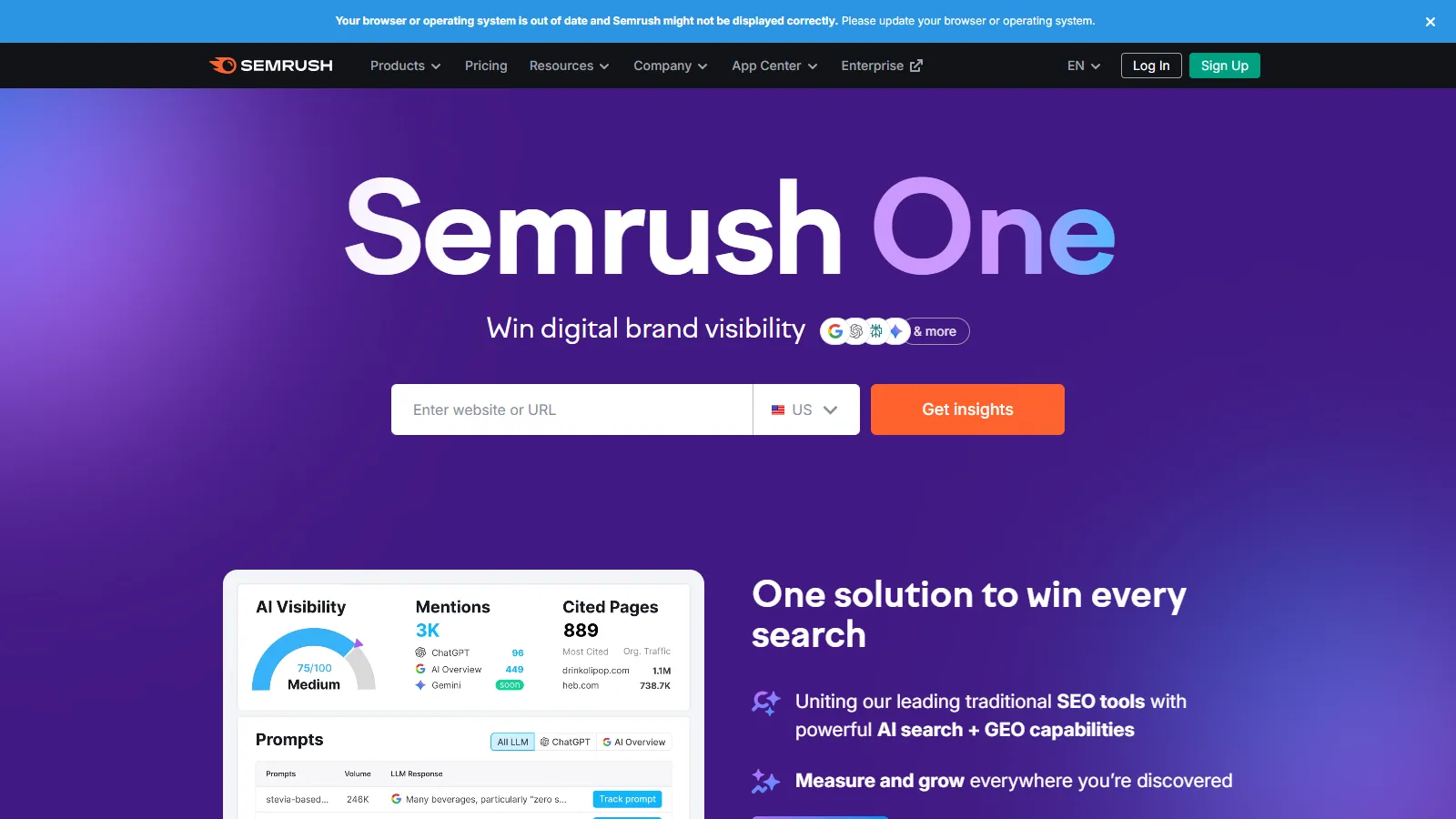
Semrush's E-commerce Toolkit extends its core SEO platform with features specifically for online stores. The Product Audit identifies out-of-stock pages still indexed, thin product descriptions under 200 words, and missing product schema. Category optimization tools find keyword opportunities where competitors rank but you don't. The Internal Linking report reveals orphaned products with no inbound links. Competitor analysis shows which products drive their organic traffic, helping you identify catalog gaps. For e-commerce SEO teams managing comprehensive optimization, Semrush covers technical audits, content strategy, and competitive intelligence in one platform.
Strengths
E-commerce-specific audits catch issues general tools miss
Category keyword research finds expansion opportunities
Integration with core Semrush for backlinks and keywords
Limitations
Premium pricing at $129+ monthly
E-commerce features require higher-tier plans
Learning curve for all features
Who it's for: Perfect for mid-to-large e-commerce businesses (1,000+ products) with dedicated SEO resources. If you're running comprehensive SEO across technical, content, and link building, Semrush provides e-commerce specialization within a full-featured platform.
Shopify SEO Manager is purpose-built for Shopify stores with deep platform integration. One-click product schema implementation adds Product, Review, Aggregaterating, and Offer markup to all products automatically. Bulk editing lets you optimize 1,000+ product titles, meta descriptions, and alt tags at once using AI-powered suggestions. The app audits your store for Shopify-specific issues like missing H1 tags, duplicate content across variants, and image optimization. For Shopify merchants without technical SEO expertise, SEO Manager automates best practices that would take hours manually.
Starting price$20/mo
Strengths
Purpose-built for Shopify with native integration
One-click product schema implementation
Bulk edit thousands of products simultaneously
AI-powered meta tag suggestions
Most affordable at $20/month
Limitations
Shopify-only—doesn't work on other platforms
Less comprehensive than enterprise tools
Limited competitor analysis features
Who it's for: Essential for Shopify store owners without SEO agencies. If you're managing 100-10,000 products on Shopify and need automation for meta tags, schema, and bulk optimization, SEO Manager delivers professional results at minimal cost.
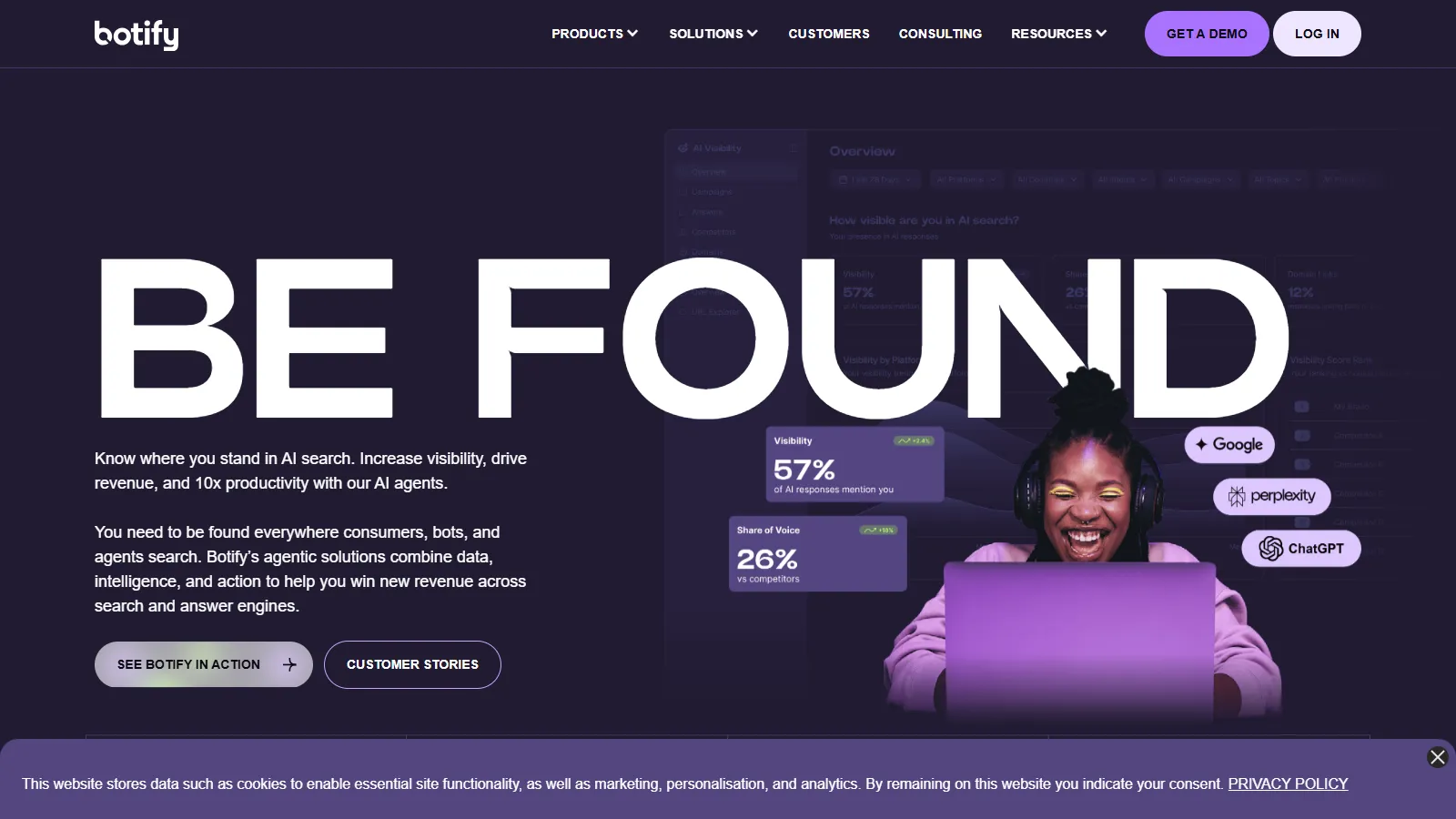
Botify is the enterprise solution for e-commerce sites with 50,000+ products. Log file analysis reveals which product pages Google actually crawls—often only 30-40% of large catalogs. This helps prioritize crawl budget by promoting high-value products and blocking low-value pages. JavaScript rendering analysis ensures product information loads properly for search engines. Segment analysis breaks performance down by category, brand, and product type to identify patterns. For enterprises where a 10% traffic increase equals millions in revenue, Botify's depth justifies its premium pricing.
Starting priceCustom
Strengths
Log file analysis optimizes crawl budget for massive catalogs
JavaScript rendering ensures product data visible to Google
Who it's for: Built for enterprise e-commerce (Amazon-scale retailers, major brands) with 50K+ products. If crawl budget optimization and technical depth drive meaningful revenue, Botify provides insights no other tool offers.
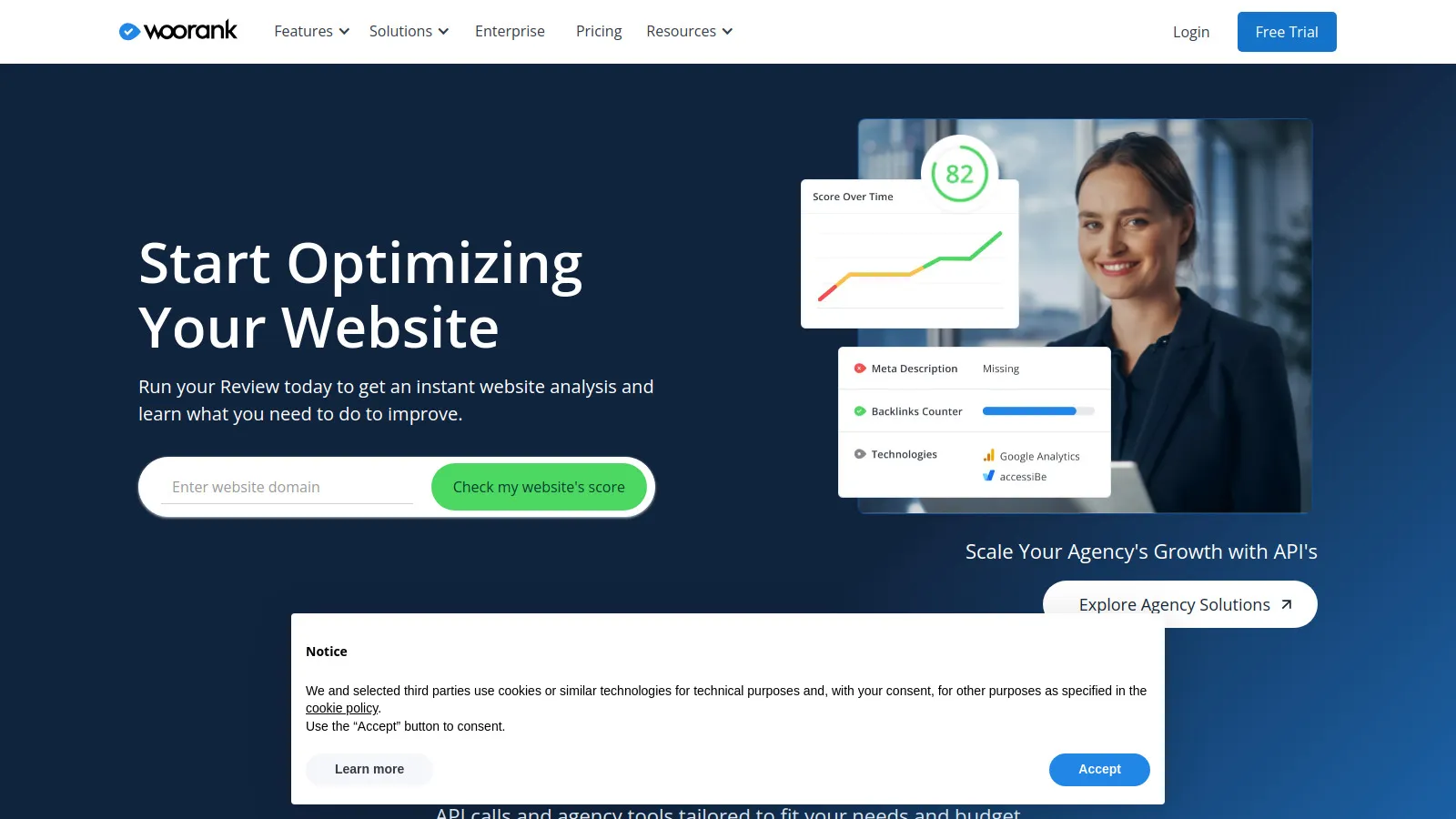
Woorank makes e-commerce SEO accessible with beginner-friendly audits and clear explanations. The site audit identifies product page issues like missing meta descriptions, slow loading times, and broken internal links—explained in plain English with priority levels. Competitor tracking monitors how rival stores rank for your target keywords. The white-label reports work well for agencies showing clients optimization opportunities. While less specialized than enterprise tools, Woorank covers 80% of e-commerce SEO fundamentals at affordable pricing.
Starting price$89/mo
Strengths
Beginner-friendly with clear explanations
Prioritized issues show what to fix first
Competitor tracking monitors rival stores
White-label reports for agencies
Good mobile optimization analysis
Limitations
Less e-commerce-specific than dedicated tools
Limited schema features
No bulk optimization capabilities
Who it's for: Perfect for small-to-mid e-commerce businesses (100-5,000 products) learning SEO. If you're managing your own SEO without agencies and need clear guidance, Woorank explains issues without overwhelming technical jargon.
Schema App automates product schema implementation across massive catalogs. Connect to your product feed and Schema App generates Product, Offer, AggregateRating, and Review markup for all SKUs. The bulk implementation saves hundreds of hours vs. manual coding. Automated validation catches schema errors before Google does. The dashboard monitors rich result performance in SERPs. For e-commerce teams where rich results drive CTR improvements (star ratings, pricing, availability), Schema App ensures consistent markup across all products.
Starting price$149/mo
Strengths
Automated product schema across 10,000+ SKUs
Bulk implementation saves massive time
Continuous validation prevents errors
Rich result monitoring tracks SERP performance
Support for all product schema types
Limitations
Premium pricing at $149+ monthly
Focused only on schema—no other SEO features
Requires product feed integration
Who it's for: Essential for mid-to-large e-commerce sites prioritizing rich results. If you have 1,000+ products and want star ratings, pricing, and availability in search results, Schema App automates what would be impossible manually.
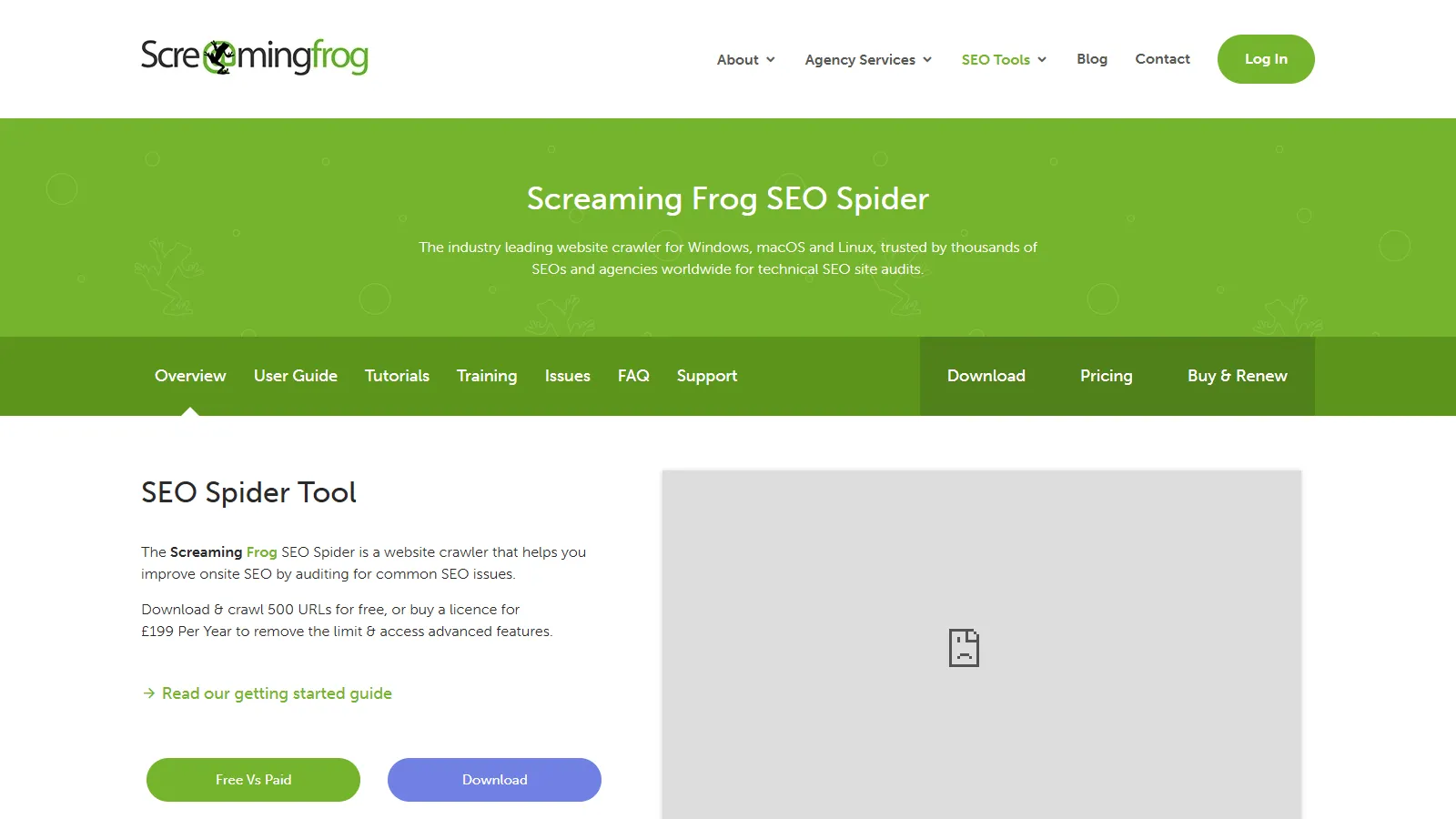
Screaming Frog's desktop crawler excels at technical e-commerce audits. Crawl your entire catalog to find orphaned products, redirect chains, and duplicate content across variants. Custom extraction pulls product-specific data (price, availability, reviews) from HTML for bulk analysis in spreadsheets. JavaScript rendering mode ensures AJAX-loaded product details are visible. For technical SEO consultants auditing e-commerce clients, Screaming Frog provides the depth needed to identify complex issues at scale.
Starting priceFree/$259/yr
Strengths
Custom extraction pulls product data for analysis
JavaScript rendering handles dynamic catalogs
Finds orphaned products with no internal links
Identifies duplicate content across variants
Free version handles 500 URLs
Limitations
Desktop software requires installation
Learning curve for advanced features
No ongoing monitoring—point-in-time audits
Who it's for: Best for SEO consultants and technical specialists auditing e-commerce clients. If you need deep crawls to diagnose complex issues on WooCommerce, Magento, or custom platforms, Screaming Frog provides unmatched technical visibility.
Ahrefs excels at competitive product research for e-commerce. Use Content Explorer to find products competitors rank for but you don't stock—revealing catalog expansion opportunities. The Keyword Gap tool shows terms competitors rank for that you miss. Analyze competitor category pages to understand their information architecture. For e-commerce teams making product selection and category strategy decisions, Ahrefs' competitive intelligence reveals market opportunities before competitors dominate them.
Starting price$99/mo
Strengths
Find products competitors rank for but you don't stock
Content Explorer discovers trending product content
Best backlink database for link building
Limitations
Not e-commerce-specific—general SEO tool
No product page audits or schema tools
Premium pricing at $99+ monthly
Who it's for: Perfect for e-commerce product managers and SEO strategists making catalog decisions. If you use SEO data to guide which products to stock and which categories to expand, Ahrefs' competitive research is invaluable.
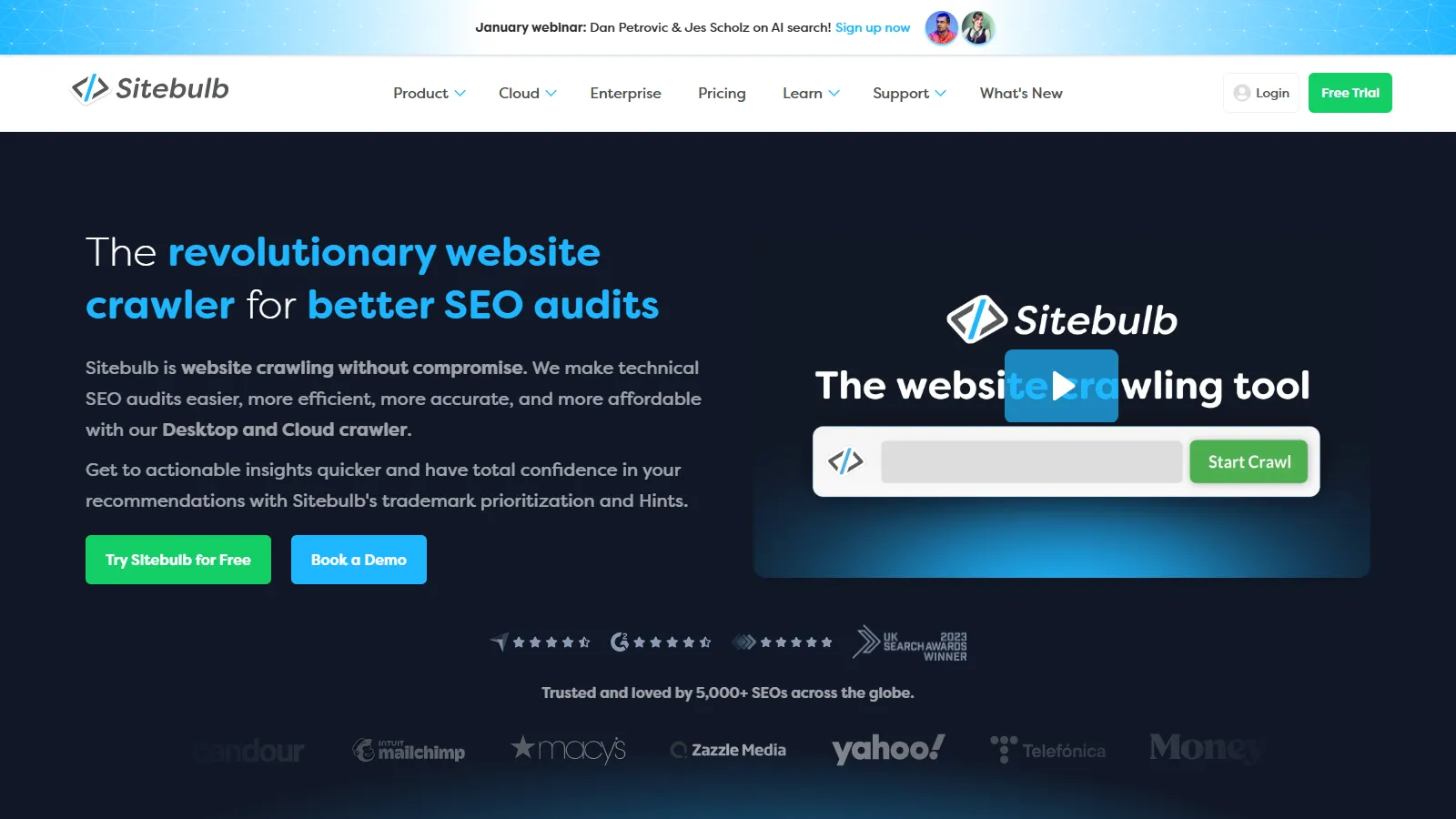
Sitebulb provides visual site architecture analysis perfect for understanding complex e-commerce structures. The crawl visualization shows category depth, internal linking patterns, and orphaned product clusters. Hints system flags e-commerce issues with actionable suggestions. URL scoring prioritizes which pages to optimize first based on potential impact. For agencies auditing e-commerce clients or in-house teams understanding their site structure, Sitebulb's visual approach makes complex issues comprehensible.
Starting price$17/mo
Strengths
Visual site architecture reveals structure problems
Hints system provides actionable e-commerce advice
URL scoring prioritizes high-impact pages
Affordable at $17/month desktop version
Excellent PDF reports for clients
Limitations
Desktop software requires installation
No ongoing monitoring—audit-focused
Less e-commerce-specific than dedicated tools
Who it's for: Perfect for agencies and consultants auditing e-commerce clients. If you need to explain complex site architecture issues to non-technical stakeholders, Sitebulb's visuals make problems obvious at a fraction of enterprise tool costs.
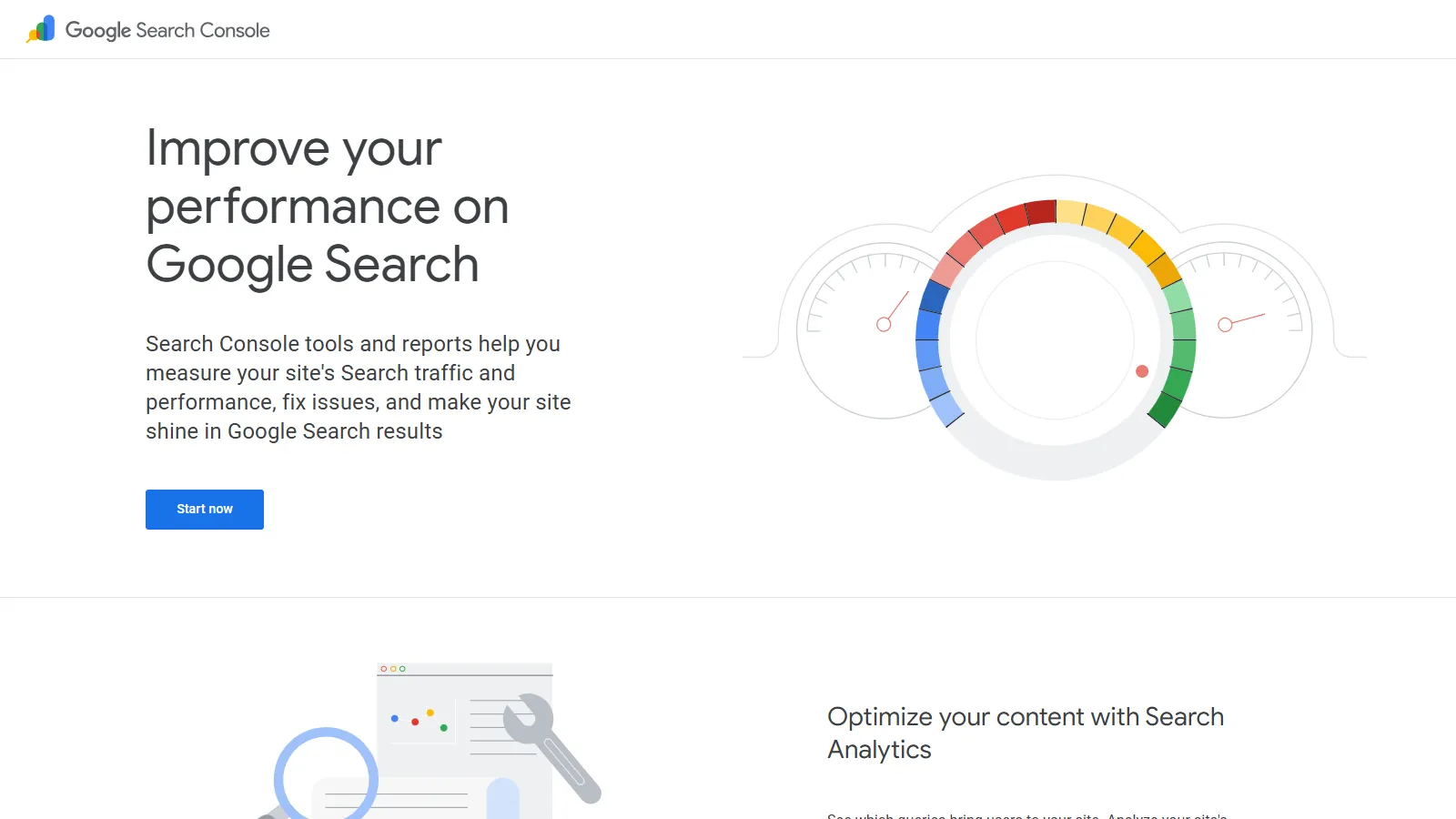
Google Search Console provides free baseline e-commerce monitoring. The Product rich results report shows schema errors preventing star ratings and pricing from appearing in search. Index Coverage identifies product pages blocked from indexing. Core Web Vitals monitoring ensures fast page loads critical for e-commerce conversions. Performance reports show which products and categories drive the most clicks. For e-commerce businesses getting started with SEO, GSC establishes baseline visibility metrics without tool costs.
Starting priceFree
Strengths
Completely free from Google directly
Product rich results report validates schema
Index Coverage catches indexation problems
Core Web Vitals for e-commerce performance
Performance data shows top products
Limitations
No competitive analysis
Limited historical data (16 months)
No actionable recommendations
Basic compared to paid tools
Who it's for: Essential baseline for all e-commerce stores regardless of size. Even with paid tools, GSC provides Google's official view of your site. For small stores and beginners, it covers essential monitoring without budget.
We audited 12 e-commerce sites (Shopify, WooCommerce, Magento) with 500-50,000 products, measuring issue detection accuracy and optimization impact on rankings.
E-commerce Specificity (30%) — Identifies issues unique to product pages and e-commerce structure.
Scale Handling (25%) — Performance with 10,000+ products and complex faceted navigation.
Schema Capabilities (20%) — Product, review, and availability markup implementation and validation.
Actionability (15%) — Clear recommendations with prioritization for e-commerce teams.
Platform Integration (10%) — Shopify, WooCommerce, BigCommerce, and Magento compatibility.
How to Choose
Choose Semrush if you need comprehensive e-commerce SEO platform.
Choose Shopify SEO Manager if you need Shopify store optimization.
Choose Botify if you need enterprise 50K+ products.
Choose Woorank if you need beginner-friendly audits.
Choose Schema App if you need product schema at scale.
Choose Screaming Frog if you need deep technical audits.
Choose Ahrefs if you need competitive product research.
Choose Sitebulb if you need visual site architecture.
Choose Google Search Console if you need free baseline monitoring.
Common Questions
E-commerce sites face unique challenges: 1) Scale (10,000+ products vs. 100 blog posts), 2) Thin content (product descriptions are short), 3) Duplicate content (variants and filters create copies), 4) Faceted navigation (filter URLs can create crawl waste), 5) Out-of-stock pages (temporary indexation issues). E-commerce tools handle these specifically.
Keep them indexed if restocking soon (within 30 days) using "out of stock" schema. If permanently discontinued, 301 redirect to similar products or category pages. Noindexing causes ranking loss when restocked. Balance: indexed out-of-stock pages with proper schema maintain rankings while being transparent to users.
Critical—product schema enables star ratings, pricing, and availability in search results, increasing CTR by 20-35%. Rich results make your listings stand out from competitors. Google prefers properly marked-up e-commerce sites. Schema also helps Google understand product relationships, variants, and reviews.
Thin product descriptions under 200 words. Copying manufacturer descriptions creates duplicate content across retailers. Invest in unique, detailed descriptions (300+ words) highlighting benefits, use cases, and specifications. This single factor drives most product page ranking differences between competitors.
Category pages: Target broader keywords ("running shoes"), include rich intro content (500+ words), optimize filters for crawling. Product pages: Target specific long-tail ("Nike Air Zoom Pegasus 40 men's"), focus on unique descriptions, optimize images. Categories capture upper-funnel traffic, products capture buying-intent searches.