
Affiliate marketing and listicle content are natural partners. Best-of pages drive product research traffic; affiliate programs monetize that traffic through purchase referrals. When done ethically, everyone wins: readers get useful recommendations, publishers earn revenue, and brands get customers.
But affiliate content exists in a regulated space. The FTC has clear rules about disclosing material connections between publishers and products. Google has its own requirements for marking sponsored links. Violating either creates real risk—FTC enforcement actions or search penalties.
This guide covers both regulatory and search engine compliance for affiliate listicles. We'll address what's required, how to implement it, and how to maintain trust while monetizing your comparison content.
FTC Disclosure Requirements
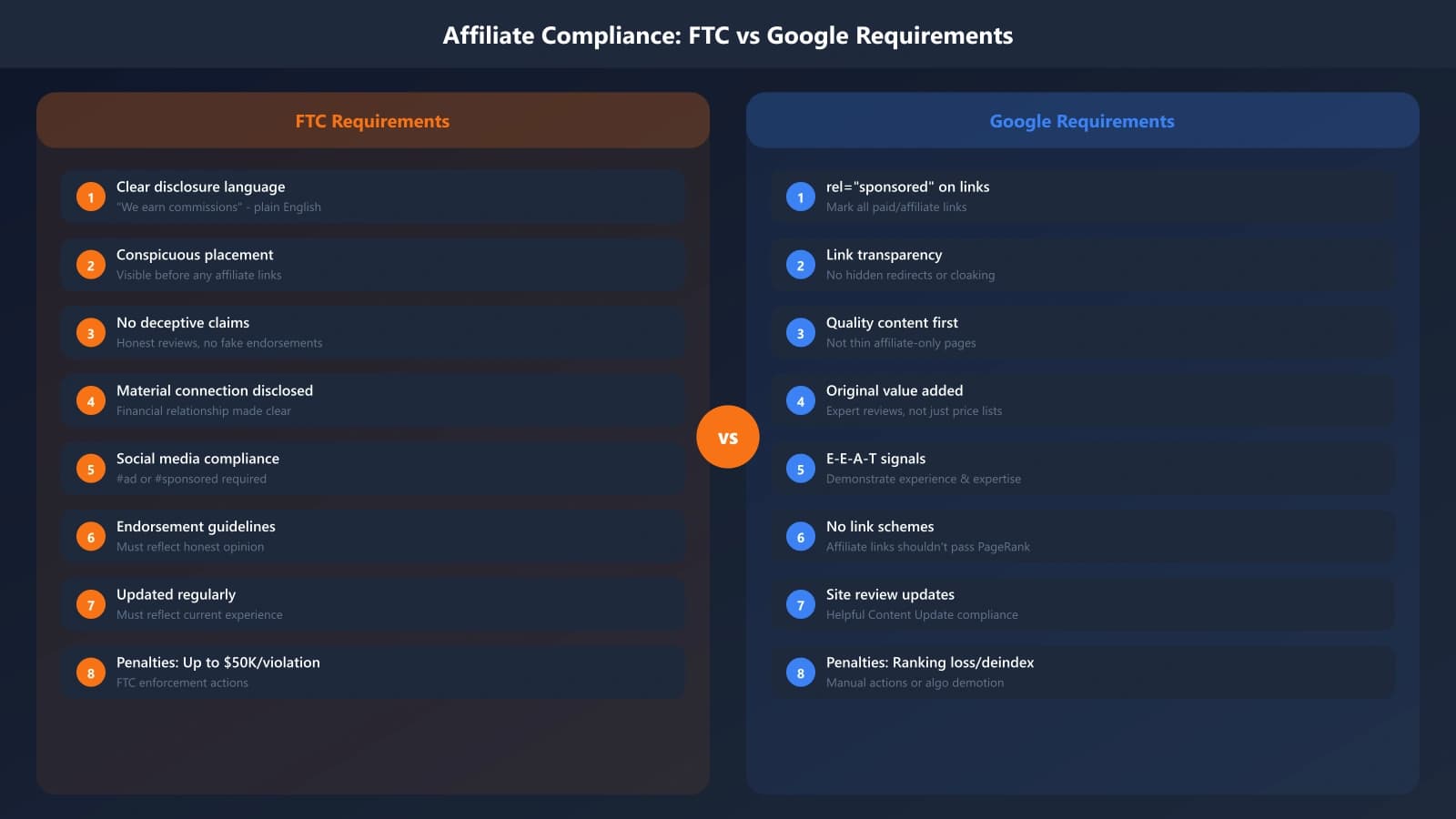
The Federal Trade Commission requires disclosure of “material connections” between endorsers and products. For affiliate content, this means clearly telling readers you may earn money from their purchases.
Clear and Conspicuous
FTC guidance uses the phrase “clear and conspicuous” repeatedly. A disclosure buried in footer links or requiring scrolling to find doesn't meet this standard. The disclosure must be:
- Prominent — Near the beginning of content, not hidden
- Visible — Sized and colored to be readable
- Understandable — Plain language, not legalese
- Unavoidable — Readers should encounter it naturally
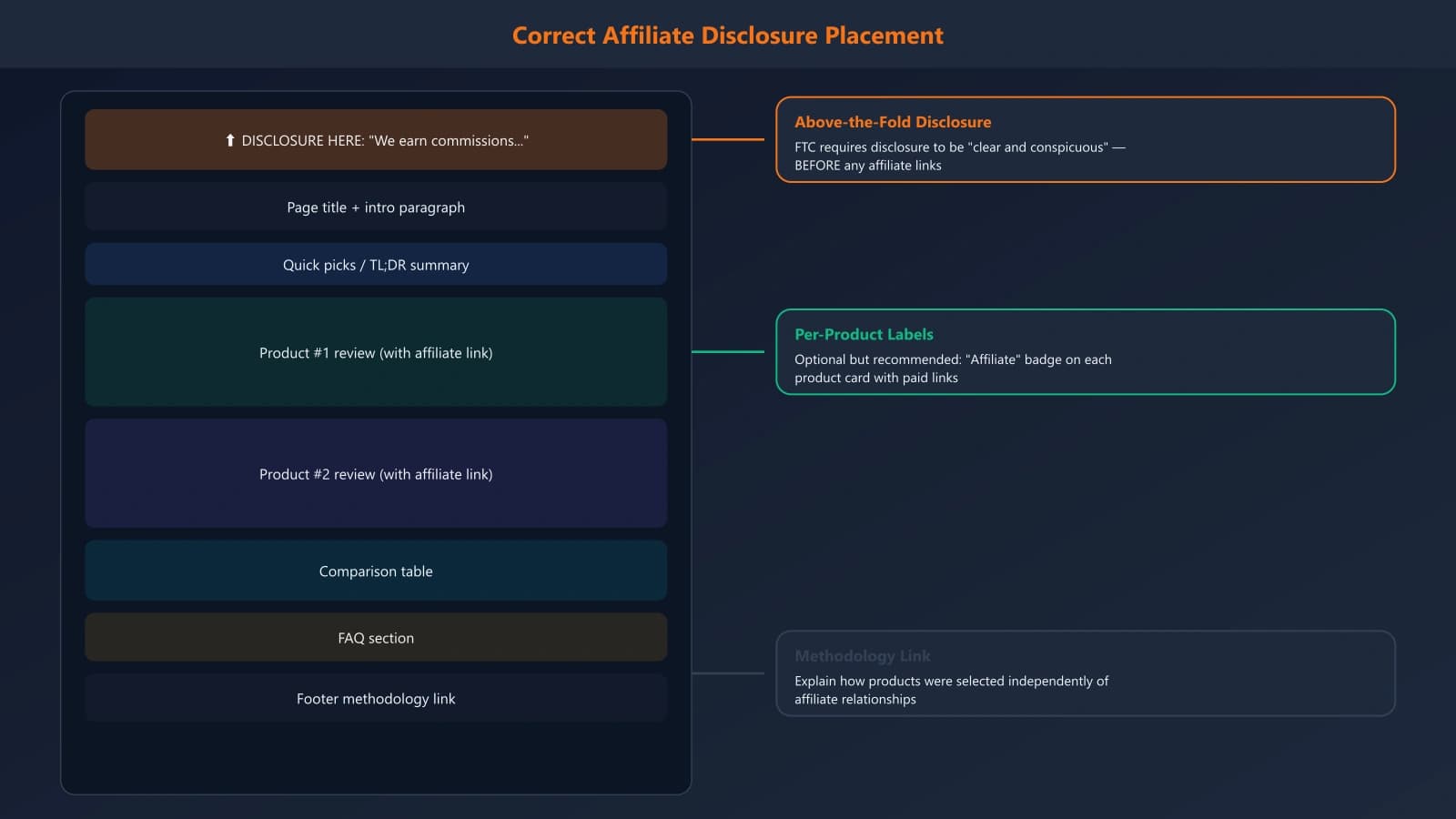
In practice, this means placing a disclosure statement in the first few paragraphs of any affiliate content. A disclosure visible only in mobile views, or requiring horizontal scroll, fails the test.
Disclosure Language Examples
The FTC doesn't mandate specific wording, but the meaning must be clear. Effective examples:
“We may earn a commission if you purchase through links on this page. This doesn't affect our rankings or recommendations.”
“Some products in this list pay us a referral fee. Our recommendations are based on testing and research, not commission rates.”
Avoid vague language like “partnerships” or “support our site” that obscures the financial relationship. Be direct about earning money.
Google's Affiliate Guidelines
Beyond FTC rules, Google has its own requirements for affiliate content that affect rankings and potential manual actions.
Rel=”sponsored” Attribute
Google requires that affiliate links include the rel=”sponsored” attribute. This tells Google the link is a paid relationship, not an organic editorial endorsement.
You can combine with other rel values: rel=”sponsored nofollow noopener” is common for affiliate links that open in new tabs.
Not marking affiliate links appropriately can trigger manual actions for “unnatural outbound links” or link scheme violations.
Avoiding “Thin Affiliate” Penalties
Google specifically warns against “thin affiliate” sites—pages that exist primarily to funnel clicks to affiliate merchants without adding value. Signs of thin affiliate content:
- Product descriptions copied from merchant sites
- No original reviews or analysis
- Comparisons that don't actually compare anything
- Lists ranked by commission rate rather than quality
- Missing disclosure of affiliate relationships
The antidote is genuine editorial value. Original testing, specific use-case recommendations, honest pros and cons—content that would be useful even without the affiliate links.
| Thin Affiliate | Value-Added Affiliate |
|---|---|
| Copied product descriptions | Original hands-on reviews |
| “Top 10” with no criteria | Clear ranking methodology |
| All products are “best” | Honest downsides included |
| Hidden disclosure | Upfront, clear disclosure |
| Affiliate links everywhere | Links where they help users |
Create Compliant Affiliate Listicles
Generate comparison pages with proper disclosures and rel=sponsored links built in.
Try for Free
Building Trust Through Transparency
Compliance isn't just about avoiding penalties—it's about building sustainable audience trust. Transparent affiliate content often performs better long-term than content that hides incentives.
Ranking Integrity
The most damaging perception for affiliate content is that rankings are bought rather than earned. Counter this proactively:
- Publish your ranking methodology
- Include products you don't have affiliate relationships with
- Rank products with lower commissions above higher-paying ones when justified
- Be specific about what makes your #1 pick the top choice
Readers who trust your recommendations convert better and return more often. Short-term commission optimization destroys this trust.
Disclosure as Credibility Signal
Counterintuitively, clear disclosure can increase trust. It signals that you're operating transparently, that you're confident enough in your recommendations to admit the financial relationship.
“Yes, we earn a commission—and we stand behind these recommendations anyway” is a stronger position than trying to hide the relationship.
Implementation Checklist
Use this checklist for every affiliate listicle before publishing.
Disclosure:
- Clear disclosure appears above the fold
- Language explicitly mentions commission/earnings
- Disclosure is styled to be noticeable (not tiny gray text)
- Statement addresses how rankings are determined
Links:
- All affiliate links use rel=”sponsored”
- Links open in new tabs (rel=”noopener”)
- Non-affiliate links to official product pages are available
Content:
- Original content, not copied from merchants
- Genuine evaluation/comparison, not just listing
- Pros AND cons for each product
- Clear ranking criteria explained
Sustainable Affiliate Content
Affiliate listicles can be a sustainable business model when built on a foundation of compliance and trust. The sites that succeed long-term—Wirecutter, RTINGS, Tom's Guide—combine genuine editorial quality with transparent monetization.
FTC and Google requirements aren't obstacles to monetization; they're guardrails that keep the affiliate ecosystem credible. Meet those requirements, focus on genuine user value, and affiliate revenue becomes sustainable rather than risky.
For a detailed look at how successful affiliate content works in practice, see our Wirecutter Teardown.

Product Manager at BestPage. Pioneer in AEO research since 2024, exploring the convergence of SEO and GEO (Generative Engine Optimization). Led multiple AI-powered content optimization projects that achieved 300%+ citation increases in ChatGPT and Perplexity.