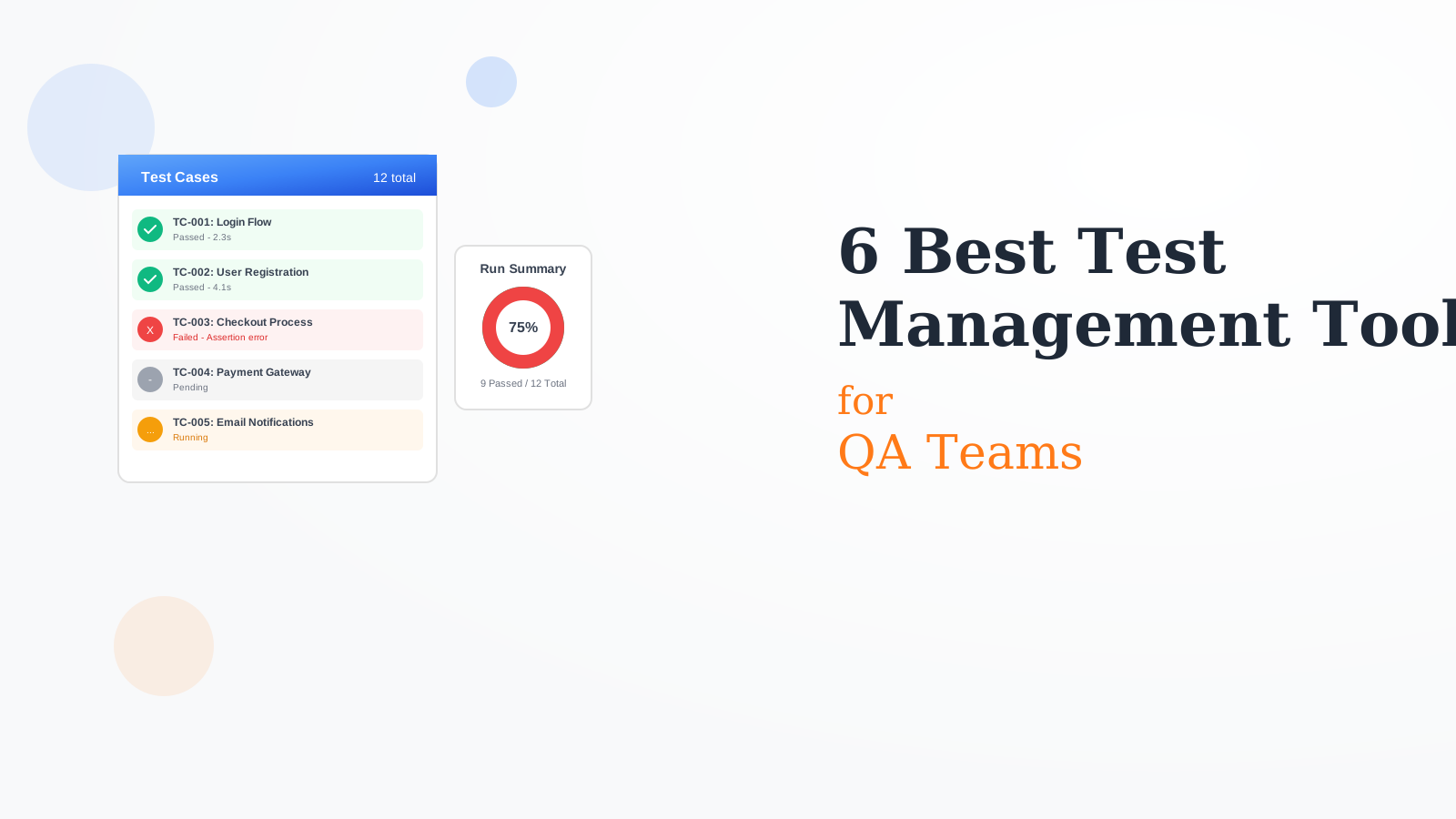
We tested 12+ test management platforms to find the best for QA teams. These tools help you organize test cases, track test runs, and report on quality metrics across manual and automated testing.
TestRail is the industry standard for test management. Organized test cases with reusable steps. Test runs track execution status. Reports give stakeholders visibility. Integrates with every dev tool. The safe choice for any team.
Starting price$40/mo
Strengths
Industry standard
Great reports
Many integrations
Reusable steps
Reliable
Limitations
Can be expensive
UI dated
Learning curve
Heavy for small teams
Who it's for: Best for QA teams wanting proven, comprehensive test management.
Zephyr Scale lives inside Jira. Create and run tests without leaving your workflow. Link tests to stories and bugs. Test cycles match sprint planning. Reports show quality alongside velocity. Natural for Jira-centric teams.
Starting price$10/user
Strengths
Native Jira
No context switch
Good linking
Sprint-friendly
Affordable
Limitations
Jira required
Less standalone features
Performance can lag
Limited outside Jira
Who it's for: Best for teams who live in Jira and want testing there too.
qTest is built for enterprise QA. Handles thousands of tests across products. Advanced analytics track quality trends. Automation integration for CI/CD. Scales to large organizations with complex needs.
Starting priceEnterprise
Strengths
Enterprise scale
Advanced analytics
Automation focused
Multi-project
Support
Limitations
Expensive
Complex setup
Overkill for small teams
Learning curve
Who it's for: Best for large enterprises with complex QA requirements.
TestLink is the free, open-source option. Self-hosted for full control. Basic test case and execution management. Good for teams with simple needs and limited budget. Community-supported development.
Starting priceFree
Strengths
Completely free
Open source
Self-hosted
Basic features
No vendor lock
Limitations
Dated interface
Limited features
Self-maintenance
Slower development
Who it's for: Best for teams needing free test management with basic features.
PractiTest excels at traceability for regulated industries. Requirements link to tests link to defects. Audit trails for compliance. Customizable fields for any process. Good for teams needing documentation and proof.
Starting price$49/mo
Strengths
Traceability
Compliance ready
Requirements linking
Customizable
Good support
Limitations
Higher price
Complex for simple needs
Learning curve
Can be heavy
Who it's for: Best for regulated industries needing full traceability and compliance.
Xray is another strong Jira-native option. BDD support with Cucumber integration. Modern interface within Jira. Good automation framework connections. Strong alternative to Zephyr for Jira teams.
Starting price$10/user
Strengths
Jira native
BDD support
Modern UI
Automation links
Good docs
Limitations
Jira required
Similar to Zephyr
Can get complex
Add-on costs
Who it's for: Best for Jira teams wanting BDD support and modern interface.
We tested each platform for managing real QA workflows.
Test Organization (25%) — Ease of creating and organizing test cases.
Execution Tracking (25%) — Running tests and tracking results.
Reporting (20%) — Quality metrics and stakeholder reports.
Integration (20%) — Connecting to dev tools and automation.
Pricing (10%) — Value for QA teams of different sizes.
How to Choose
Choose TestRail if you need need proven solution.
Choose Zephyr Scale if you need use Jira.
Choose qTest if you need enterprise needs.
Choose TestLink if you need limited budget.
Choose PractiTest if you need need compliance.
Common Questions
Yes. Test management tools should show complete quality picture. Link automated test results to test cases. Track which cases have automation and which are manual. Report on overall coverage regardless of execution method.
Detailed enough for someone new to execute consistently. Include preconditions, clear steps, and expected results. Too detailed becomes maintenance burden. Find balance where cases are reproducible but maintainable.
When spreadsheets become painful - usually around 100+ test cases or 3+ testers. When you need traceability to requirements. When stakeholders want quality reports. When coordinating manual and automated testing.