7 Best Agile Project Management Tools for Scrum Teams in 2026
We tested 25+ PM tools to find the best options for agile and scrum teams. These platforms support sprints, backlogs, kanban boards, and velocity tracking to help teams deliver iteratively.
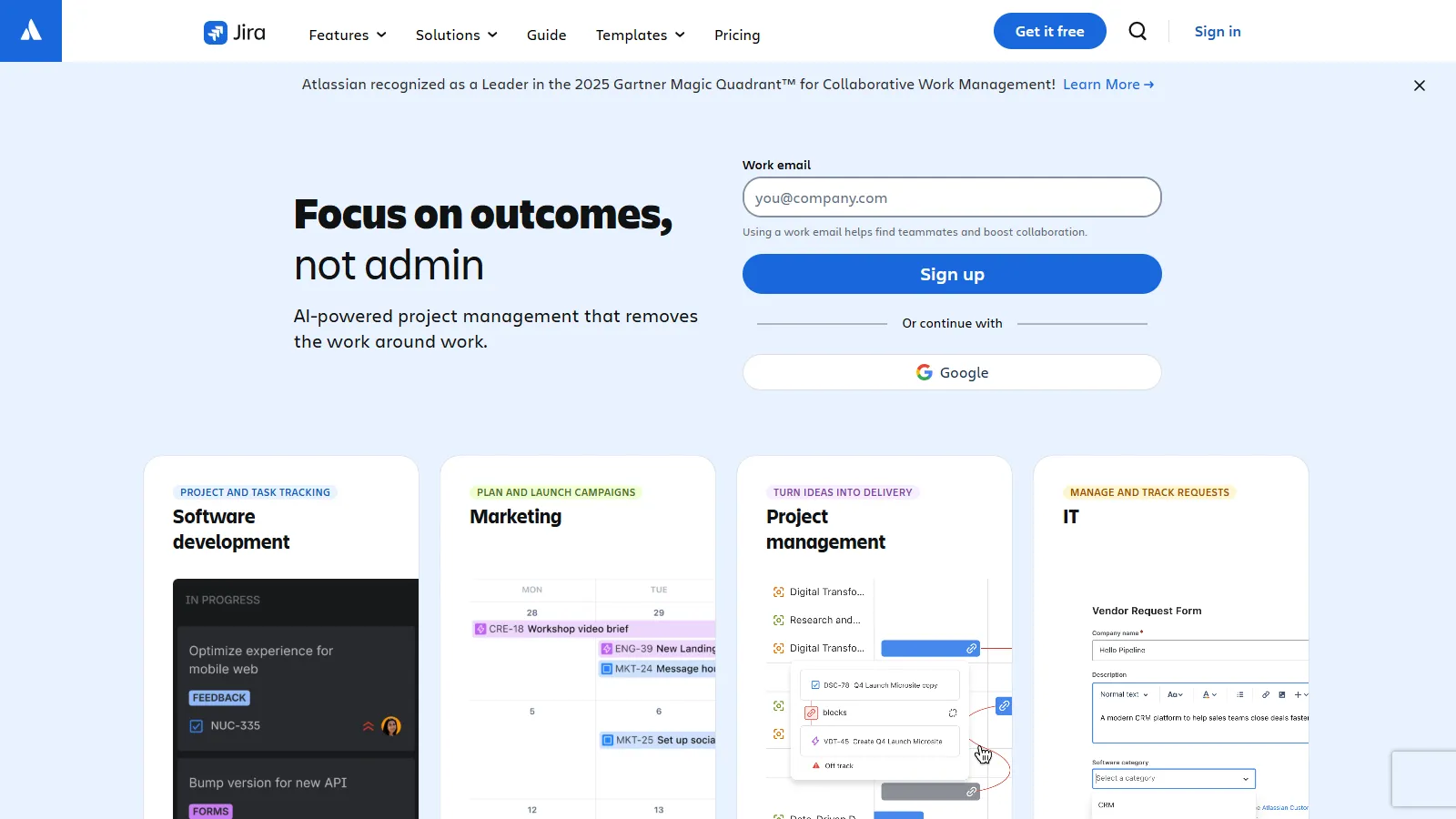
Jira is the industry standard for agile software development. It offers comprehensive scrum and kanban support with sprints, backlogs, roadmaps, and extensive reporting. Deep integrations with development tools make it essential for engineering teams.
Starting priceFree/$8.15/user
Strengths
Most comprehensive agile features
Deep developer tool integrations
Extensive reporting and analytics
Scales from small teams to enterprise
Large marketplace of add-ons
Limitations
Can be complex for non-developers
Configuration requires learning
Performance can lag with large projects
Interface feels dated to some
Who it's for: Best for software development teams that need full scrum or kanban implementation with DevOps integrations. Ideal when you need velocity tracking, burndown charts, and CI/CD connections.
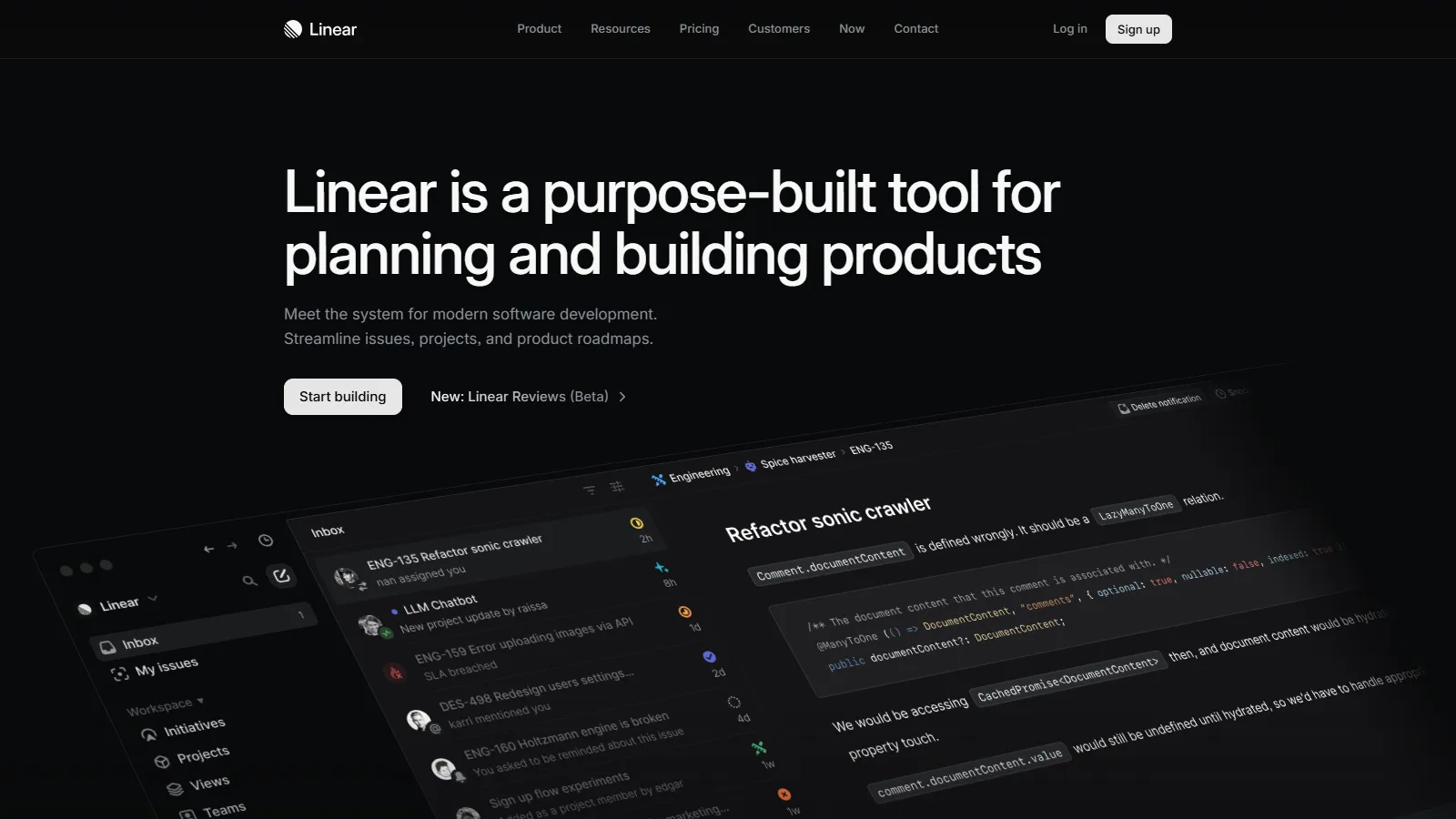
Linear is the fastest, most beautifully designed agile tool available. Built for modern software teams, it emphasizes keyboard-driven workflows and minimal friction. Cycles replace sprints with a more flexible approach to iteration planning.
Starting priceFree/$8/user
Strengths
Fastest agile tool available
Beautiful modern interface
Keyboard-first navigation
Excellent Git integrations
Thoughtful cycle-based planning
Limitations
Less customizable than Jira
Smaller integration ecosystem
Opinionated workflow may not fit all
Best suited for software teams
Who it's for: Perfect for software teams that value speed and design. Ideal for startups and modern engineering teams frustrated with slower, more complex tools.
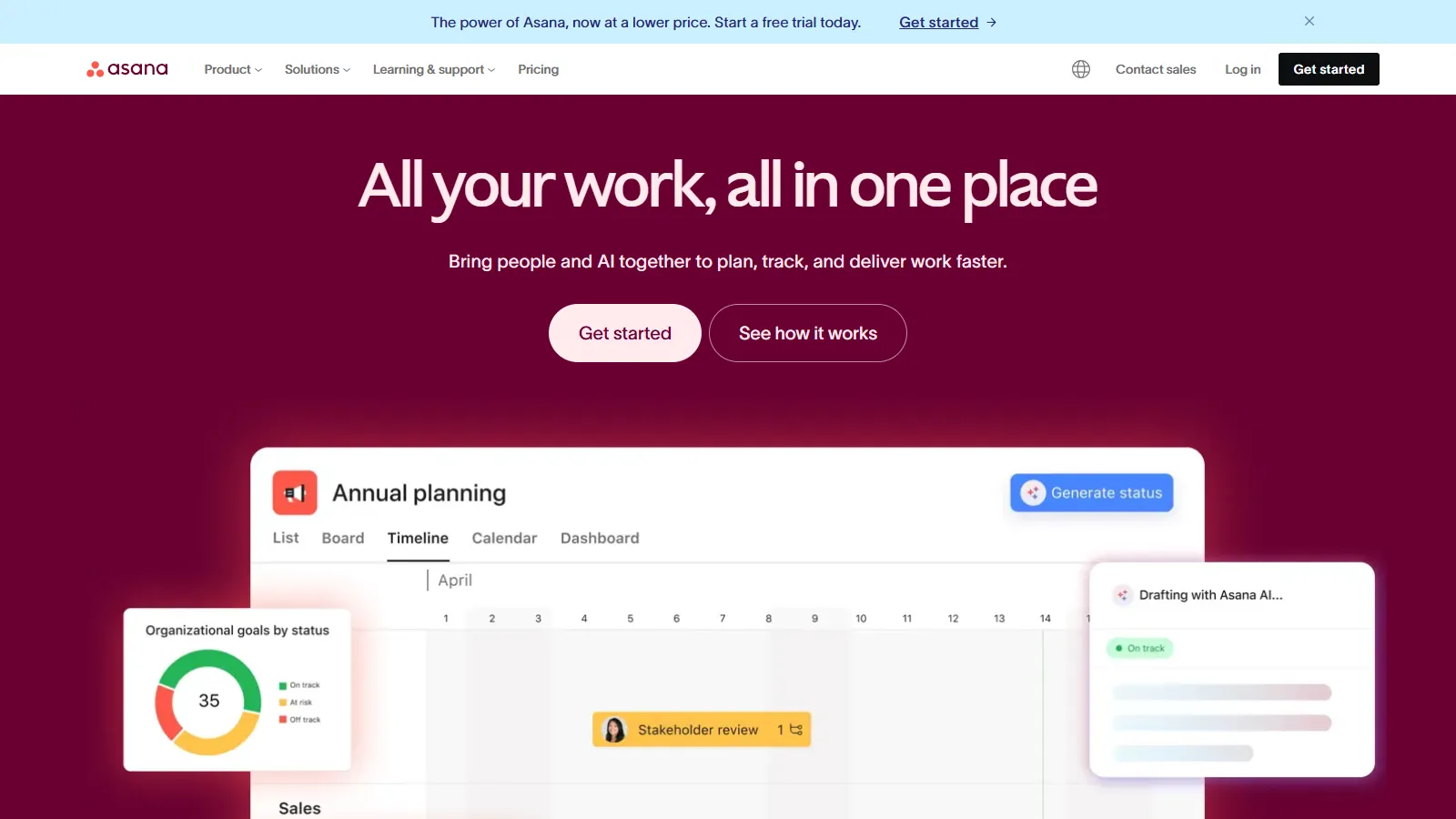
Asana provides flexible board views that work well for agile teams beyond just software development. Marketing, product, and design teams can adopt agile practices without the overhead of dedicated dev tools. The learning curve is minimal.
Starting priceFree/$10.99/user
Strengths
Works for any team type
Easy to learn and adopt
Multiple view options
Strong free tier
Excellent mobile apps
Limitations
No native sprint functionality
Limited agile-specific reporting
Better for kanban than scrum
Less developer-focused
Who it's for: Best for cross-functional teams adopting agile beyond software development. Ideal for marketing, operations, and product teams wanting visual work management.
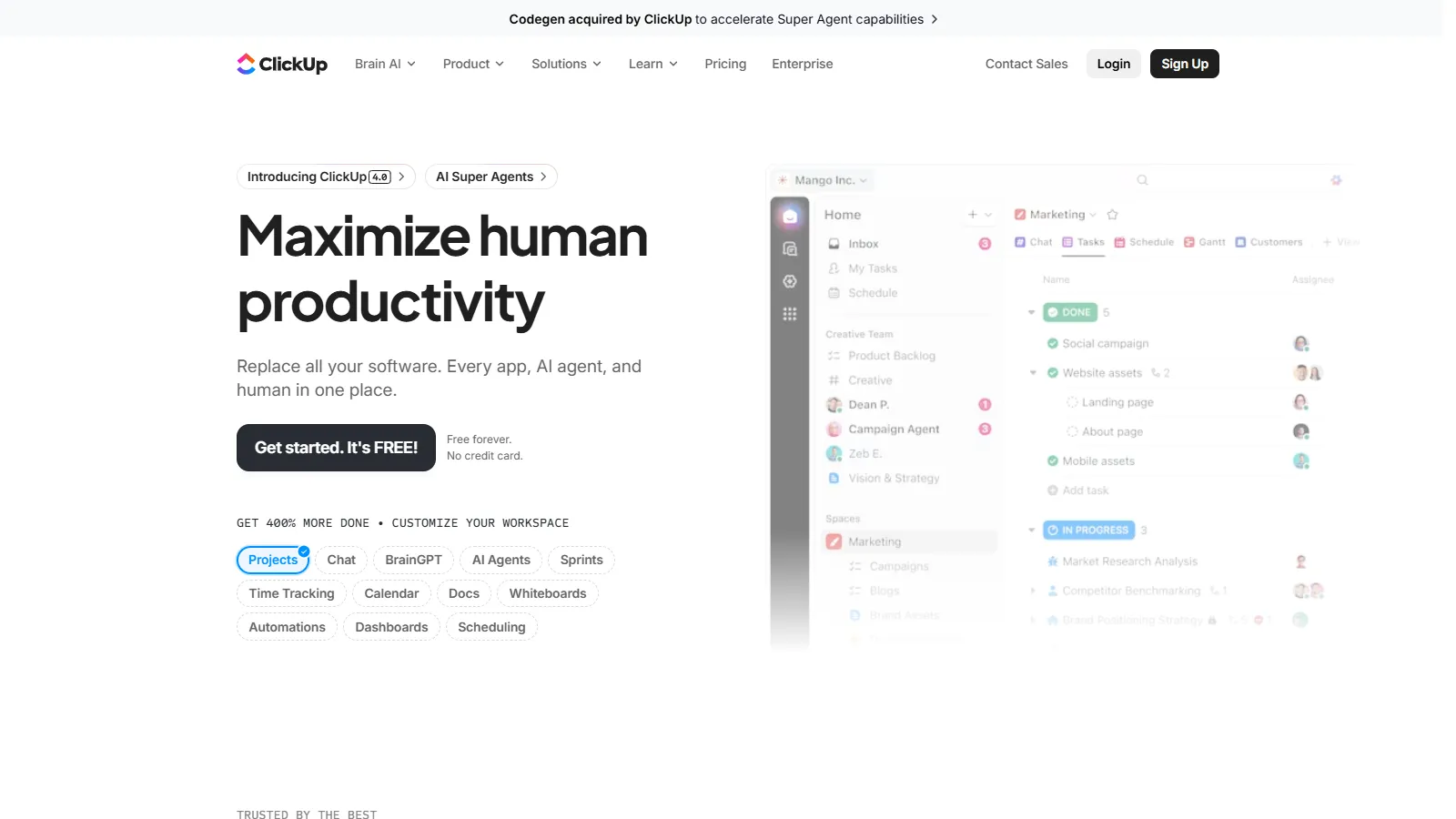
ClickUp offers sprint management alongside docs, whiteboards, and goals in one platform. Agile teams get dedicated sprint folders, velocity tracking, and burndown charts while keeping all project context together.
Starting priceFree/$7/user
Strengths
Sprints plus docs plus whiteboards
Velocity and burndown charts
Highly customizable
Strong free tier
Goals and OKR tracking
Limitations
Many features can overwhelm
Learning curve for full setup
Mobile app less capable
Performance with large datasets
Who it's for: Best for agile teams that want sprint management combined with documentation and planning tools. Ideal when you need an all-in-one platform.
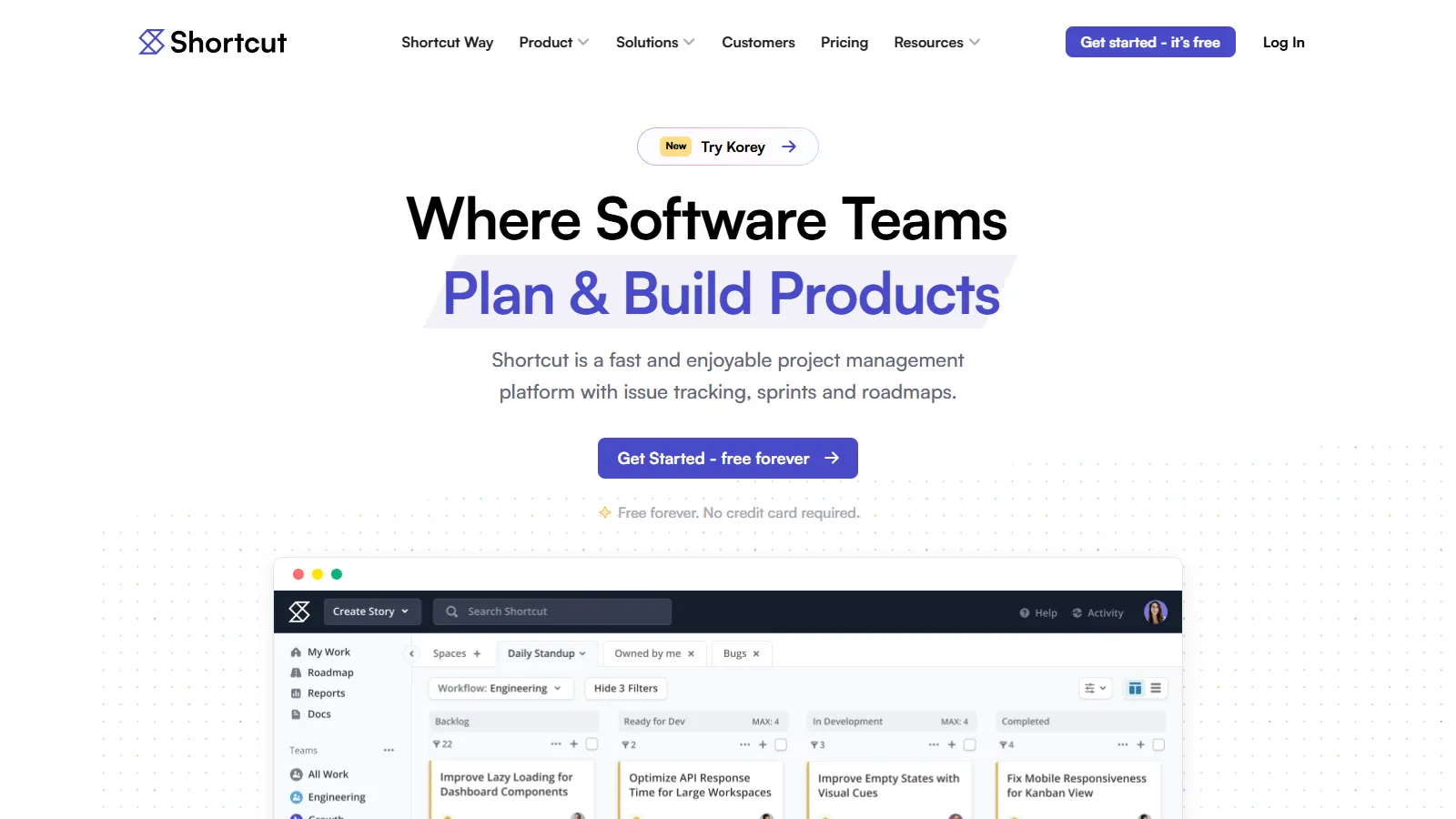
Shortcut (formerly Clubhouse) is built specifically for product development teams. The stories, epics, and iterations structure maps directly to how product teams think about work. Clean interface keeps focus on shipping.
Starting priceFree/$8.50/user
Strengths
Purpose-built for product teams
Clean focused interface
Stories and epics well-structured
Good Git integrations
Iteration and milestone planning
Limitations
Less known than competitors
Smaller integration ecosystem
Limited for non-product work
Reporting less comprehensive
Who it's for: Best for product and engineering teams building software products. Ideal for startups and growing teams that want structure without enterprise complexity.
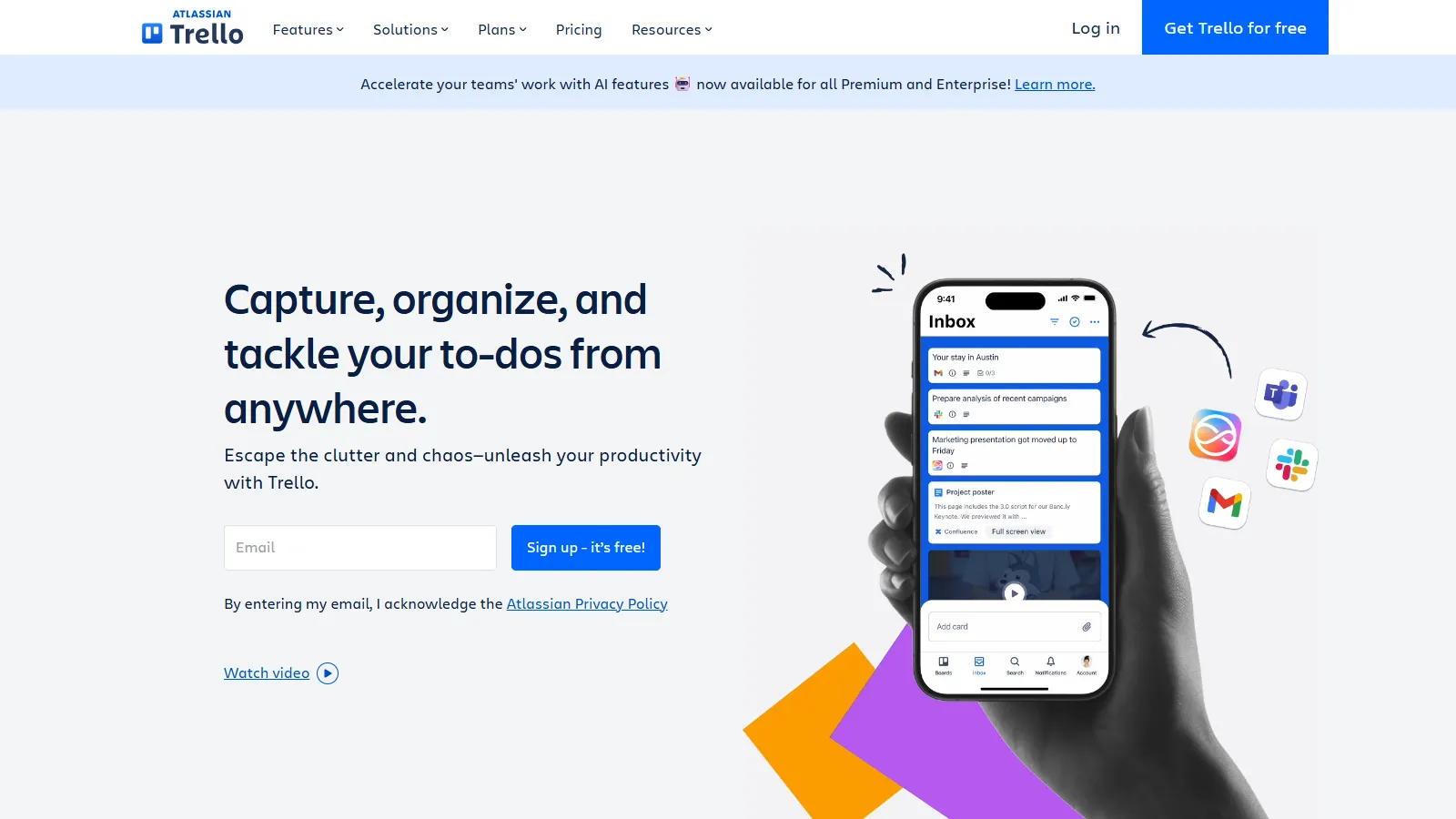
Trello provides the simplest kanban experience for agile teams that do not need formal scrum ceremonies. Boards with lists and cards work naturally for visual work management, and Butler automation handles repetitive tasks.
Starting priceFree/$5/user
Strengths
Simplest kanban interface
Free tier very generous
Butler automation powerful
Power-Ups add features
Excellent mobile apps
Limitations
No native sprint support
No backlog management
No agile reporting
Limited for formal scrum
Who it's for: Best for teams wanting simple kanban without scrum ceremonies. Ideal for small teams, personal projects, and those new to agile visual management.
Azure DevOps provides agile boards as part of a complete DevOps platform including repos, pipelines, and test management. For Microsoft-oriented teams, it offers tight integration across the entire software development lifecycle.
Starting priceFree/$6/user
Strengths
Complete DevOps platform
Full scrum and kanban support
Integrated repos and pipelines
Test management included
Strong free tier for small teams
Limitations
Microsoft ecosystem focus
Interface can feel complex
Less intuitive than modern tools
Overkill if you only need PM
Who it's for: Best for teams in Microsoft environments needing integrated DevOps. Ideal when you want boards, repos, CI/CD, and testing in one platform.
Scalability (15%) — Support for multiple teams, programs, and portfolio planning.
How to Choose
Choose Jira if you need full scrum for software teams.
Choose Linear if you need speed and beautiful design.
Choose Asana if you need agile for any team type.
Choose ClickUp if you need sprints plus docs in one.
Choose Shortcut if you need product development focus.
Choose Trello if you need simple kanban only.
Choose Azure DevOps if you need Microsoft DevOps stack.
Common Questions
Scrum uses fixed-length sprints with planning and review ceremonies. Kanban is continuous flow with work-in-progress limits. Jira, Linear, and ClickUp support both. Trello is kanban-only. Many teams use hybrid approaches.
No. Linear, Shortcut, and ClickUp are excellent alternatives. Jira is most valuable for large teams needing extensive customization and enterprise DevOps integrations. Smaller teams often prefer simpler tools.
Yes. Asana and Trello work well for marketing, operations, and other teams adopting agile practices. The methodology concepts (boards, sprints, backlogs) apply beyond software development.
Velocity measures how much work a team completes per sprint, usually in story points. It helps predict future sprint capacity. Jira, Linear, ClickUp, and Shortcut all provide velocity charts.
Linear is faster and more modern, better for small to mid-sized teams wanting simplicity. Jira offers more customization and enterprise features. Linear is gaining popularity among startups and modern engineering teams.