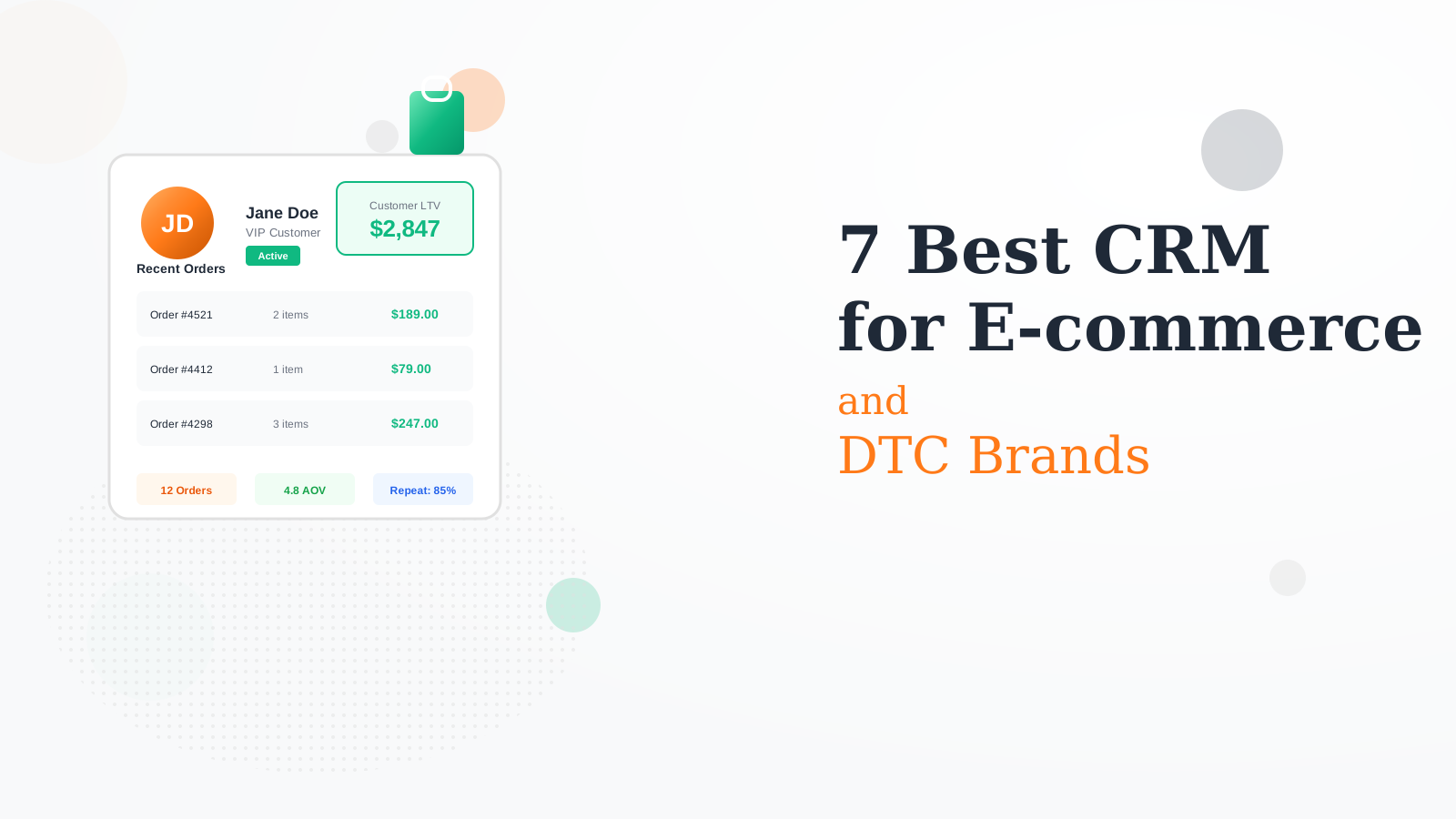
We tested 12+ CRM platforms to find the best for e-commerce and direct-to-consumer brands. These tools integrate with Shopify, track purchase history, segment customers by behavior, and help you maximize customer lifetime value through personalized engagement.
Klaviyo is the gold standard for e-commerce CRM and marketing. Deep Shopify integration syncs every order, browse, and cart action. Predictive analytics forecast customer lifetime value and churn risk so you can proactively retain high-value customers.
Starting priceFree
Strengths
Best Shopify integration
Predictive CLV
Smart segmentation
Email + SMS
Revenue attribution
Limitations
Gets expensive at scale
Email-centric
Learning curve
Limited CRM features
Who it's for: Best for Shopify brands who want deep customer insights and powerful email marketing in one platform built for e-commerce.
HubSpot provides a full CRM platform that scales with your brand. E-commerce plugins sync Shopify data into your CRM. The unified view shows customer interactions across marketing, sales, and support for a complete relationship picture.
Starting priceFree
Strengths
Full CRM platform
Unified customer view
Marketing hub
Service tools
Scales well
Limitations
E-commerce via plugins
Less native
Premium pricing
B2B-focused features
Who it's for: Best for scaling DTC brands who need a full CRM beyond email and want unified sales, marketing, and service tools.
Drip combines e-commerce CRM with email marketing at an affordable price. Track customer purchase behavior, build segments based on buying patterns, and create automated workflows that trigger on shopping actions. Revenue attribution shows ROI.
Starting price$39/mo
Strengths
Affordable pricing
E-commerce focus
Good workflows
Revenue tracking
Easy setup
Limitations
Email only
Simpler CRM
Limited SMS
Fewer integrations
Who it's for: Best for small to mid-size e-commerce brands who want affordable CRM with email marketing and e-commerce focus.
Gorgias is a customer support helpdesk built for e-commerce. Every support ticket shows full order history, previous conversations, and customer value. Macros and automation speed up responses while maintaining personalization based on customer data.
Starting price$10/mo
Strengths
Support-first
Order context
Fast macros
Multi-channel
Shopify native
Limitations
Support only
No marketing
Basic CRM
Volume pricing
Who it's for: Best for e-commerce brands who need excellent customer support with full order and purchase context for every conversation.
Omnisend provides all-in-one marketing automation for e-commerce at affordable pricing. Email, SMS, and web push notifications reach customers across channels. Popups and forms capture leads. Segmentation targets based on shopping behavior.
Starting priceFree
Strengths
Affordable
Email + SMS + push
Good forms
Easy automation
Shopify integration
Limitations
Light CRM
Simpler analytics
Basic segmentation
Limited advanced features
Who it's for: Best for small e-commerce brands who want affordable multi-channel marketing with basic CRM capabilities included.
Retention.com identifies anonymous website visitors and captures their email addresses for marketing. When someone browses your store without buying, their identity resolution technology finds their email so you can follow up with cart recovery.
Starting priceCustom
Strengths
Visitor identification
List growth
Cart recovery
Email capture
Shopify integration
Limitations
Identity-focused
US mainly
Privacy considerations
Custom pricing
Who it's for: Best for e-commerce brands focused on growing their email list by identifying anonymous browsers and recovering abandoned carts.
Salesforce Commerce Cloud provides enterprise-grade e-commerce platform and CRM together. Einstein AI powers personalization and recommendations. Global multi-currency and multi-language support handles international operations at scale.
Strengths
Enterprise scale
Full platform
AI Einstein
Global support
Deep customization
Limitations
Enterprise pricing
Complex implementation
Long setup
Requires resources
Who it's for: Best for large enterprise e-commerce brands who need robust platform capabilities with full CRM and global scale.
We tested each platform for e-commerce integration, customer data, and marketing capabilities.
E-commerce Integration (30%) — Depth of Shopify, WooCommerce, and platform connections.
Customer Data (25%) — Purchase history, segmentation, and behavioral tracking.
Marketing Tools (20%) — Email, SMS, and automation capabilities.
Ease of Use (15%) — Setup time and day-to-day usability.
Pricing Value (10%) — Cost relative to features and contact volume.
How to Choose
Choose Klaviyo if you need Shopify store.
Choose HubSpot if you need scaling DTC brand.
Choose Drip or Omnisend if you need tight budget.
Choose Gorgias if you need support-first approach.
Choose Salesforce Commerce if you need enterprise scale.
Common Questions
Many e-commerce brands use their email marketing platform (Klaviyo, Omnisend) as their CRM since it tracks customer data and purchase history. A separate CRM makes sense when you have a sales team, B2B customers, or need unified support tracking.
Essential: purchase history, order value, frequency, recency. Advanced: browsing behavior, email engagement, customer lifetime value, predicted next purchase date. The best platforms calculate these metrics automatically from your store data.
Track metrics like customer lifetime value (CLV), repeat purchase rate, email revenue per recipient, and cart recovery rate. Compare these before and after CRM implementation. Most e-commerce CRMs show revenue attributed to campaigns and automations.