6 Best Enterprise CRM Platforms for Large Sales Teams in 2026
We evaluated 12+ enterprise CRM platforms for organizations with 100+ sales reps. These solutions offer advanced customization, territory management, forecasting, and integrations required for complex sales operations.
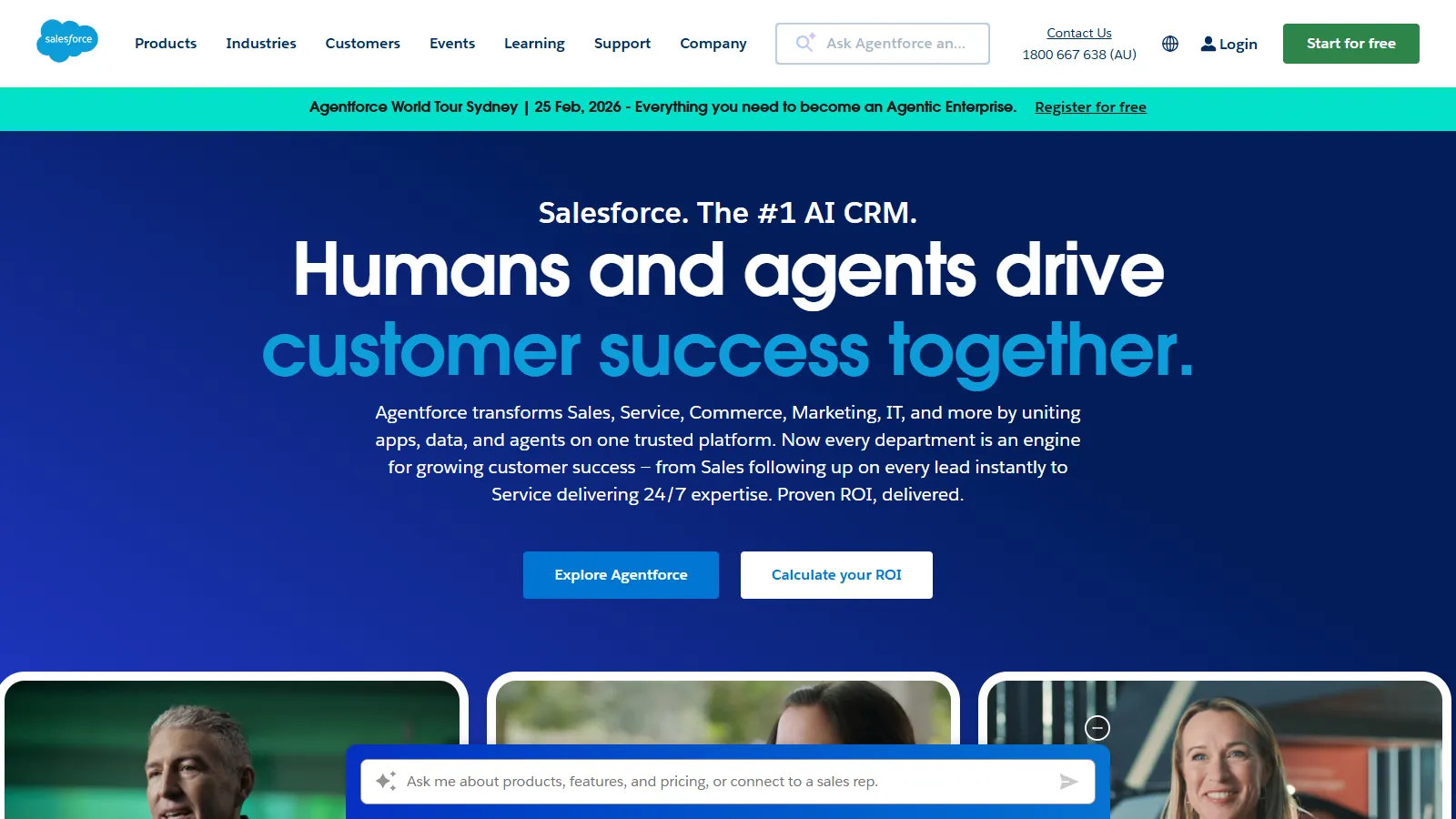
Salesforce Sales Cloud is the industry standard for enterprise CRM, powering sales teams at the world largest companies. The platform offers unmatched customization through declarative tools and Apex code. AppExchange provides thousands of pre-built integrations and extensions.
Starting price$25-$300/user/mo
Strengths
Largest CRM ecosystem with 5000+ AppExchange apps
Einstein AI for predictive lead scoring and forecasting
Unmatched customization without limits
Territory and quota management built-in
Industry-specific solutions available
Limitations
High total cost of ownership
Complexity requires dedicated admin
Implementation takes months
Per-user costs escalate with add-ons
Who it's for: The standard choice for enterprises with 100+ sales reps needing maximum flexibility. Best for organizations with dedicated Salesforce admins and implementation budget.
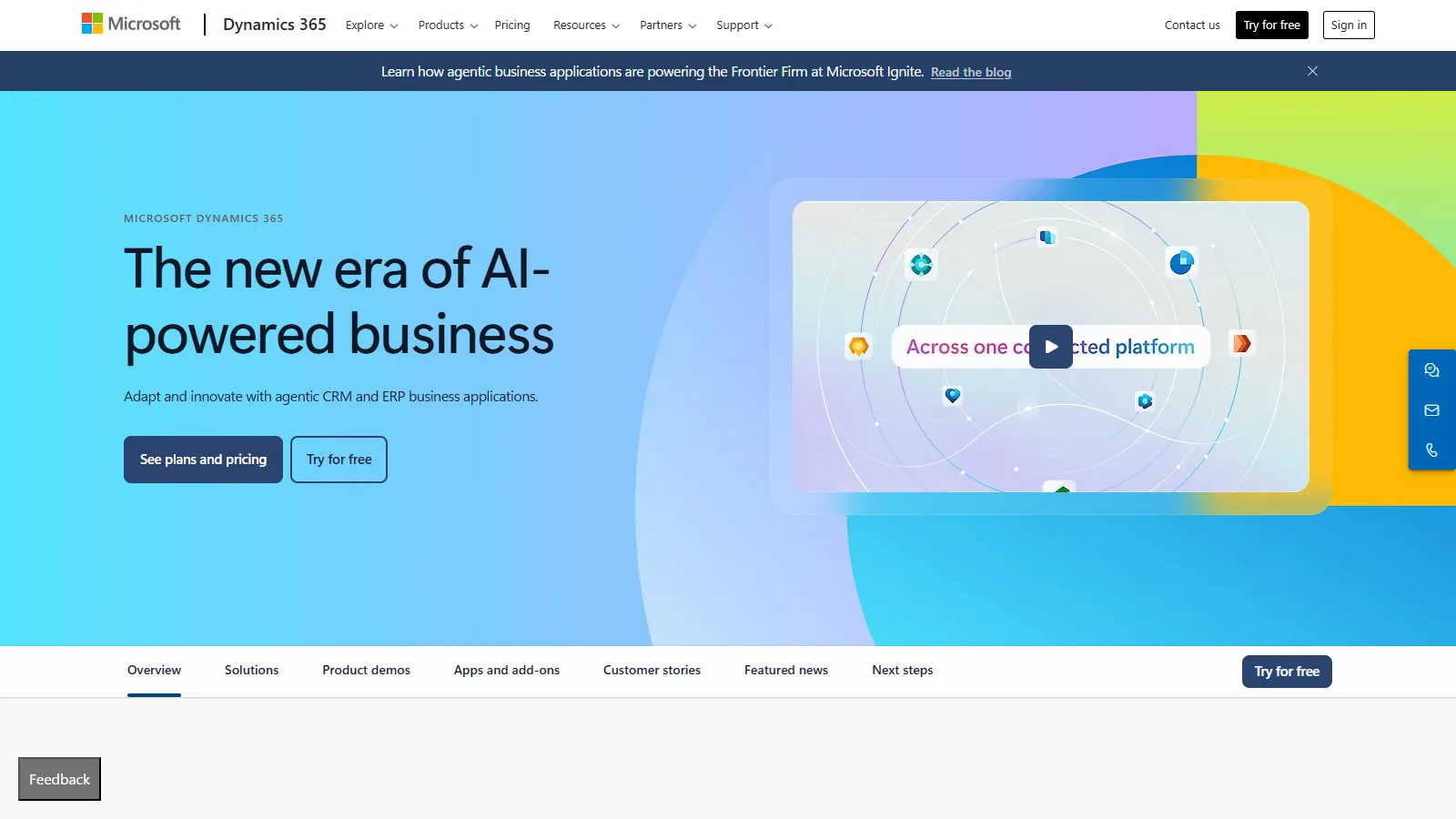
Microsoft Dynamics 365 Sales provides deep integration with the Microsoft ecosystem that enterprises already use. Teams can work with CRM data directly in Outlook, Excel, and Teams. Power Platform enables citizen developers to build custom apps and automations.
Starting price$65-$162/user/mo
Strengths
Native integration with Office 365 and Teams
LinkedIn Sales Navigator integration included
Power Platform for no-code customization
Copilot AI for intelligent assistance
Single vendor for full Microsoft stack
Limitations
Best value requires Microsoft ecosystem commitment
Interface less intuitive than competitors
Implementation complexity similar to Salesforce
Some features require additional licenses
Who it's for: Ideal for enterprises standardized on Microsoft technology. Best for organizations wanting deep Office 365 and Teams integration for seller productivity.
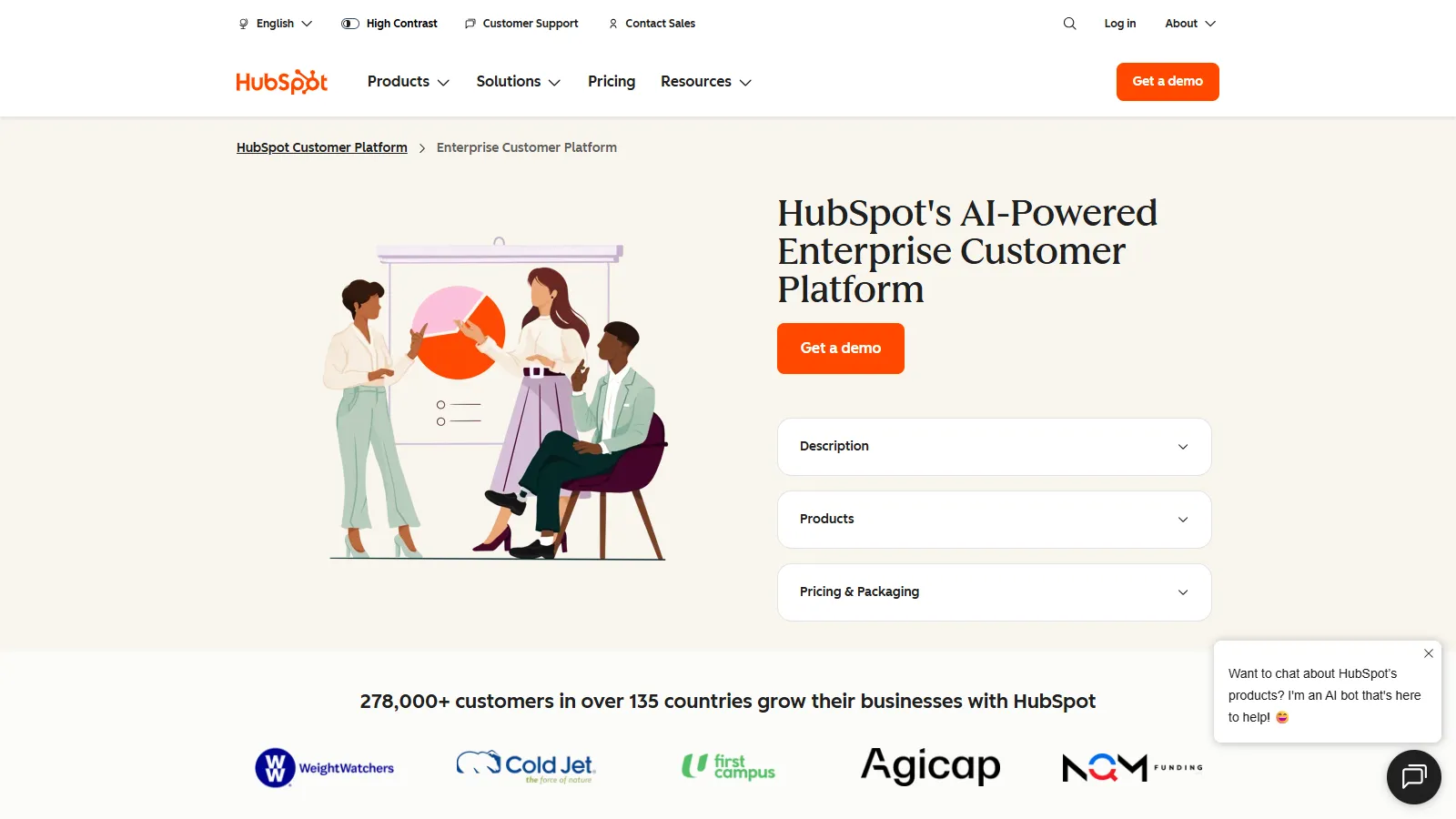
HubSpot Sales Hub Enterprise brings enterprise features to HubSpot intuitive platform. Unlike traditional enterprise CRMs, HubSpot prioritizes usability without sacrificing capability. Custom objects, playbooks, and advanced permissions support complex sales operations.
Starting price$150/user/mo
Strengths
Most user-friendly enterprise CRM
Unified platform with marketing and service
Custom objects for complex data models
Playbooks guide reps through sales processes
Faster implementation than traditional enterprise CRM
Limitations
Territory management less mature
Fewer enterprise integrations than Salesforce
Custom reporting has limitations
Per-user pricing gets expensive at scale
Who it's for: Best for mid-market companies scaling to enterprise or organizations prioritizing usability. Ideal for marketing-led companies wanting unified marketing and sales.
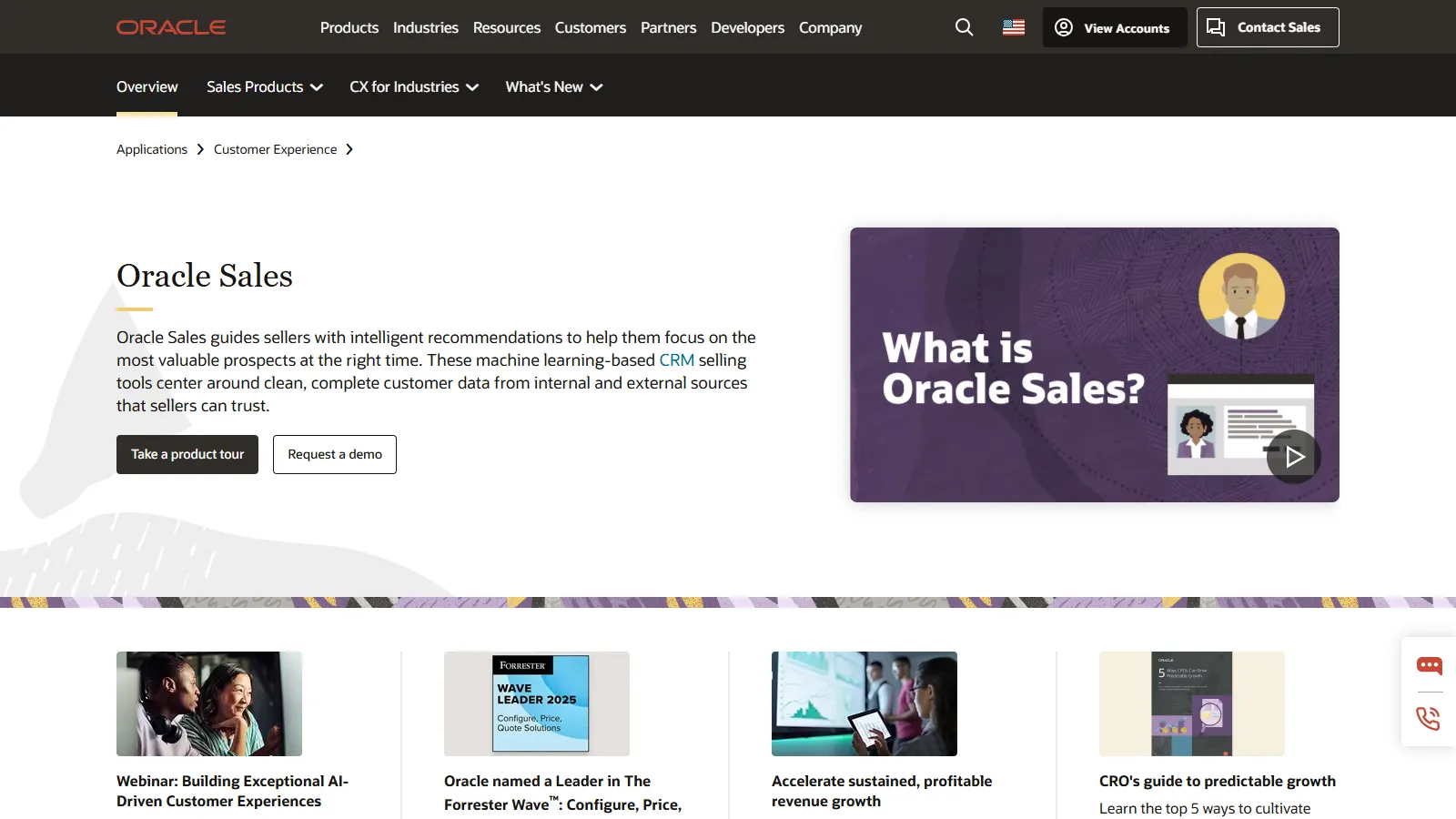
Oracle CX Sales leverages Oracle data and AI capabilities for enterprise selling. The platform excels at data-driven recommendations, helping reps focus on the right accounts with the right messaging. Native CPQ handles complex quoting for manufacturing and technology.
Starting price$65-$300/user/mo
Strengths
Advanced AI and machine learning built-in
Native CPQ for complex quoting
Strong territory and quota management
Oracle ecosystem integration
Enterprise-grade performance and security
Limitations
Implementation requires Oracle expertise
User interface less modern than competitors
Smaller partner ecosystem
Higher learning curve for admins
Who it's for: Best for enterprises already invested in Oracle technology. Ideal for manufacturing and technology companies with complex quoting needs.
SAP Sales Cloud provides CRM capabilities tightly integrated with SAP S/4HANA and ERP systems. For enterprises running SAP for operations, this integration eliminates data silos between sales and fulfillment. Mobile capabilities support field sales scenarios.
Starting priceCustom pricing
Strengths
Seamless SAP ERP integration
Strong for manufacturing and distribution
Excellent mobile and offline capabilities
Visit planning for field sales
Real-time inventory and pricing from ERP
Limitations
Value depends on SAP ERP usage
Smaller CRM market share means fewer resources
Implementation typically requires SAP partners
Less flexible than Salesforce for customization
Who it's for: Essential for enterprises running SAP ERP who need CRM integration. Best for manufacturing and distribution with field sales teams.
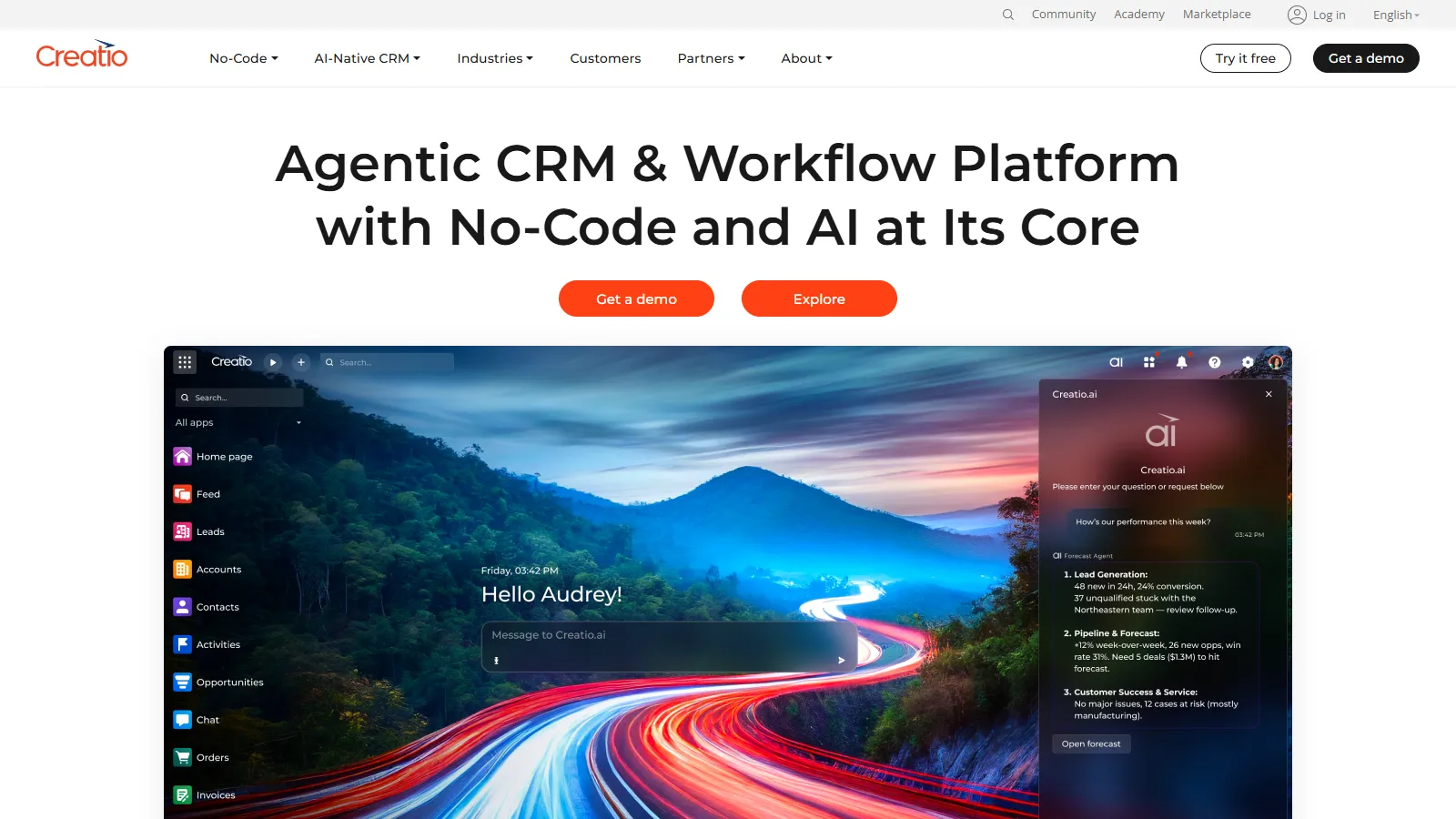
Creatio offers enterprise CRM with the most flexible no-code customization platform. Business users can build complex workflows, custom objects, and integrations using the visual Studio designer. This dramatically reduces implementation time and ongoing development costs.
Starting price$25-$85/user/mo
Strengths
Most powerful no-code customization platform
Dramatically lower implementation costs
Process automation without developers
Modern user interface
Competitive pricing for enterprise features
Limitations
Smaller ecosystem than Salesforce or Microsoft
Fewer pre-built industry solutions
Less brand recognition in enterprise
AI features less mature than leaders
Who it's for: Ideal for enterprises wanting enterprise features without enterprise implementation costs. Best for organizations with unique processes needing high customization.
We assessed each enterprise CRM based on scalability, customization depth, and the needs of large sales organizations with complex processes.
Scalability (25%) — Performance with thousands of users and millions of records.
Customization Depth (25%) — Ability to adapt to complex business processes without code.
Integration Ecosystem (20%) — Pre-built connectors and API flexibility for enterprise systems.
AI & Analytics (15%) — Predictive capabilities, forecasting accuracy, and reporting.
Total Cost of Ownership (15%) — Licensing, implementation, and ongoing administration costs.
How to Choose
Choose Salesforce Sales Cloud if you need maximum flexibility and ecosystem.
Choose Microsoft Dynamics 365 if you need Microsoft Office and Teams integration.
Choose HubSpot Enterprise if you need enterprise features with usability.
Choose Oracle CX Sales if you need data-driven AI recommendations.
Choose SAP Sales Cloud if you need SAP ERP integration.
Choose Creatio if you need no-code customization at enterprise scale.
Common Questions
Typical enterprise implementations take 6-18 months depending on complexity. Salesforce and Dynamics average 9-12 months. HubSpot and Creatio can be faster at 4-8 months due to better usability and no-code tools.
Beyond licensing, budget 1-3x license costs for implementation and 15-25% annually for ongoing administration. A 200-user Salesforce deployment might cost $400K-$800K in year one including implementation.
Platform CRMs like Salesforce and HubSpot reduce integration complexity and training needs. Best-of-breed makes sense only if you have unique requirements that platforms cannot meet well.
AI is increasingly essential for forecasting accuracy and rep productivity. Salesforce Einstein and Dynamics Copilot are the most mature. Evaluate specific AI use cases rather than marketing claims.
Yes, but migrations are major projects taking 6-12 months. Data migration is manageable, but recreating customizations and retraining users are the real challenges. Most enterprises migrate only when absolutely necessary.