We tested 15+ open source SEO platforms to find self-hosted tools offering full data control, customization freedom, and no vendor lock-in—perfect for technical teams, enterprises with privacy requirements, and developers building custom SEO workflows.
Matomo is the most mature self-hosted analytics platform with 1M+ downloads and 10+ years of development. Self-host on your infrastructure for complete data ownership and GDPR compliance without sending data to third parties. Track unlimited websites, traffic, and users without per-seat or data limits. The feature set rivals Google Analytics—goals, ecommerce, heatmaps, session recordings, and A/B testing. Plugins extend functionality. For enterprises with privacy requirements or teams wanting analytics freedom, Matomo provides commercial-grade capabilities without vendor lock-in.
Strengths
Most mature with 1M+ downloads and active development
Complete data ownership and GDPR compliance
Feature parity with Google Analytics
Unlimited sites, traffic, users at no cost
Large plugin ecosystem extends functionality
Limitations
Requires PHP/MySQL hosting and maintenance
Self-hosting means you manage updates and security
Complex setup for large-scale deployments
Some premium plugins require payment
Who it's for: Essential for enterprises with privacy requirements, EU-based companies needing GDPR compliance, or any team wanting analytics freedom. If GA4 limits or privacy concerns are issues, Matomo provides full-featured alternative.
Plausible is the lightweight open source analytics alternative focused on privacy and simplicity. The tracking script is under 1KB (45x smaller than GA4), improving site speed and Core Web Vitals. No cookies means automatic GDPR/CCPA compliance without consent banners. The clean interface shows essential metrics (visitors, pageviews, bounce rate, top pages) without overwhelming complexity. Self-host for free or use paid hosting. For teams wanting simple, privacy-focused analytics without Google's complexity, Plausible delivers essentials beautifully.
Strengths
Lightweight <1KB script improves site speed
No cookies, automatic GDPR/CCPA compliance
Beautifully simple interface
Self-hostable or managed hosting option
Active development and community
Limitations
Intentionally limited features vs. GA4
No user-level tracking (by privacy design)
Less suitable for complex conversion funnels
Self-hosting requires Elixir/PostgreSQL knowledge
Who it's for: Perfect for privacy-conscious teams, content sites, and small businesses wanting simple analytics. If GA4 feels overwhelming or privacy is priority, Plausible provides 80% of value with 10% of complexity.
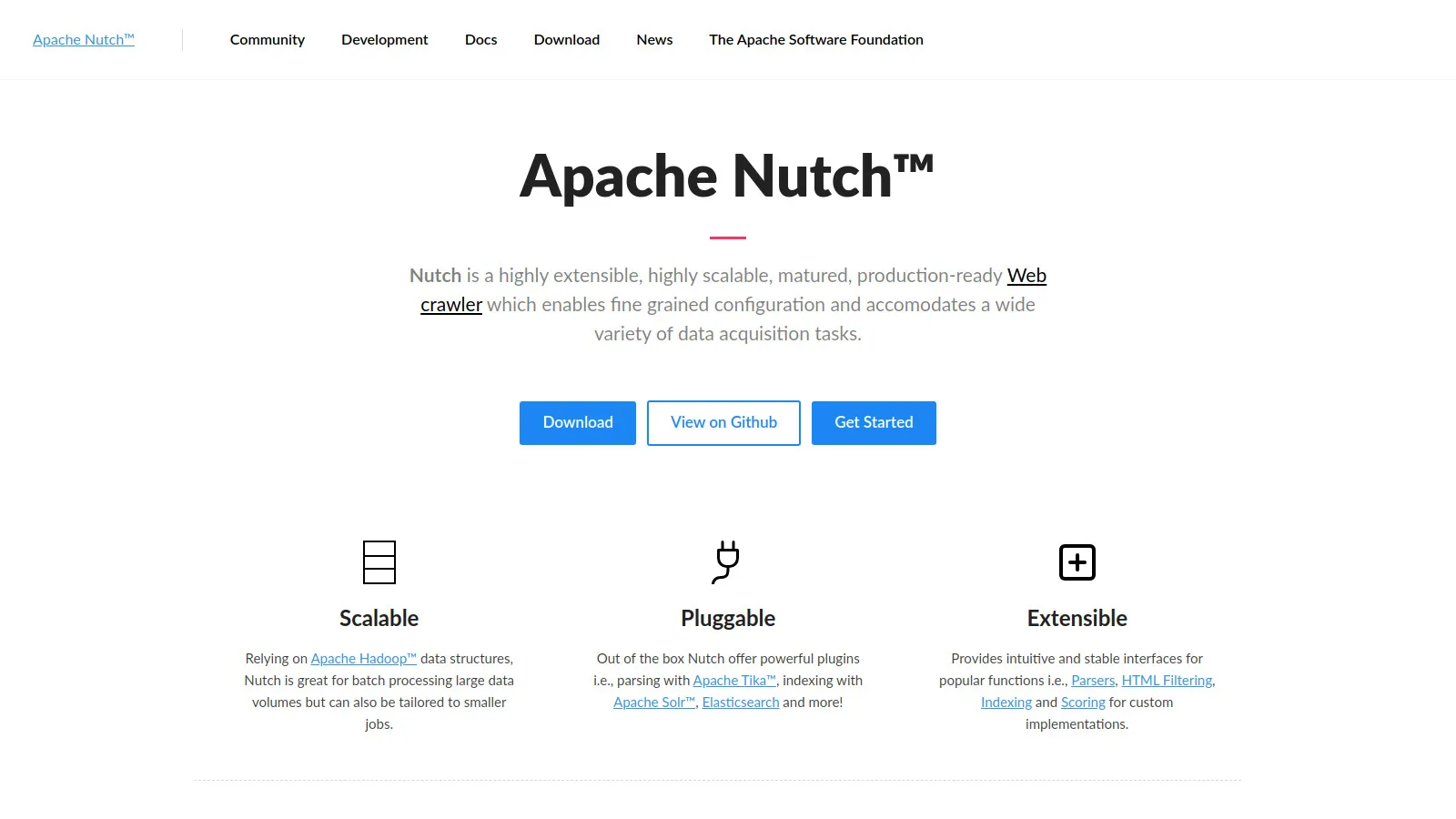
Apache Nutch is an enterprise-grade open source web crawler handling billions of pages with Hadoop integration. Built by Apache Software Foundation, it scales horizontally for massive crawling jobs. Extensible plugin architecture supports custom extraction, parsing, and indexing. Integration with Solr/Elasticsearch enables full-text search. For companies building custom search engines, large-scale data collection, or SEO at scale, Nutch provides the crawler infrastructure without per-page SaaS costs. Technical teams can customize every aspect for specialized needs.
Strengths
Enterprise scale handling billions of pages
Hadoop integration for distributed crawling
Completely customizable and extensible
No per-page or data limits
Apache Foundation backing ensures longevity
Limitations
Complex setup requiring Java and Hadoop expertise
Steep learning curve for configuration
Requires significant infrastructure for scale
Not user-friendly for non-technical users
Who it's for: Built for technical teams and enterprises needing custom crawling at scale. If you're crawling millions of pages, building custom search engines, or need specialized extraction, Nutch provides infrastructure commercial tools can't match.
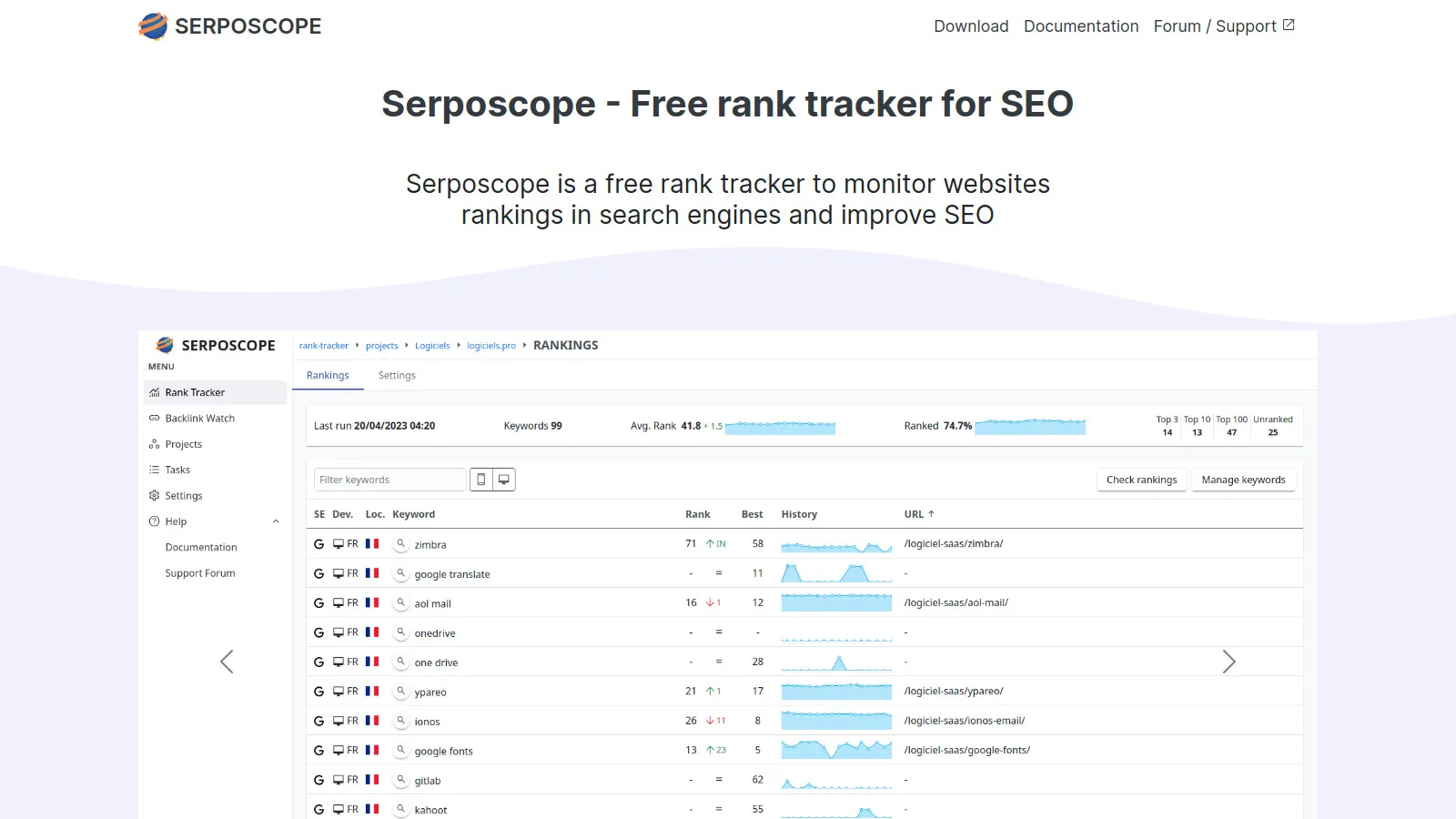
Serposcope is a free self-hosted rank tracker with unlimited keywords and no per-keyword costs. Track rankings across Google, Bing, and other search engines. The multi-user system lets teams collaborate on keyword monitoring. Historical data shows ranking changes over time. Export functionality enables custom reporting. For agencies and teams tracking hundreds or thousands of keywords, Serposcope eliminates the per-keyword SaaS costs that make commercial trackers expensive. The Java-based application installs easily on any server.
Strengths
Completely free with unlimited keywords
Self-hosted means no per-keyword costs ever
Multi-user support for team collaboration
Historical ranking data preserved
Easy setup with Java
Limitations
Basic compared to commercial trackers
No SERP feature tracking
Manual updates required
Less frequent checking than SaaS tools
Who it's for: Perfect for agencies and SEO teams tracking 500+ keywords where commercial tracker costs become prohibitive. If you're paying $500+ monthly for rank tracking, Serposcope's one-time setup pays for itself immediately.
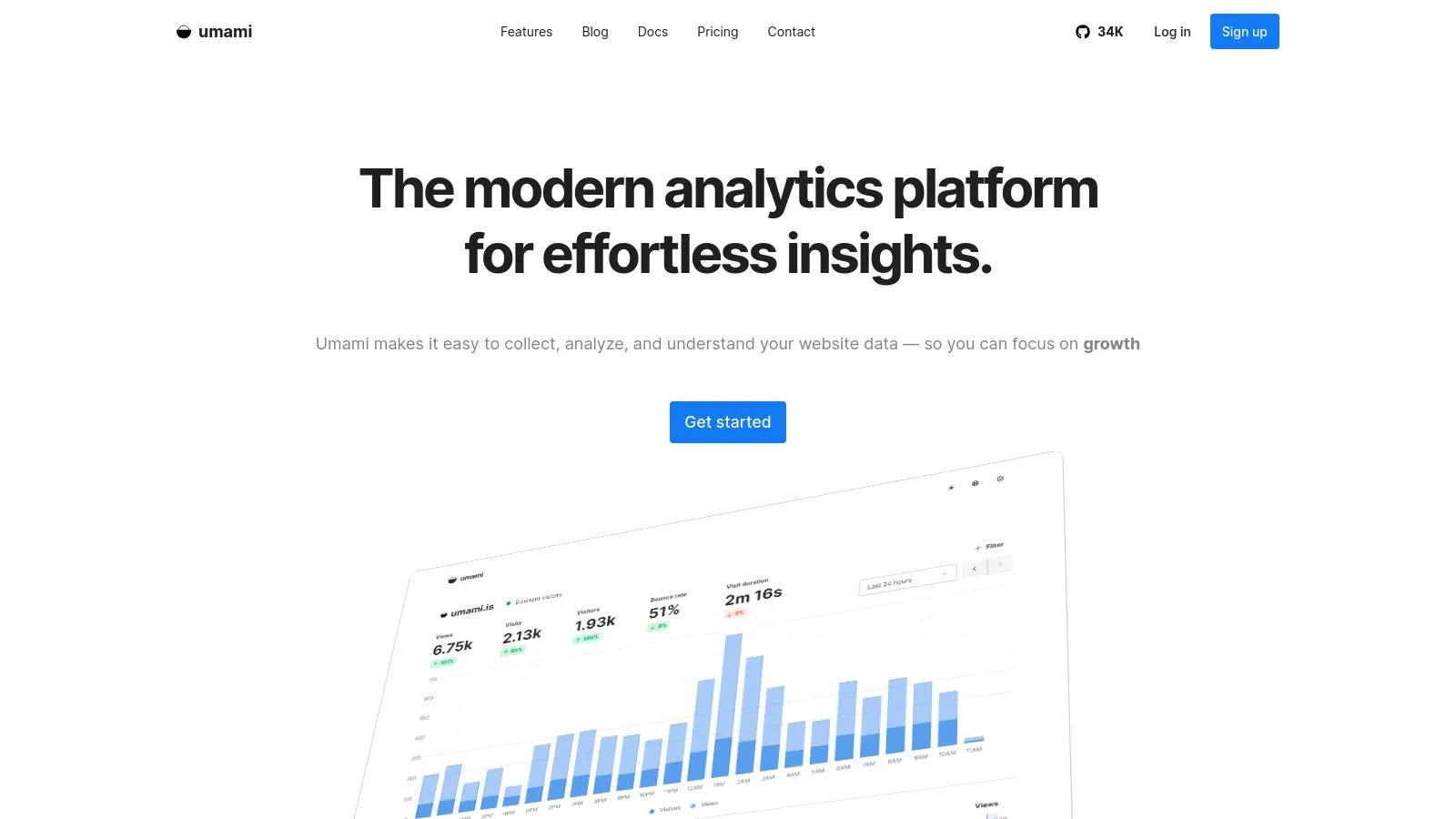
Umami is a modern, privacy-focused analytics platform with a beautiful interface. Built on Node.js with PostgreSQL or MySQL, it's easier to deploy than older PHP-based tools. The dashboard is clean and fast, showing realtime visitors, popular pages, devices, and traffic sources. No cookies means GDPR compliance by default. API access enables custom integrations. For developers wanting modern self-hosted analytics with simple deployment, Umami provides contemporary alternative to Matomo's PHP stack.
Strengths
Modern tech stack (Node.js) easier than PHP
Beautiful clean interface
Simple deployment with Docker
API for custom integrations
Active development and updates
Limitations
Younger project with smaller community
Fewer features than mature Matomo
Limited plugin ecosystem
Best for simpler use cases
Who it's for: Best for developers and modern tech stacks preferring Node.js over PHP. If you want self-hosted analytics without legacy dependencies, Umami's modern approach and simple deployment are attractive.
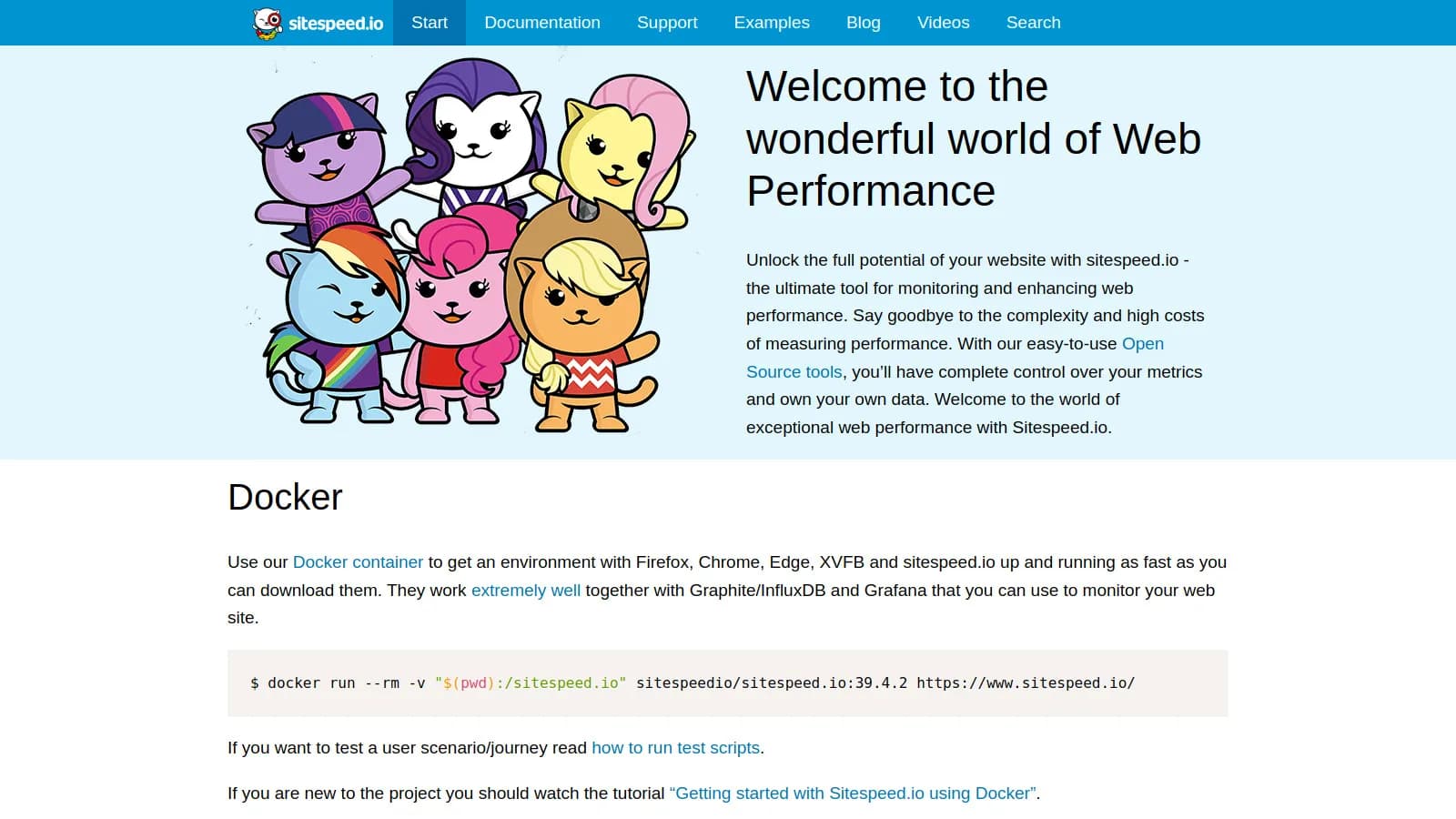
Sitespeed.io provides open source performance monitoring with Core Web Vitals tracking. Run continuous speed tests on your site, track metrics over time, and identify performance regressions. The tool integrates with CI/CD pipelines to prevent slow code from reaching production. Dashboard visualization shows trends in Lighthouse scores, Core Web Vitals, and custom metrics. For teams prioritizing site speed and Core Web Vitals as ranking factors, Sitespeed.io provides ongoing monitoring without PageSpeed Insights' point-in-time limitations.
Strengths
Continuous Core Web Vitals monitoring
Integrates with CI/CD for regression prevention
Dashboard shows performance trends
Budget alerts for performance budgets
Completely free and open source
Limitations
Requires Node.js and infrastructure setup
Complex configuration for advanced use
Not as comprehensive as paid monitoring tools
Best for technical teams
Who it's for: Perfect for development teams prioritizing Core Web Vitals and page speed. If you want continuous monitoring integrated with development workflows, Sitespeed.io provides infrastructure commercial tools charge monthly for.
Fathom is the simplest privacy-focused analytics with a 7-day data retention focus. Built in Go with SQLite, it's lightweight and fast. The minimal interface shows only essential metrics—current visitors, popular pages, referrers. No cookies, no personal data collection, complete GDPR/CCPA compliance by design. For personal blogs, small businesses, or teams wanting absolute privacy simplicity, Fathom's minimalism is its strength. The paid hosting option makes it accessible to non-technical users.
Strengths
Simplest setup and interface
Extremely lightweight (Go/SQLite)
Strong privacy focus by design
Managed hosting option for non-technical users
No cookies or personal data
Limitations
Intentionally minimal features
7-day data retention limit (self-hosted)
Not suitable for complex analytics needs
Small community compared to alternatives
Who it's for: Best for bloggers, personal projects, and small sites wanting absolute privacy simplicity. If privacy is non-negotiable and you need only basic metrics, Fathom's minimalism is ideal.
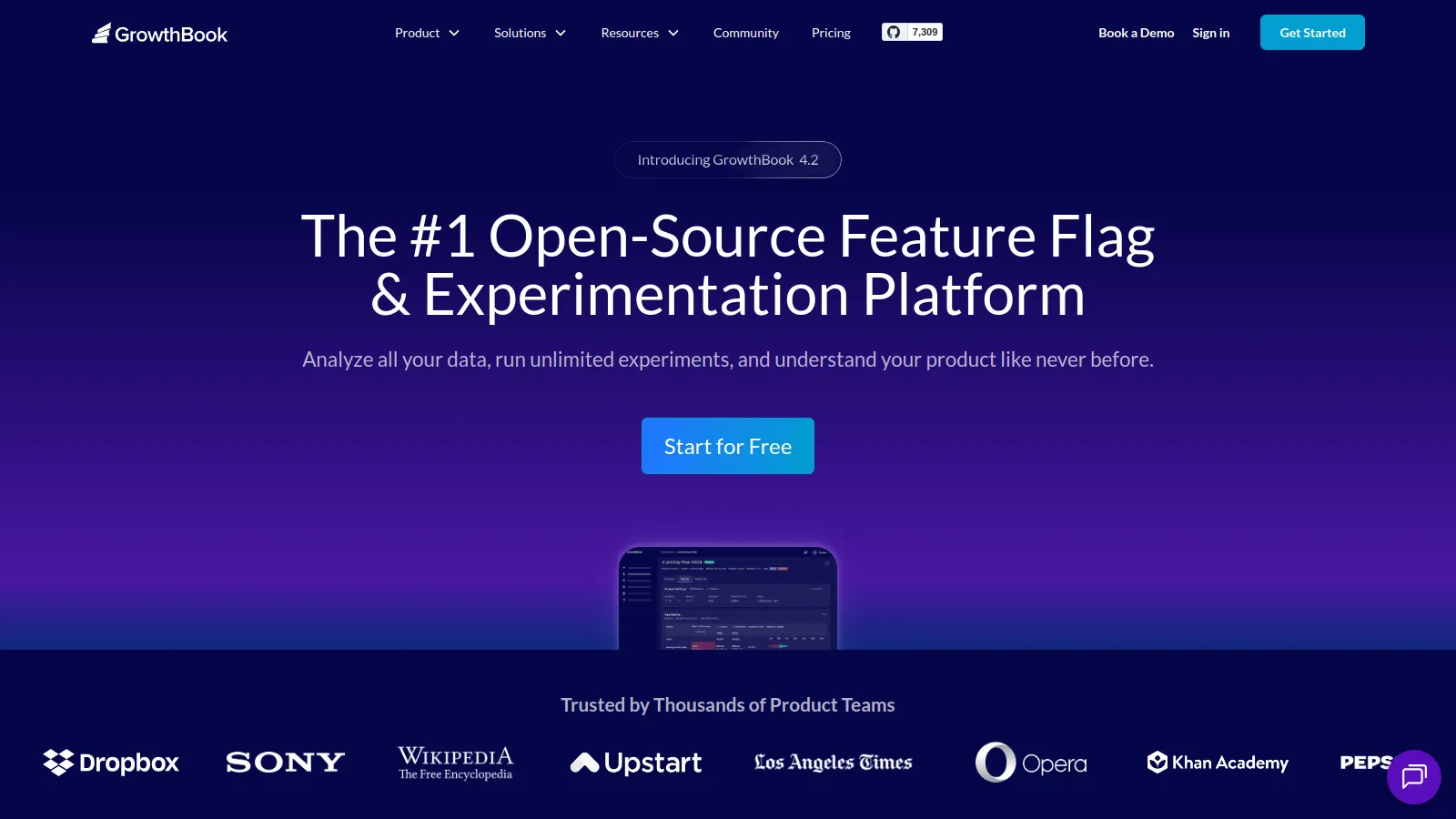
GrowthBook is an open source A/B testing and feature flag platform for SEO experiments. Test title changes, content variations, CTA placements, and measure impact on conversions. The feature flags system enables gradual rollouts of SEO changes. Integration with existing analytics (Google Analytics, Mixpanel, custom) means no data migration. For teams running SEO experiments (split testing title tags, testing content formats), GrowthBook provides commercial A/B testing capabilities self-hosted.
Strengths
Free open source A/B testing platform
Feature flags for gradual rollouts
Integrates with existing analytics
Self-hosted or managed cloud option
Good for SEO experiments
Limitations
Requires technical implementation
Not as polished as commercial tools
Smaller community and resources
Best for teams with developers
Who it's for: Perfect for technical SEO teams running experiments. If you test title variations, content formats, or layout changes and need A/B testing without Optimizely costs, GrowthBook provides self-hosted infrastructure.
Common Crawl provides free access to petabytes of web crawl data stored on AWS S3. The non-profit maintains monthly crawls of billions of web pages—HTML, metadata, extracted text. Researchers, developers, and data scientists use Common Crawl for large-scale web analysis, training ML models, and competitive research. For SEO teams building custom analysis tools or researching competitive landscapes at scale, Common Crawl provides data that would cost millions to collect. Query via AWS Athena or download datasets directly.
Strengths
Free access to petabytes of web data
Monthly crawls of billions of pages
Queryable via AWS Athena
Rich metadata and extracted text
Perfect for custom research and ML
Limitations
Requires AWS and data engineering skills
Not user-friendly for non-technical users
Query costs (AWS charges)
Learning curve for dataset structure
Who it's for: Built for data scientists, researchers, and technical teams doing large-scale web analysis. If you're building custom SEO research tools, training ML models, or analyzing web trends, Common Crawl provides data infrastructure.
We self-hosted and tested open source tools for 6 months, measuring setup difficulty, maintenance burden, and feature parity vs. commercial tools.
Feature Completeness (30%) — Functionality vs. commercial alternatives for core SEO needs.
Setup and Maintenance (25%) — Ease of installation and ongoing operational burden.
Data Ownership (20%) — Control over data storage, privacy, and export capabilities.
Community and Documentation (15%) — Active development, support resources, and plugin ecosystem.
Scalability (10%) — Performance with large datasets and high traffic sites.
How to Choose
Choose Matomo if you need self-hosted analytics alternative to GA4.
Choose Plausible if you need lightweight privacy-focused analytics.
Choose Apache Nutch if you need enterprise web crawling at scale.
Choose Serposcope if you need free unlimited rank tracking.
Choose Umami if you need modern Node.js analytics.
Choose Sitespeed.io if you need Core Web Vitals monitoring.
Choose Fathom if you need simplest privacy analytics.
Choose GrowthBook if you need SEO A/B testing experiments.
Choose Common Crawl if you need web data research at scale.
Common Questions
Main reasons: 1) Data ownership and privacy (no third-party data sharing), 2) No per-seat/usage limits or price increases, 3) Customization freedom for specialized needs, 4) No vendor lock-in if tool shuts down. Trade-offs: you manage hosting, updates, and security. Best for technical teams, privacy-focused companies, or high-volume use where SaaS costs are prohibitive.
Consider: 1) Server hosting ($20-500+ monthly depending on scale), 2) Developer time for setup (8-40 hours), 3) Ongoing maintenance (4-8 hours monthly), 4) Updates and security patches. For small teams, TCO often exceeds SaaS after accounting for time. For large teams tracking 1,000+ keywords or high-traffic sites, self-hosting saves thousands monthly.
Depends on category. Analytics (Matomo, Plausible) rival commercial tools. Rank tracking (Serposcope) is basic vs. SEMrush. Crawling (Nutch) exceeds commercial scale. Generally: mature projects (5+ years, active development) match commercial quality. Younger projects have gaps but improve fast. Check GitHub stars, commit frequency, and community size.
Minimum: command line comfort, basic server administration, understanding of databases. Ideal: experience with Docker, Linux, nginx/Apache, and the tool's language (PHP, Node.js, Java). Easy tools (Serposcope, Umami): weekend project. Hard tools (Nutch, Matomo at scale): multi-week implementation. Consider managed hosting for tools like Plausible if non-technical.
Self-hosted tools (Matomo, Plausible, Umami, Fathom) are GDPR compliant by design since YOU control data and no third parties are involved. This is their primary advantage over Google Analytics. You're the data controller, eliminating third-party data processor agreements. Still document your privacy policy and configure tools for compliance.