
City best-of pages are a staple of local content strategy—and often executed poorly. Generic lists scraped from Yelp with city names swapped don't fool anyone, least of all Google.
The pages that rank—and genuinely help readers—demonstrate real local knowledge. They know which neighborhoods have emerged recently, which classic spots are overrated, and what locals actually recommend versus what tourists find.
This guide covers how to build city best-of pages that stand out from generic directory content and actually rank for competitive local queries.
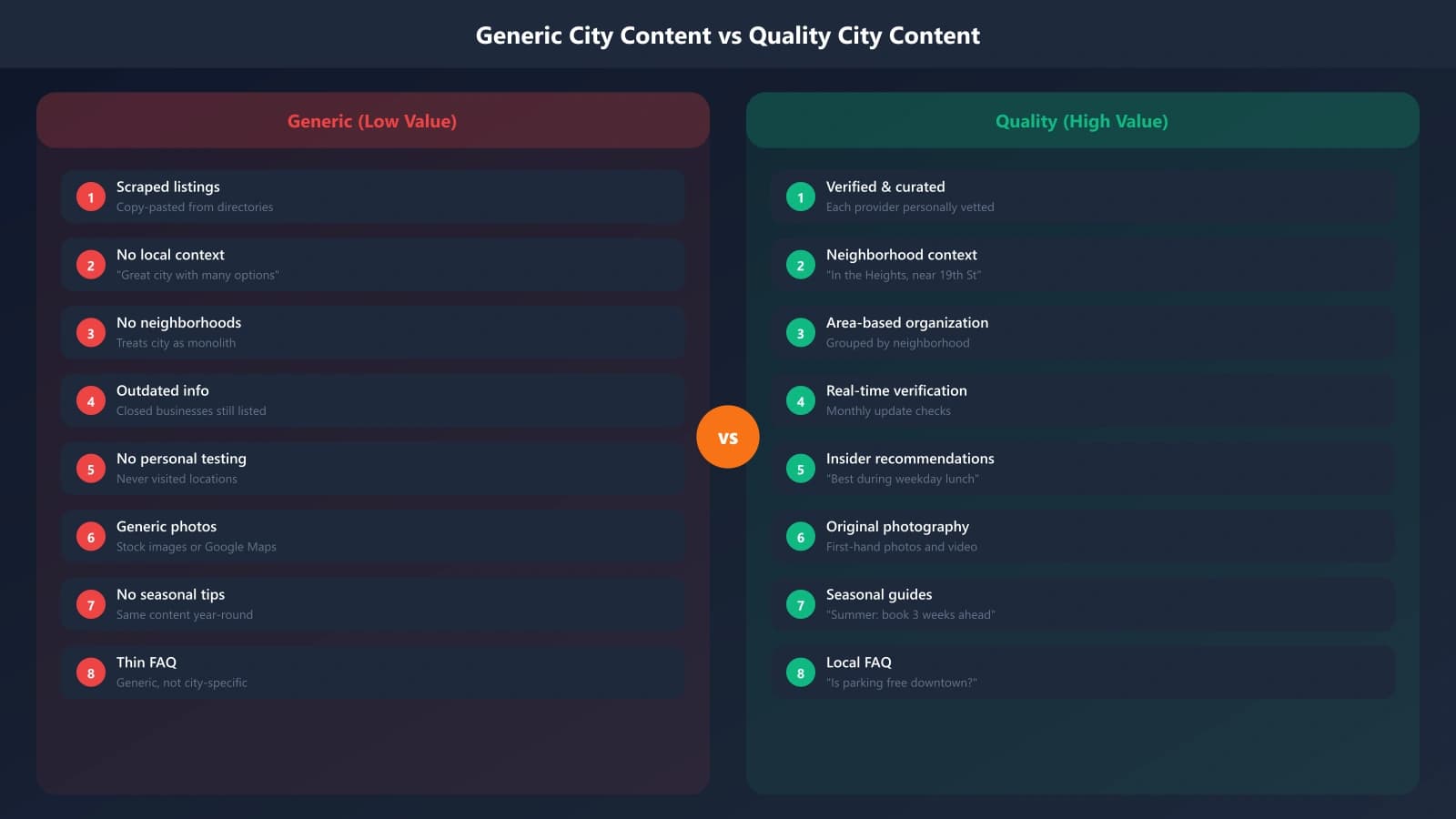
Demonstrating Genuine Local Expertise
The most important differentiator for city content is demonstrable local knowledge. Here's what that looks like in practice.
Neighborhood-Level Context
Generic content treats cities as monoliths. Quality content understands neighborhood dynamics. Instead of just listing restaurants, explain where in the city they're located and what that neighborhood is known for.
Generic: “Uchi is one of Austin's best Japanese restaurants, featuring innovative omakase and sushi.”
With local context: “Uchi anchors South Lamar's restaurant row—park on the street and walk past the food trucks to reach the unassuming entrance. The neighborhood has become Austin's dining destination, though Uchi predates the boom and maintains its no-reservations walk-in culture.”
The second version shows someone who knows the city, not just someone who looked up the address.
Seasonal and Timing Advice
Locals know when to visit places—and when to avoid them. Include this temporal knowledge that generic content misses.
Example: “Barton Springs is Austin's iconic swimming hole, but avoid weekend afternoons in summer when the park reaches capacity. Early morning swims (pool opens at 5 AM) offer cool water and no crowds—and you'll swim alongside the regulars who've been coming for decades.”
Honest Negatives and Alternatives
Locals know what's overrated. Don't be afraid to say so—it builds credibility far more than universally positive reviews.
Example: “Rainey Street has become a tourist draw, but the craft cocktail bars that made it famous have largely been replaced by crowded patios with cover charges. For the neighborhood bar vibe Rainey used to have, head to East César Chávez where spots like Whisler's and Weather Up deliver without the lines.”
Structuring City Content
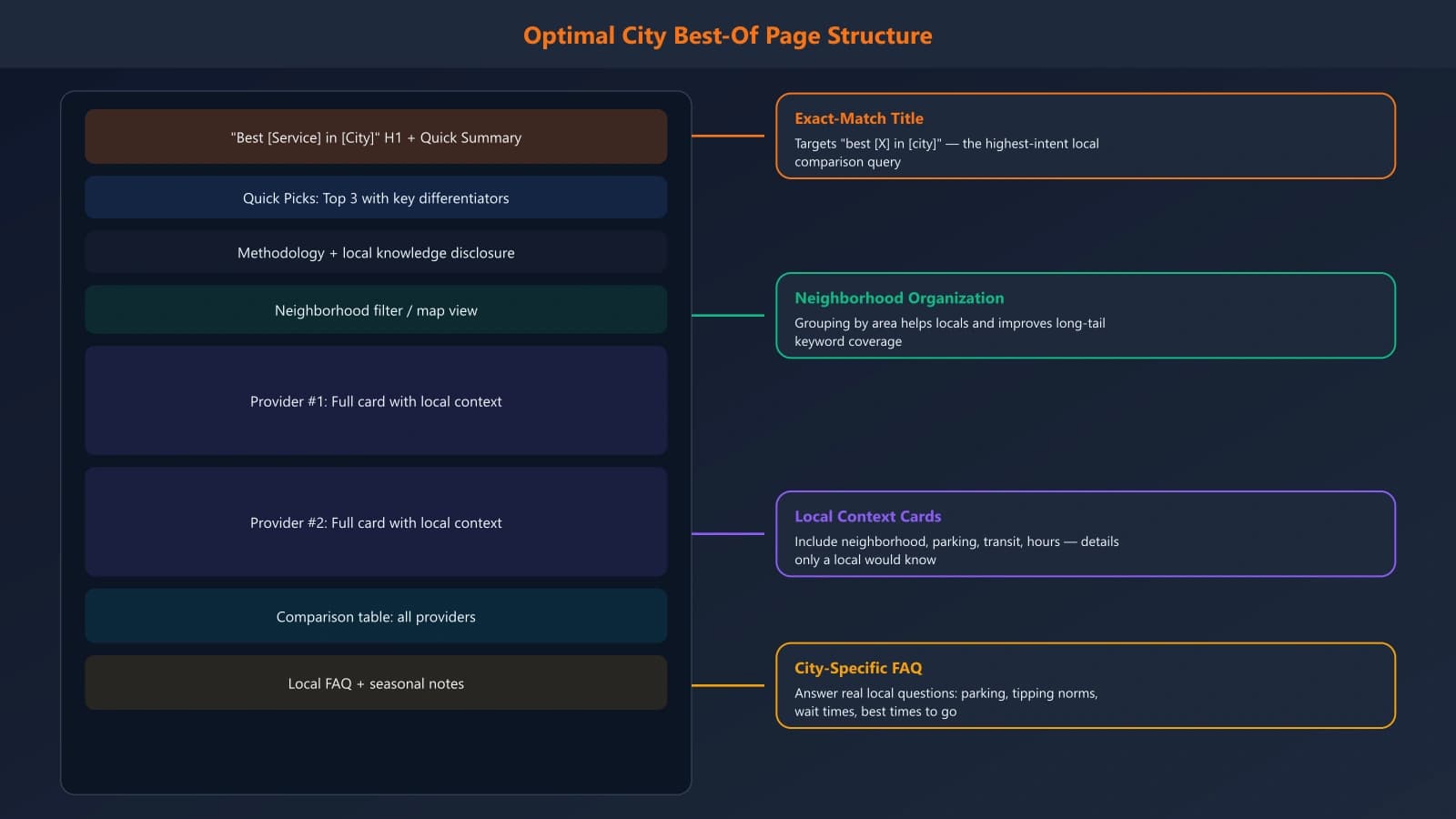
Beyond local knowledge, structure helps city content serve different reader needs.
Segmenting by Intent
Not everyone searching “best restaurants in [city]” wants the same thing. Segment your picks to serve different intents:
- Quick summary — Immediate answer for decisive readers
- By neighborhood — For readers planning around where they're staying
- By occasion — Date night, business dinner, casual hangout
- By budget — Splurge-worthy versus everyday options
- For specific needs — Family-friendly, vegetarian-friendly, late-night
This segmentation also captures long-tail searches: “best date night restaurants in [city]” or “kid-friendly restaurants in [neighborhood].”
Practical Details That Matter
Include the logistical information readers actually need:
Useful details: “Reservation essential for dinner; walk-ins usually available at the bar. Parking is street-only and competitive—consider the rideshare. Cash bar at happy hour offers the same cocktails at $5 off.”
These details demonstrate firsthand experience and help readers actually use your recommendations—not just admire them.
Local SEO Optimization
City content benefits from specific local SEO techniques beyond standard on-page optimization.
Geographic Term Optimization
Include natural variations of location terms throughout your content. For a Denver guide, that means “Denver,” but also “Mile High City,” “Front Range,” “downtown Denver,” and neighborhood names like “RiNo” and “LoDo.”
These aren't keyword stuffing—they're how locals actually talk about their city. Using them naturally signals authentic content.
Schema for City Content
Implement schema that helps search engines understand your local content structure:
- Article schema with geographic targeting via mentions
- ItemList for your ranked recommendations
- LocalBusiness for each venue/service profiled
- Place schema for geographic landmarks mentioned
Local Link Opportunities
Quality city content attracts local links that generic content doesn't. Local bloggers, neighborhood associations, tourism boards, and local media all link to genuinely useful city guides. These local links compound your city-specific authority over time.
Generate City-Specific Best-Of Pages
Create location-optimized listicles with proper structure and local SEO signals.
Try for Free
Keeping City Content Current
Local information changes faster than national content. Businesses open and close. Neighborhoods evolve. A two-year-old city guide may be significantly outdated.
Update Triggers
Monitor for changes that require updates:
- Business closures or significant ownership changes
- Major neighborhood developments (new venues, closures)
- Seasonal factors (outdoor venues opening/closing for season)
- Event-driven changes (a restaurant closing for renovation)
- User reports of outdated information
Freshness for Readers
Display update information clearly so readers know your content is current:
Example: “Last updated January 2026. We personally re-verified all listings in December 2025 and added three new openings.”
This transparency builds trust and signals freshness to search engines—both beneficial for rankings and user experience.
Building City Content Authority
City best-of pages succeed through genuine local expertise, not SEO tricks. The content that ranks—and actually helps readers—comes from knowing the city, understanding its neighborhoods, and providing the kind of insider perspective that directory listings can't offer.
Start with cities you know well or can research deeply. Build the local knowledge into your content structure. Maintain pages as the city evolves. Over time, you'll build a city content portfolio that outperforms generic competitors.
For scaling city content across multiple locations, see our guide on Service Area PSEO Strategy. For the broader local comparison framework, see Local Service Comparison Playbook.

Product Manager at BestPage. Pioneer in AEO research since 2024, exploring the convergence of SEO and GEO (Generative Engine Optimization). Led multiple AI-powered content optimization projects that achieved 300%+ citation increases in ChatGPT and Perplexity.