
Key Takeaways
- •YMYL compliance is mandatory: Healthcare content triggers Google's highest quality standards—expert authorship, citations, and medical review are requirements
- •Safety considerations first: Any health-related recommendation must include appropriate caveats, contraindications, and "consult your doctor" guidance
- •Credential transparency: Display author credentials, medical reviewer information, and organizational affiliations prominently
- •Evidence-based evaluation: Link to clinical studies, FDA approvals, and peer-reviewed sources—not marketing claims
Healthcare best-of pages carry unique responsibilities. When someone searches "best telemedicine platforms" or "top mental health apps," they're often making decisions that affect their health outcomes. Google applies its strictest quality standards—Your Money or Your Life (YMYL)—to this content, and AI systems are increasingly cautious about healthcare citations.
This playbook covers how to create healthcare-focused best-of pages that meet YMYL standards while genuinely helping readers make informed health decisions. We'll explore credibility architecture, safety-first content design, evidence-based evaluation frameworks, and the trust signals that satisfy both search quality guidelines and healthcare readers' needs.
Understanding YMYL Standards for Healthcare#
Google's Quality Rater Guidelines classify healthcare content as YMYL—Your Money or Your Life—meaning inaccurate information could significantly harm readers. This triggers the highest quality evaluation standards, with emphasis on E-E-A-T (Experience, Expertise, Authoritativeness, Trustworthiness).
Healthcare Content Warning
Meeting YMYL standards isn't just about rankings—it's about responsibility. Healthcare content can influence treatment decisions. Building pages that prioritize reader safety over traffic is both ethical and strategically sound.
Building Healthcare Credibility Architecture#
Healthcare readers are appropriately skeptical. They want to know who wrote the content, what credentials they hold, and what editorial process ensures accuracy. Your page structure should make these trust signals immediately visible.
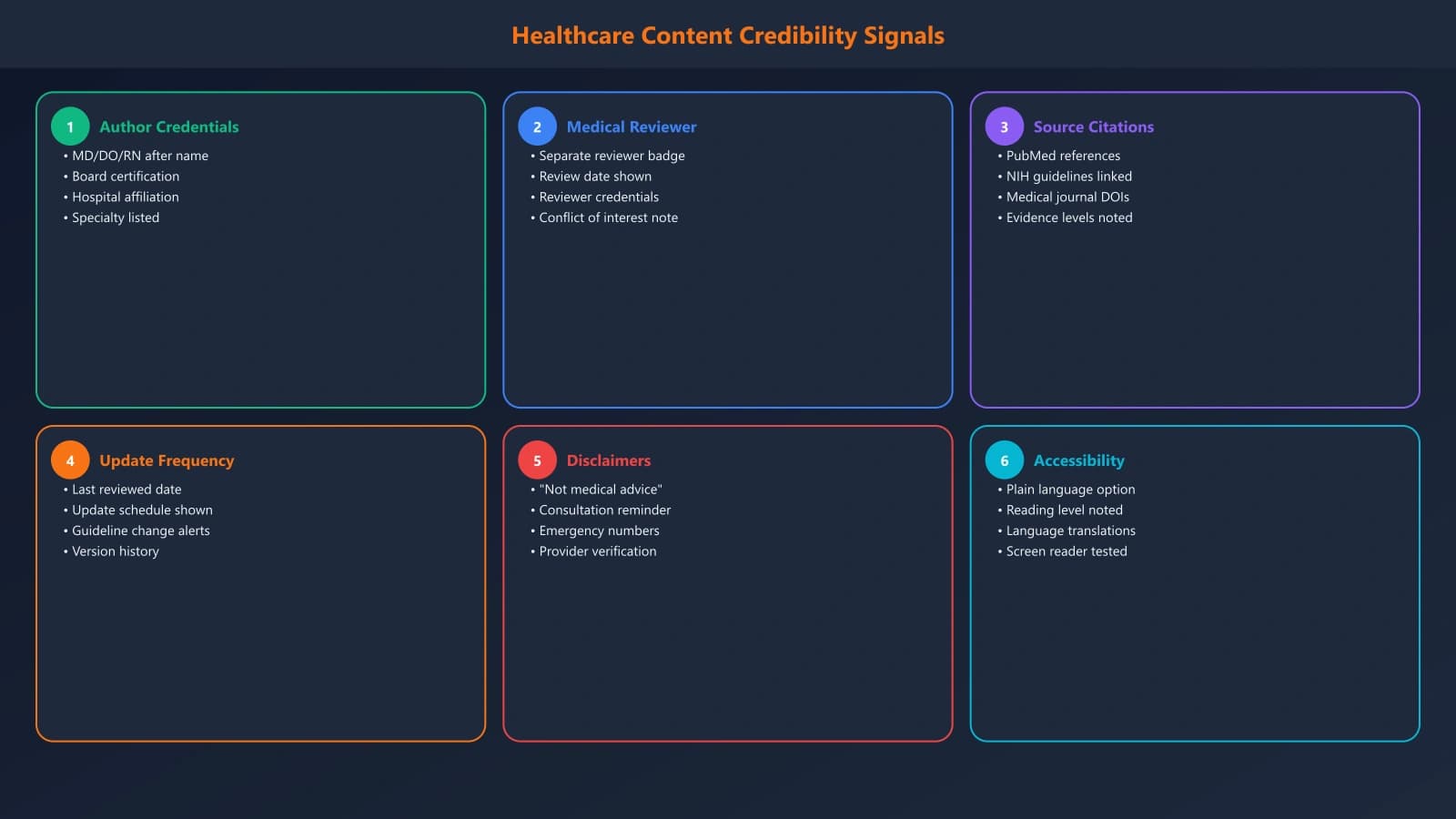
Figure 1: Essential credibility elements for healthcare best-of pages
- 1Author CredentialsDisplay degrees (MD, RN, PharmD), specializations, and affiliations. Link to full bio pages with verification.
- 2Medical ReviewShow medical reviewer name, credentials, and review date. "Reviewed by [Name], MD" with linked profile.
- 3Editorial ProcessPublish your medical content policy explaining sourcing standards, review requirements, and update procedures.
- 4Institutional BackingOrganizational credibility matters—display affiliations, certifications, and HONcode compliance if applicable.
- 5Freshness SignalsShow last reviewed date prominently. Medical information changes; outdated content loses trust.
Safety-First Content Design#
Healthcare best-of pages must balance helpful recommendations with appropriate safety guidance. Every recommendation should include context about limitations, contraindications, and the importance of professional medical advice.
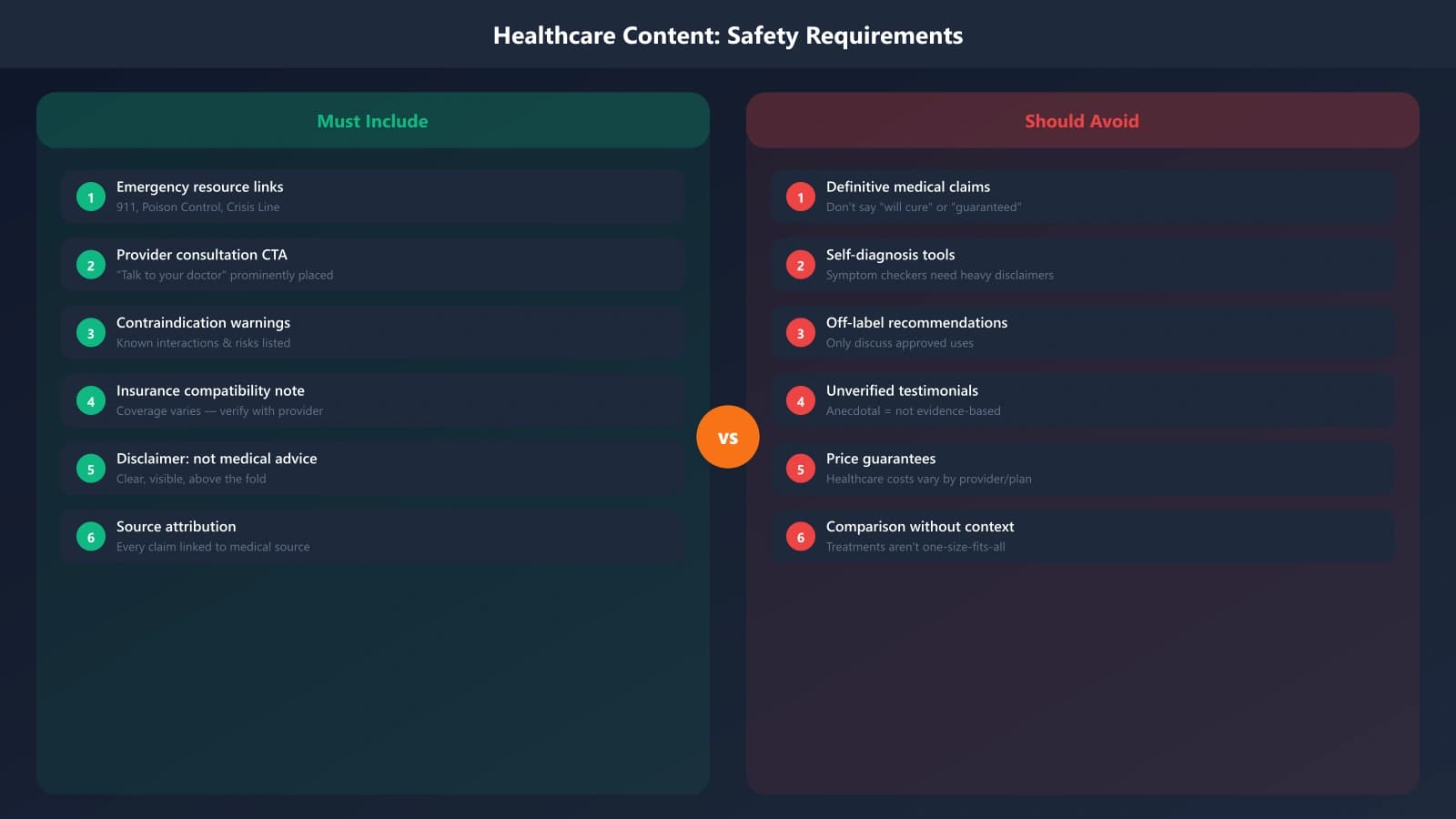
Figure 2: Safety-first content elements in healthcare best-of pages
Do
- ✓Include "consult your healthcare provider" guidance prominently
- ✓Note contraindications and who should NOT use each option
- ✓Distinguish between evidence-backed and emerging treatments
- ✓Link to FDA pages, clinical trial registries, and medical associations
Don't
- ✕Make absolute claims about treatment effectiveness
- ✕Recommend replacing professional medical care
- ✕Ignore potential side effects or risks
- ✕Use testimonials as evidence of medical effectiveness
Safety Disclosure Template
Evidence-Based Evaluation Frameworks#
Healthcare rankings must be grounded in evidence, not marketing claims. Your evaluation criteria should reference clinical data, regulatory status, and peer-reviewed research rather than vendor testimonials.
| Evidence Type | Quality Level | How to Use | |
|---|---|---|---|
| FDA Approval/Clearance | High | Required for medical devices, drugs | |
| Peer-Reviewed Studies | High | Link to PubMed, cite specifically | |
| Clinical Trial Data | High | Reference ClinicalTrials.gov entries | |
| Medical Association Guidelines | High | AMA, specialty society recommendations | |
| User Reviews | Low | Context only, not medical evidence |
For healthcare tools and apps, focus on clinical validation. Has the app been studied? Is there published research on outcomes? FDA-cleared digital therapeutics carry more weight than unvalidated wellness apps.
Category-Specific Healthcare Guidance#
Different healthcare categories have different evidence standards and safety considerations. Telehealth platforms, mental health apps, and medical devices each require tailored evaluation approaches.
Always verify regulatory status before publishing. An app claiming to treat a condition without FDA clearance for that indication may be violating medical device regulations—and your recommendation could expose you to liability.
Technical SEO Considerations for Healthcare#
Healthcare pages benefit from structured data that signals credibility to search engines. Medical-specific schema helps Google understand your content's expertise signals.
{
  "@context": "https://schema.org",
  "@type": "MedicalWebPage",
  "name": "Best Telehealth Platforms 2025",
  "description": "Expert-reviewed comparison of telehealth services",
  "lastReviewed": "2025-01-15",
  "reviewedBy": {
    "@type": "Person",
    "name": "Dr. Jane Smith",
    "jobTitle": "Board-Certified Internal Medicine Physician",
    "affiliation": {
      "@type": "Organization",
      "name": "Johns Hopkins Medicine"
    }
  },
  "medicalAudience": {
    "@type": "MedicalAudience",
    "audienceType": "Patient"
  }
}
Frequently Asked Questions#
Do I need a medical professional to write healthcare best-of pages?
Healthcare content should be written or substantially reviewed by qualified medical professionals. For tool comparisons (telehealth platforms, apps), a medical review of health claims is essential even if the writing is done by experienced health writers.
How do I find medical reviewers for content?
Partner with healthcare professionals through medical content agencies, freelance medical writers with clinical backgrounds, or consulting arrangements with physicians. Verify credentials and document the review process.
Can I use user testimonials in healthcare best-of pages?
Use testimonials sparingly and never as evidence of medical effectiveness. They can provide context on user experience (app usability, customer service) but should not be presented as proof of health outcomes.
How often should healthcare comparison pages be updated?
Healthcare content should be reviewed at least annually, with updates triggered by FDA actions, new clinical data, or significant product changes. Display "last reviewed" dates prominently.
Conclusion: Trust as the Foundation#
Healthcare best-of pages succeed when trust is the primary design principle. Every element—author credentials, medical review, evidence citations, safety warnings—should reinforce that your content is responsible, accurate, and reader-focused. This approach satisfies YMYL requirements while genuinely helping readers make safer health decisions.
- Invest in expertise: Medical review isn't optional for healthcare content
- Lead with safety: Contraindications and "consult your doctor" guidance should be prominent
- Source everything: Link to peer-reviewed studies, FDA databases, and medical associations
- Show your process: Publish editorial standards explaining how content is created and reviewed
- Maintain freshness: Healthcare information changes; outdated content is potentially harmful
Sources & References
- Google. Google Search Quality Rater Guidelines (2024)
- Health On the Net Foundation. HONcode Certification Standards (2024)
- U.S. FDA. FDA Digital Health Guidelines (2024)

Product Manager at BestPage. Pioneer in AEO research since 2024, exploring the convergence of SEO and GEO (Generative Engine Optimization). Led multiple AI-powered content optimization projects that achieved 300%+ citation increases in ChatGPT and Perplexity.