
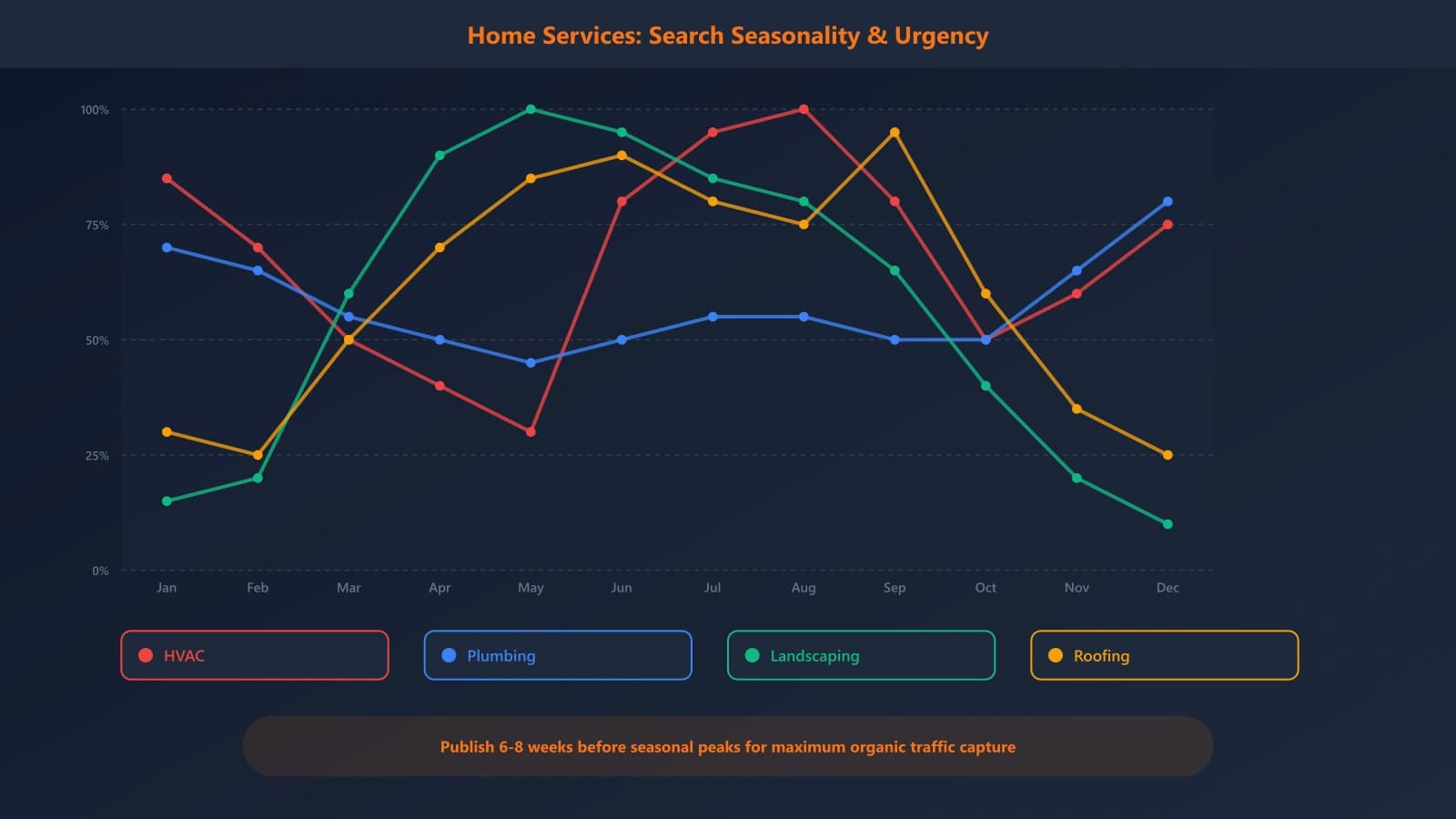
When a pipe bursts at midnight or an AC unit fails in August, homeowners search for help with urgency and money ready to spend. “Best plumber near me” and “emergency electrician [city]” are among the highest-intent local searches. The homeowner isn't browsing—they need service now.
This urgency creates opportunity for comparison content that helps homeowners make quick but informed decisions. But it also creates responsibility. Recommending an unqualified contractor for electrical work has real safety implications. Getting home services comparison content right matters.
This guide covers the home services category specifically: the unique content requirements, trust signals that matter, and strategies for building comparison pages that serve homeowners well.
Home Services Category Landscape
Different home services categories have different considerations. Understanding the landscape helps you prioritize opportunities and tailor content appropriately.
| Category | Licensing Required | Search Volume | Urgency Level | Key Trust Factors |
|---|---|---|---|---|
| Plumbing | Yes (most states) | High | Often urgent | Emergency availability, license, insurance |
| Electrical | Yes (all states) | Medium-high | Variable | License critical (safety), bonding |
| HVAC | Yes (most states) | High (seasonal) | Seasonal urgency | Certifications (EPA), brand expertise |
| General Contractors | Yes (most states) | High | Lower (planned) | Portfolio, references, license tier |
| Roofing | Varies | High | Post-storm urgency | Insurance claim experience, warranties |
| Landscaping | Rarely | Medium | Low | Portfolio, maintenance contracts |
Categories requiring licensing (plumbing, electrical, HVAC, contractors) demand verification of credentials. Categories with urgent need require content highlighting emergency availability and response times.
Content Requirements for Home Services
Home services comparison content needs specific elements that generic listicle templates miss.
Essential Verification Elements
Every contractor in your comparison should have verified credentials:
- License verification: Current, valid license for their trade
- Insurance confirmation: Liability and worker's compensation coverage
- Bonding status: Where required or relevant
- Service area: Confirmed areas they actually serve
- Business status: Active, operating business (not defunct)
Practical Information Readers Need
Beyond credentials, homeowners need practical decision-making information:
Essential contractor profile elements:
• Emergency/after-hours availability
• Response time expectations
• Service area boundaries
• Specializations (commercial vs residential, new construction vs repairs)
• Payment options and financing availability
• Warranty or guarantee policies
This practical information helps homeowners make real decisions, not just learn that contractors exist.
Trust Factors Specific to Home Services
Homeowners inviting strangers into their homes have specific trust concerns.
Safety and Professionalism Signals
Highlight factors that indicate professionalism and safety:
- Background-checked employees
- Uniformed, identifiable workers
- Marked company vehicles
- Drug-free workplace policies
- Online scheduling and communication
These signals matter particularly for services where workers enter the home—plumbing, HVAC, electrical—and may work while homeowners are at work.
Review and Reputation Verification
Multi-source reputation check:
• Google Business Profile reviews (most volume)
• Yelp reviews (often more detailed)
• BBB rating and complaints
• Angi/HomeAdvisor ratings (home services specific)
• Nextdoor recommendations (neighborhood-level)
Aggregating across platforms provides a more complete picture than any single source. Note patterns: consistently positive across platforms suggests genuine quality; wildly different ratings across platforms suggests potential issues.
Generate Home Service Comparisons
Create contractor listicles with built-in license verification and trust signals.
Try for Free
Monetization and Lead Generation
Home services comparisons have strong monetization potential given the high transaction values.
Lead Generation Models
Common monetization approaches for home services comparison content:
- Pay-per-lead: Capture inquiries and sell qualified leads to contractors
- Affiliate partnerships: Partner with home service platforms (Angi, Thumbtack) for referral revenue
- Premium listings: Charge contractors for enhanced visibility or featured placement
- Quote request forms: Connect homeowners with multiple contractors simultaneously
Each model has trade-offs between revenue potential, user experience, and content credibility. Premium listings, in particular, require careful disclosure to maintain trust.
Monetization Disclosure
Whatever monetization model you use, disclose it clearly. If contractors pay for placement, say so. If you receive referral fees, acknowledge it. Transparency about monetization actually builds trust—readers know everyone has business models.
Building Valuable Home Services Content
Home services comparison content serves homeowners at critical moments—when something breaks, when they're planning renovations, when they need trusted help. The value you provide depends on accuracy, credibility, and practical usefulness.
Invest in verification. Provide the practical details homeowners actually need. Build trust through transparency about both your recommendations and your business model. The publishers who do this well build sustainable traffic from one of the most valuable local search categories.
For the broader local comparison framework, see Local Service Comparison Playbook. For trust signal implementation, see Local Business Trust Signals.

Product Manager at BestPage. Pioneer in AEO research since 2024, exploring the convergence of SEO and GEO (Generative Engine Optimization). Led multiple AI-powered content optimization projects that achieved 300%+ citation increases in ChatGPT and Perplexity.