
Some searches spike like clockwork. “Best Christmas gifts for dad” explodes every November. “Best patio furniture” peaks in April. “Best back-to-school laptops” surges in August. This predictable traffic is a gift to content planners who prepare in advance.
Seasonal listicles capture this recurring demand with content that becomes more valuable over time. A well-maintained “Best Holiday Gift Ideas” page that's been updated for five years has authority that a freshly-published competitor can't match.
This playbook covers how to build seasonal comparison content that compounds year over year—the initial investment, the update process, and the timing that makes it all work.
Identifying Seasonal Opportunities
Start by mapping the seasonal calendar relevant to your niche. Different categories have different peak periods.
Holiday and Event Seasons
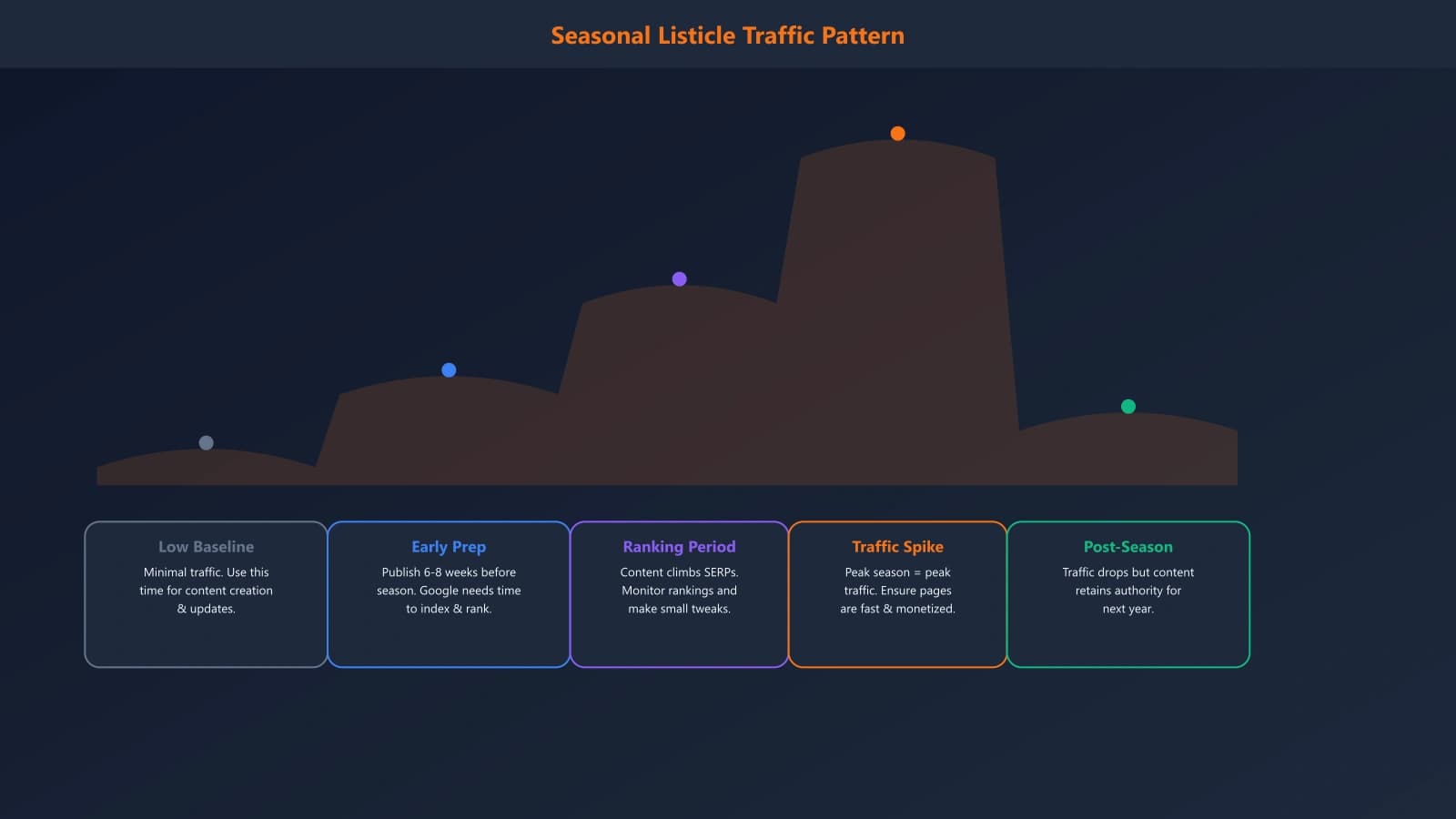
The most obvious seasonal patterns center on holidays. Christmas gift guides, Valentine's Day ideas, Mother's Day and Father's Day recommendations, Halloween costumes and decorations. These have the sharpest spikes—traffic explodes for 4-6 weeks, then crashes to near zero.
Event seasons work similarly: Super Bowl party supplies, graduation gifts, wedding season purchases. The window is short but intense, and the searches are highly commercial—people are ready to buy.
Usage-Based Seasons
Many product categories follow usage patterns rather than holidays. Summer triggers searches for outdoor furniture, grills, pool supplies, and camping gear. Winter brings heating equipment, snow tires, and indoor entertainment. Spring means gardening tools and allergy products.
Usage seasons often have longer windows than holiday seasons—summer product interest spans May through August rather than peaking in a single week.
Planning and Buying Seasons
Some categories have planning seasons that precede usage. Tax software searches peak in January but start rising in December. Back-to-school shopping starts in July for August needs. New Year resolutions drive fitness equipment searches starting in late December.
Understanding when the search volume rises—not just when it peaks—is crucial for timing your content preparation.
Building for Long-Term Value
Seasonal content should be built for annual updates, not annual rebuilds. Structure matters.
Evergreen Structural Elements
Separate what changes annually from what stays constant. Your methodology explanation, category education, buyer guide sections—these remain largely unchanged. The specific product recommendations, prices, and deals—these need annual refreshes.
Structurally, put evergreen content in dedicated sections that don't need touching. Contain volatile information (prices, specific products, deal links) in clearly defined areas that are easy to update wholesale.
Year-Agnostic Language
Where possible, avoid embedding the year into core content. Instead of “In 2026, the best option is...” write “Currently, the best option is...” This reduces the number of changes needed during updates.
Do include the year in the title and meta description for freshness signals, but make those easy to update separately from body content.
Modular Product Entries
Structure individual product recommendations as modular blocks that can be swapped, reordered, or removed independently. When a product is discontinued, you remove one block and add another—rather than rewriting paragraphs that reference multiple products.
Timing Your Updates
Seasonal content requires strategic timing. Update too late and you miss the rankings window. Update too early and information may be stale when it matters.
Ranking Lead Time
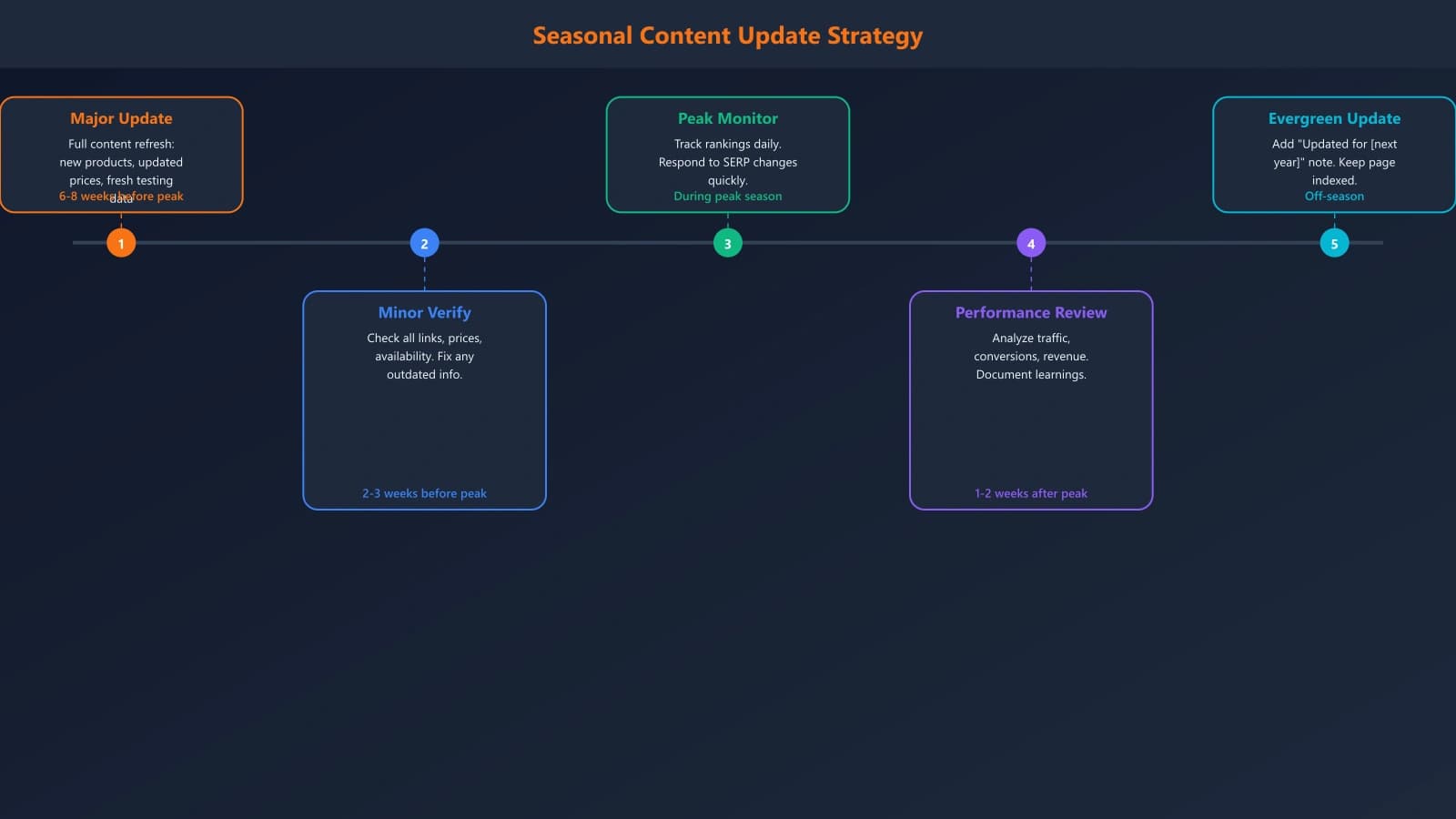
Google takes time to recrawl, reindex, and re-rank updated content. For seasonal pages, plan to complete updates 6-8 weeks before traffic begins rising. For a Christmas gift guide where traffic rises in October, your update should be live by mid-August.
This feels early—you're updating December content in August. But pages updated at the last minute often don't fully re-rank until after the peak has passed.
Update in Waves
Consider a two-wave approach: a major update in advance (new products, refreshed recommendations) and a minor update just before peak (price checks, deal verification). The early update establishes rankings; the late update ensures accuracy.
Monitoring and Quick Fixes
During peak season, monitor your pages closely. Products go out of stock. Prices change. New deals emerge. Have a process for quick updates that don't require full editorial review—swapping a sold-out product for an alternative, correcting a price, adding a new deal.
Build Seasonal Listicles That Last
Create evergreen seasonal comparison pages designed for easy annual updates.
Try for Free
Building Your Seasonal Calendar
Managing multiple seasonal pages requires a planning calendar. Here's a framework for organizing your seasonal content portfolio.
| Season | Traffic Rises | Major Update By | Verification Update |
|---|---|---|---|
| Valentine's Day | Late January | Early December | Late January |
| Spring/Garden | March | Mid-January | Late February |
| Summer/Outdoor | April | February | Late March |
| Back to School | July | May | Late June |
| Black Friday | Early November | September | Early November |
| Christmas/Holiday | October | August | November |
Adjust these timelines based on your specific categories and how competitive the keywords are. More competitive seasonal terms require even earlier preparation.
Compounding Seasonal Value
The real power of seasonal listicles is compounding. A page you build this year becomes easier to update next year. A page you've updated for five years has authority that new competitors struggle to match.
Start with your most valuable seasonal opportunities. Build them properly the first time—evergreen structure, modular products, year-agnostic language. Establish your update calendar and stick to it. Each year, the process gets easier and the results get better.
For related recurring content strategies, see Listicle Refresh System and Dynamic vs Static PSEO.

Product Manager at BestPage. Pioneer in AEO research since 2024, exploring the convergence of SEO and GEO (Generative Engine Optimization). Led multiple AI-powered content optimization projects that achieved 300%+ citation increases in ChatGPT and Perplexity.