

Key Takeaways
- •Segment by user type: K-12, higher ed, professional learners, and institutions have vastly different needs—structure content accordingly
- •Outcome-based evaluation: Focus on learning outcomes, completion rates, and career impact—not just feature lists
- •Accessibility matters: Include accessibility features, language options, and device requirements in every comparison
- •Price-to-value context: Education purchases are investments—frame pricing against outcomes and alternatives (including free options)
Education best-of pages help learners, educators, and institutions navigate an increasingly complex landscape of learning tools, online courses, and edtech platforms. From parents researching math apps for their children to corporate L&D teams evaluating learning management systems, education comparison content serves audiences with high stakes and diverse needs.
This guide covers how to build education-focused best-of pages that serve different audience segments effectively. We'll explore user segmentation, outcome-based evaluation frameworks, accessibility considerations, and the proof signals that help education buyers make confident decisions.
Understanding Education Audience Segments#
Education buyers span from individual learners to enterprise institutions, each with different evaluation criteria, budgets, and decision processes. Effective education best-of pages either target one segment specifically or structure content to serve multiple segments clearly.
| Segment | Decision Maker | Key Criteria | Price Sensitivity | |
|---|---|---|---|---|
| K-12 Parents | Parents | Engagement, safety, curriculum alignment | High | |
| K-12 Institutions | Administrators, IT | Compliance, scalability, reporting | Budget-driven | |
| Higher Ed Students | Students | Outcomes, affordability, flexibility | High | |
| Professional Learners | Individuals | Career ROI, credentials, time investment | Value-focused | |
| Corporate L&D | L&D, HR teams | Analytics, integration, scalability | Medium |
Outcome-Based Evaluation Frameworks#
Education products should be evaluated on learning outcomes, not just features. Does the app actually improve math skills? Do course completers get jobs? Outcome metrics differentiate valuable comparisons from feature lists.
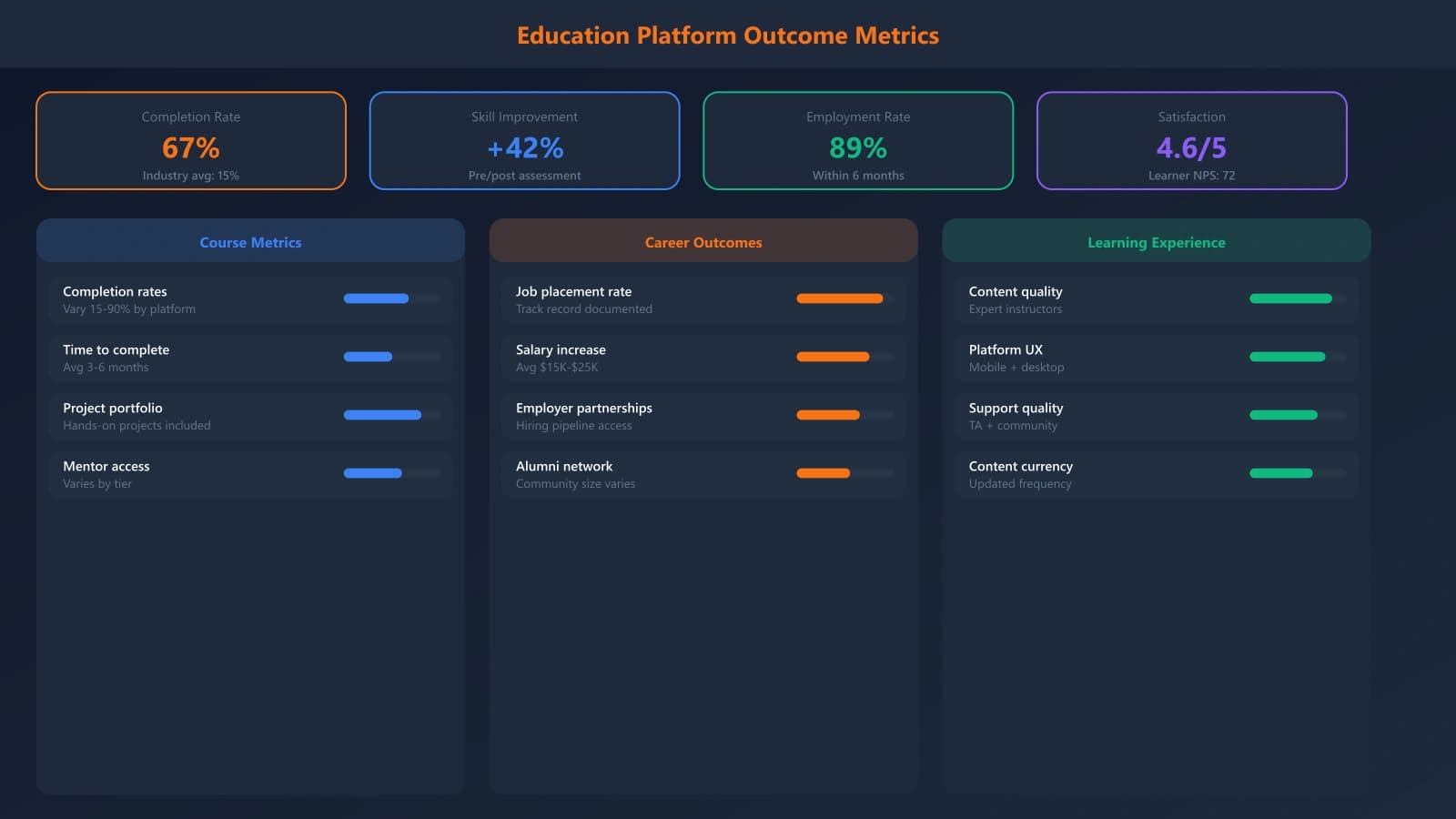
Figure 1: Outcome-based evaluation in education best-of pages
- 1Learning Outcomes (30%)Published efficacy research, third-party studies, skill assessment improvements
- 2Completion/Engagement (20%)Completion rates, time-to-completion, ongoing engagement metrics
- 3Practical Application (20%)Career outcomes for professional courses, grade improvements for academic tools
- 4Learning Experience (15%)Learner satisfaction, instructor quality, content freshness
- 5Value & Accessibility (15%)Price-to-outcome ratio, financial aid, accessibility features
Finding Outcome Data
Accessibility and Inclusion Considerations#
Education content serves diverse learners, including those with disabilities, non-native speakers, and users with limited technology access. Comprehensive best-of pages include accessibility as a core evaluation criterion.
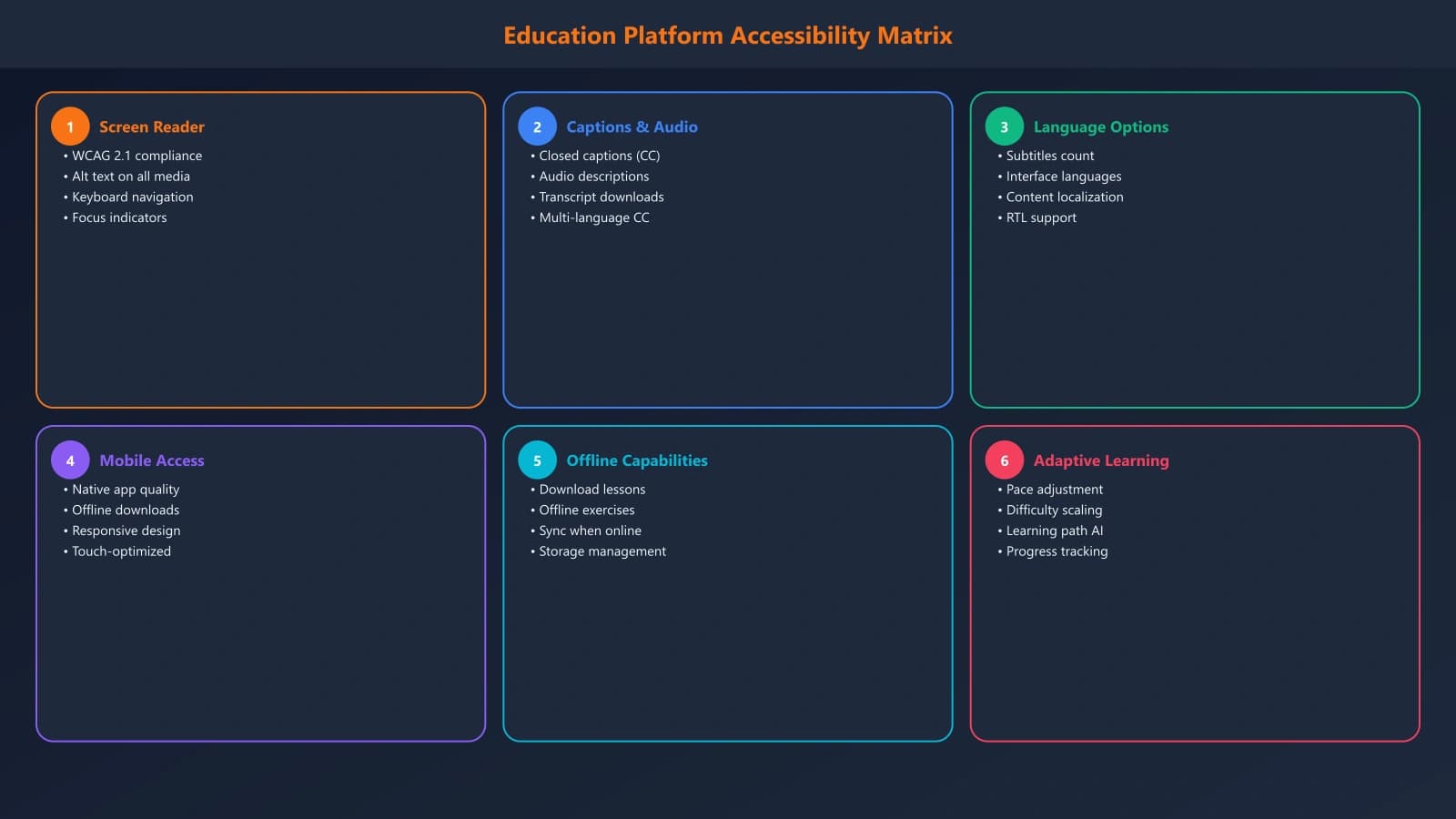
Figure 2: Accessibility criteria in education comparisons
Category-Specific Content Structure#
Different education categories require different comparison frameworks. Online courses, learning apps, LMS platforms, and tutoring services each have unique evaluation needs.
Online Courses/MOOCs
- Instructor credentials
- Completion certificates value
- Course freshness/updates
- Peer community quality
- Career services
Learning Apps (K-12)
- Curriculum alignment
- Engagement/gamification
- Parent dashboard
- Progress tracking
- Safety/privacy
LMS Platforms
- Integration ecosystem
- Scalability
- Analytics/reporting
- Content authoring
- Support/training
Tutoring Services
- Tutor vetting process
- Subject coverage
- Scheduling flexibility
- Session pricing
- Progress reporting
Proof Signals for Education Content#
Education buyers—especially parents and institutions—want evidence that products actually work. Strong proof signals differentiate credible comparisons from affiliate-driven listicles.
Designing Effective Conversion Paths#
Education purchases often involve multiple stakeholders and extended decision timelines. Your page should serve both quick deciders and those in longer research processes.
- Quick comparison table for scanners
- Deep-dive reviews for researchers
- Free trial/freemium options prominently featured
- Downloadable comparison guide for team sharing
- Segment-specific sections (teachers, students, parents)
- Budget calculator or pricing comparison tool
Frequently Asked Questions#
How do I evaluate online course quality without taking every course?
Use proxy indicators: instructor credentials, platform reputation (Coursera, edX rankings), Class Central reviews, course update dates, and completion certificate value. For popular courses, seek out detailed reviews and learner testimonials.
Should I include free options in education best-of pages?
Absolutely—many learners are budget-constrained, and some free options (Khan Academy, MIT OpenCourseWare) are genuinely excellent. Including free options also builds trust by showing you're not purely affiliate-driven.
How do I handle rapidly changing edtech products?
Commit to regular updates (quarterly minimum), display "last updated" dates prominently, and focus on stable criteria (outcomes, company stability) rather than features that change frequently.
What credentials build trust for education content?
Teaching experience, curriculum development background, education administration, or learning science credentials. For K-12 content, parent perspective and teacher endorsements carry weight.
Conclusion: Serving Diverse Learners#
Education best-of pages succeed when they respect the diversity of learning needs and the seriousness of education decisions. By focusing on outcomes, accessibility, and audience-specific value, you create content that genuinely helps learners find the right resources for their journeys.
- Segment clearly: Different audiences need different content—structure accordingly
- Focus on outcomes: Learning results matter more than feature lists
- Include accessibility: Diverse learners have diverse needs
- Show proof: Research, outcomes data, and institutional adoption build trust
- Include free options: Budget constraints are real; respect them
Sources & References
- HolonIQ. Global EdTech Market Report (2024)
- Class Central. Online Learning Effectiveness Research (2024)
- W3C. Digital Learning Accessibility Guidelines (2024)

Product Manager at BestPage. Pioneer in AEO research since 2024, exploring the convergence of SEO and GEO (Generative Engine Optimization). Led multiple AI-powered content optimization projects that achieved 300%+ citation increases in ChatGPT and Perplexity.